MS Sparsha
Some scientists make discoveries. Others build the scientific capability that makes discoveries possible.
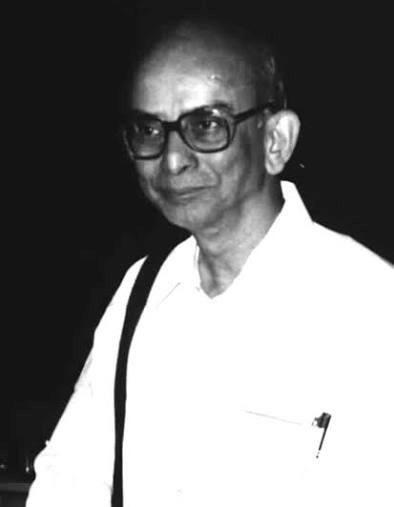
Professor Erode Subramanian Raja Gopal belonged to the second category—and, in doing so, became one of the important pioneers of experimental condensed-matter physics in Bharat.
Known to colleagues simply as ESR, Raja Gopal spent much of his professional life at the Indian Institute of Science (IISc), Bengaluru. His work took him into a world far removed from everyday experience: temperatures approaching absolute zero, extremely high pressures, unusual liquids, phase transitions and materials whose behaviour changes dramatically under controlled conditions.
But his greatest contribution may have been even more fundamental. At a time when sophisticated scientific equipment was difficult for Bharat to import, Raja Gopal and his colleagues learned to build the instruments themselves.
That combination of physics, engineering, experimentation and institution-building became the hallmark of his career.
Building science when equipment was scarce
Raja Gopal was born on May 12, 1936, in Salem, Tamil Nadu. After his studies at St Joseph’s College, Tiruchirappalli, and the University of Madras, he joined IISc for research. He completed his Ph.D. in 1961 under Professor R. S. Krishnan, a distinguished physicist known for his emphasis on high-quality experimental instrumentation.
He then spent about three years at Oxford University’s Clarendon Laboratory, where he worked in low-temperature physics under Kurt Mendelssohn, one of the pioneers of cryogenic research. He returned to IISc in 1964.
The India to which he returned was very different from the India of sophisticated global scientific supply chains. Advanced laboratory equipment was expensive, imports were difficult and foreign exchange was limited.
For scientists pursuing experimental physics, there was often only one answer: design and build what was needed.
Raja Gopal embraced that challenge.
His group worked on cryogenic systems, precision temperature measurements, calorimetry, high-pressure experiments, electronic instrumentation and other specialised facilities. A later account in Current Science noted that he and his team pursued globally challenging experimental research despite severe financial constraints, with particular emphasis on indigenous equipment and affordability without compromising quality.
Exploring matter under extreme conditions
Why study matter at temperatures close to absolute zero or under pressures thousands of times greater than atmospheric pressure?
Because materials can reveal completely different properties when their environment changes.
Cooling, heating, compressing or applying an electric field can alter the electrical, magnetic, thermal or structural behaviour of a material. Such transformations are central to the study of phase transitions and condensed-matter physics.
Raja Gopal and his collaborators investigated these phenomena through highly controlled experiments.
Among his important research interests were the behaviour of liquids near their critical points. At the critical point, the distinction between a liquid and a gas disappears. Close to this condition, seemingly simple fluids can display remarkably complex behaviour.
His precision measurements contributed to the understanding of critical phenomena and the limitations of simplified relationships used to describe them, including the rectilinear-diameter law. His work in this field became part of his wider contribution to experimental thermodynamics and condensed-matter physics.
He also worked on disordered and amorphous materials, including chalcogenide glasses, whose electrical properties can change under external influences. Such research was significant in understanding materials with potential applications in electronic switching and related technologies.
A physicist who was also an instrument builder
What distinguished Raja Gopal was that he did not regard instrumentation as something separate from physics.
For him, measurement was itself a scientific challenge.
If temperature could not be measured accurately, a low-temperature experiment could be compromised. If pressure could not be controlled precisely, conclusions about the behaviour of a material could become unreliable.
He therefore devoted considerable attention to developing experimental apparatus and measurement techniques.
He was associated with the development of low-temperature facilities at IISc and played a significant role in strengthening instrumentation and applied-physics activities. During his tenure in the Instrumentation and Services Unit, he supported activities ranging from high-pressure studies and mass spectrometer fabrication to electronic and thermal instrumentation. He was also a strong advocate of developing affordable indigenous equipment for research.
In other words, he was not merely using scientific instruments.
He helped India learn how to make them.
That distinction matters.
A laboratory becomes a national scientific asset when its capabilities can be used by generations of researchers—not merely by the scientist who established it. Raja Gopal helped create precisely such an ecosystem at IISc.
From IISc to national measurement standards
His scientific contributions earned him the Shanti Swarup Bhatnagar Prize in Physical Sciences in 1978, one of India’s major science awards. He was subsequently recognised by several scientific bodies and elected a Fellow of the Indian National Science Academy, the Indian Academy of Sciences and the National Academy of Sciences, India.
At IISc, he served in several academic and institutional positions. He was Professor of Physics, Dean of the Faculty of Science, Chairman of the Department of Physics and later headed the Instrumentation and Services Unit.
Then came an important national assignment.
In 1991, Raja Gopal became Director of the CSIR–National Physical Laboratory (NPL), New Delhi. He remained in that position until his retirement from official service in 1997.
NPL’s role goes beyond ordinary laboratory research. It is central to India’s measurement infrastructure and scientific metrology—the system that enables accurate and consistent measurements across laboratories, industry and commerce.
For a country seeking to build scientific and industrial capability, reliable measurement is fundamental.
Raja Gopal therefore moved from building sophisticated experimental capability at IISc to helping lead an institution responsible for a much broader national scientific responsibility.
His real legacy: people
Awards and laboratories tell only part of the story.
Raja Gopal was also a teacher and mentor. He guided more than 60 doctoral students, many of whom went on to careers in universities, national laboratories and scientific institutions. His influence consequently travelled far beyond his own research papers.
His books also became useful resources for students and researchers. Among them was Specific Heats at Low Temperatures, a work associated with his specialisation in low-temperature physics, along with other books and edited volumes on condensed-matter physics and statistical mechanics.
But students who worked with him remembered more than what was written in books.
They learned how to construct an experiment, how to identify an error, how to improve an instrument and, above all, how to remain patient when an experiment refused to behave as expected.
That is the culture on which good experimental science is built.
A quiet scientist, a lasting institution-builder
After his tenure at NPL, Raja Gopal returned to Bengaluru and continued his association with IISc as an emeritus professor and scientist. He remained connected with research and scientific activities until his later years.
He passed away on November 15, 2018, in Bengaluru, aged 82.
His story deserves to be remembered because it represents a generation of Indian scientists who worked when resources were limited but ambition was not.
They could not always buy the equipment that leading laboratories abroad possessed.
So they built it.
They could not simply import an established experimental culture.
So they created one.
And they could not measure their contribution merely by counting publications.
Their real achievement was the scientific capability they left behind—instruments, laboratories, methods, institutions and, most importantly, people.
Professor E. S. Raja Gopal’s life offers a powerful reminder that scientific self-reliance does not begin with a slogan. It begins in the laboratory, with a scientist willing to solve one difficult problem after another.
Sometimes the most important scientific breakthrough is not a spectacular discovery.
It is the creation of the ability to make discoveries possible.