



Sri Kala Bhairava Temple at Sivapuri, near Chidambaram in Cuddalore district of Tamil Nadu, is a fascinating and lesser-known shrine associated with the ancient Tirukkazhippalai Sri Palvannanathar Temple. The temple is situated about 5 kilometres from Chidambaram and is traditionally known as Tirukkazhippalai. Though the principal deity of the temple is Lord Shiva as Palvannanathar, the shrine is particularly famous among devotees for its unusual and powerful form of Kala Bhairava.
The exact age of the present temple structure is difficult to establish because the original temple was destroyed by floods and the shrine was subsequently rebuilt at Sivapuri. However, the sacred site itself is considerably older than the present structure. Tirukkazhippalai is associated with the Tevaram tradition, and the temple has Chola-period inscriptions, including an inscription from the reign of Rajaraja Chola I recording an endowment for a perpetual lamp. The original temple is believed to have existed before the 7th century, although this early date should be treated cautiously because the present structure is a later reconstruction.
The main deity is Lord Shiva worshipped as Palvannanathar, with Goddess Vedhanayaki as his consort. The name Palvannanathar is associated with the sacred tradition of milk and the unusual white appearance of the Shiva Linga.
The most distinctive deity of the temple, however, is Kala Bhairava, who has a separate shrine in the prakaram. Unlike the usual representation of Bhairava accompanied by a dog, the Kala Bhairava here is depicted without his vahana. He wears a garland of 27 skulls and a serpent around his waist, and his fierce face has prominent teeth. Local tradition also associates this image closely with the Kala Bhairava of Kashi.
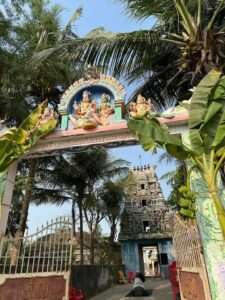
The Palvannanathar temple follows the traditional South Indian temple style and has a three-tiered Rajagopuram with rectangular enclosures around the main shrine. The sanctum is approached through the mukha mandapa and artha mandapa, while the prakaram contains several important shrines including Vinayaka, Murugan, Surya, Mahavishnu, Navagrahas and Kala Bhairava.
The temple also contains beautiful stone sculptures and yali carvings around the outer walls of the sanctum. A particularly important feature is the depiction of Shiva and Parvati in their wedding posture behind the main Shiva Linga, associated with the traditional belief that Sage Agastya received their divine darshan here.
The history of Tirukkazhippalai goes back to the ancient Chola period. The original temple stood on the northern bank of the Kollidam River, but the temple was eventually destroyed by floods. The sacred images and surviving stones were subsequently brought to the present location at Sivapuri and the temple was reconstructed.
Several Chola-period inscriptions have been recorded at the present temple, although many are incomplete because of the destruction of the earlier temple and later reconstruction. One inscription from the reign of Rajaraja Chola I records an endowment for maintaining a perpetual lamp at Tirukkazhippalai Mahadevar temple. These inscriptions provide important historical evidence for the antiquity of the sacred site.
According to the ancient Shaiva tradition, there was once a dispute between Lord Brahma and Lord Shiva over who was supreme. Brahma became proud of his position as the creator of the universe and is said to have spoken arrogantly about his greatness. Lord Shiva, who represents the supreme reality beyond creation and destruction, decided to teach Brahma a lesson.
From the divine power of Lord Shiva emerged a fierce form known as Kala Bhairava. His appearance was terrifying, representing the power of time itself. Kala Bhairava approached Brahma and, according to the traditional story, severed one of Brahma’s five heads. Because of this act, Bhairava incurred the sin of Brahmahatya and was forced to wander with the skull of Brahma attached to his hand.
Kala Bhairava travelled from one sacred place to another, seeking liberation from this sin. The skull remained with him as a reminder of the act until he finally reached Kashi. There, the sin was believed to have been washed away, and Kala Bhairava became the eternal guardian of the sacred city. This is why Kala Bhairava is traditionally regarded as the Kshetrapala, or guardian, of Kashi.
This ancient tradition gives special meaning to the Kala Bhairava worship at Sivapuri. The Bhairava here is regarded by local devotees as a particularly powerful manifestation and is traditionally associated with the Kala Bhairava of Kashi. Devotees believe that his presence at Sivapuri brings the protective grace of Bhairava to this ancient Shiva kshetra.
The form of Kala Bhairava at Sivapuri is itself unusual. Unlike the commonly seen representation in which Bhairava is accompanied by a dog, this deity is depicted without the dog. He wears a garland of 27 skulls and a serpent around his waist, while his fierce face and prominent teeth convey his role as a powerful guardian deity.
Devotees traditionally approach him with prayers for protection from fear, obstacles, and negative influences. Kala Bhairava is also regarded as the Lord of Time, and worshipping him is believed to help devotees overcome difficulties associated with time, delays and unfavourable circumstances.
Kala Bhairava worship is especially important on Theipirai Ashtami, the eighth day of the waning moon. Special pujas are performed for Kala Bhairava on this day, and devotees visit the shrine seeking his protection and blessings.
The temple also observes important Shaiva festivals and special occasions including Maha Shivaratri, Pradosham, Navaratri, Vinayagar Chaturthi, Aippasi Annabhishekam and Margazhi Thiruvathirai.


