Lakshmanrao Upadhyayula
Among the luminous revelations of the Rigveda, the hymns composed by the sage Vishwamitra in the sacred Gayatri chandas stand as radiant expressions of humanity’s earliest spiritual intuition and disciplined scientific contemplation. In these hymns, Agni is not merely the physical flame kindled upon the altar, but the conscious divine principle that unites heaven, earth, sacrifice, and human aspiration. The Vedic seers perceived the cosmos as an interconnected order governed by eternal laws, and Agni emerged as the visible manifestation of that hidden harmony. Through the fire-sacrifice, the sages sought not only ritual fulfilment but also the awakening of intelligence, purity, and universal balance within the human soul.
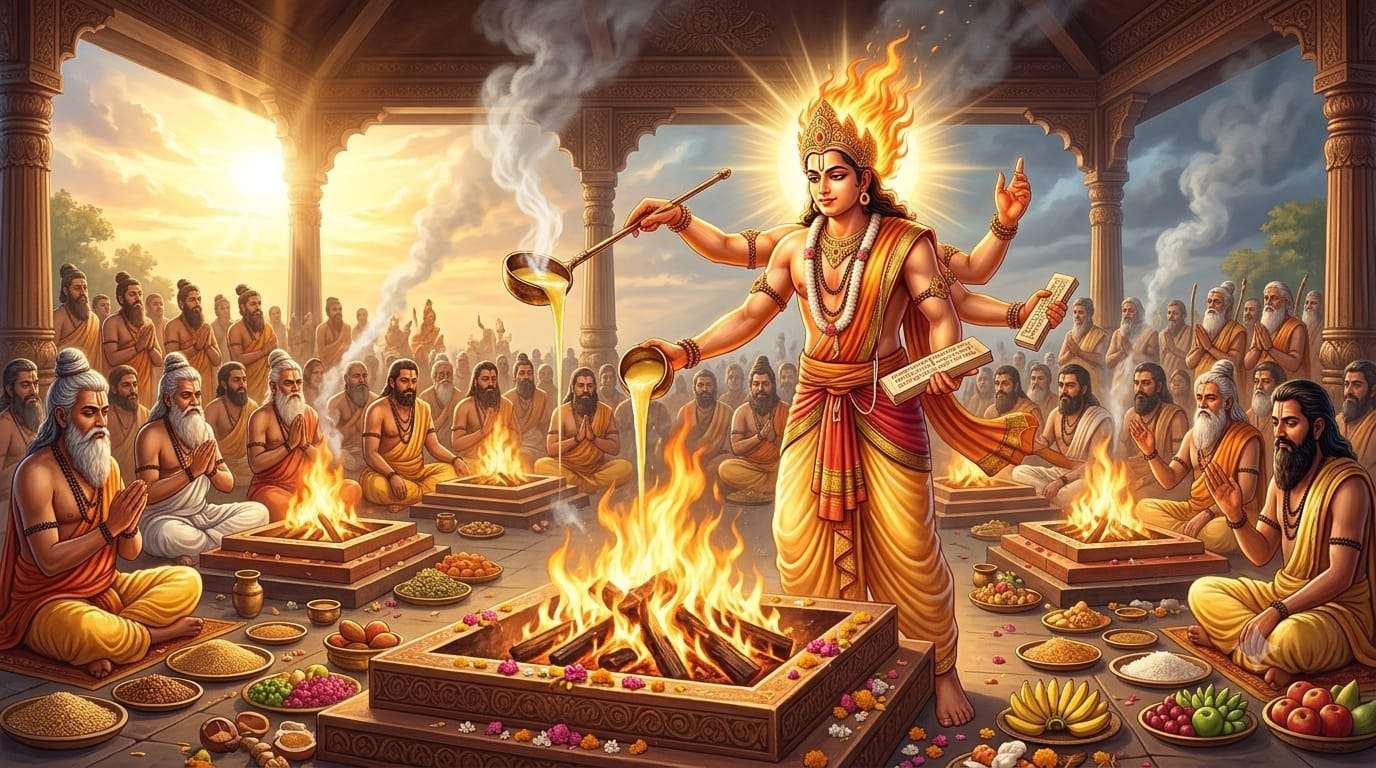
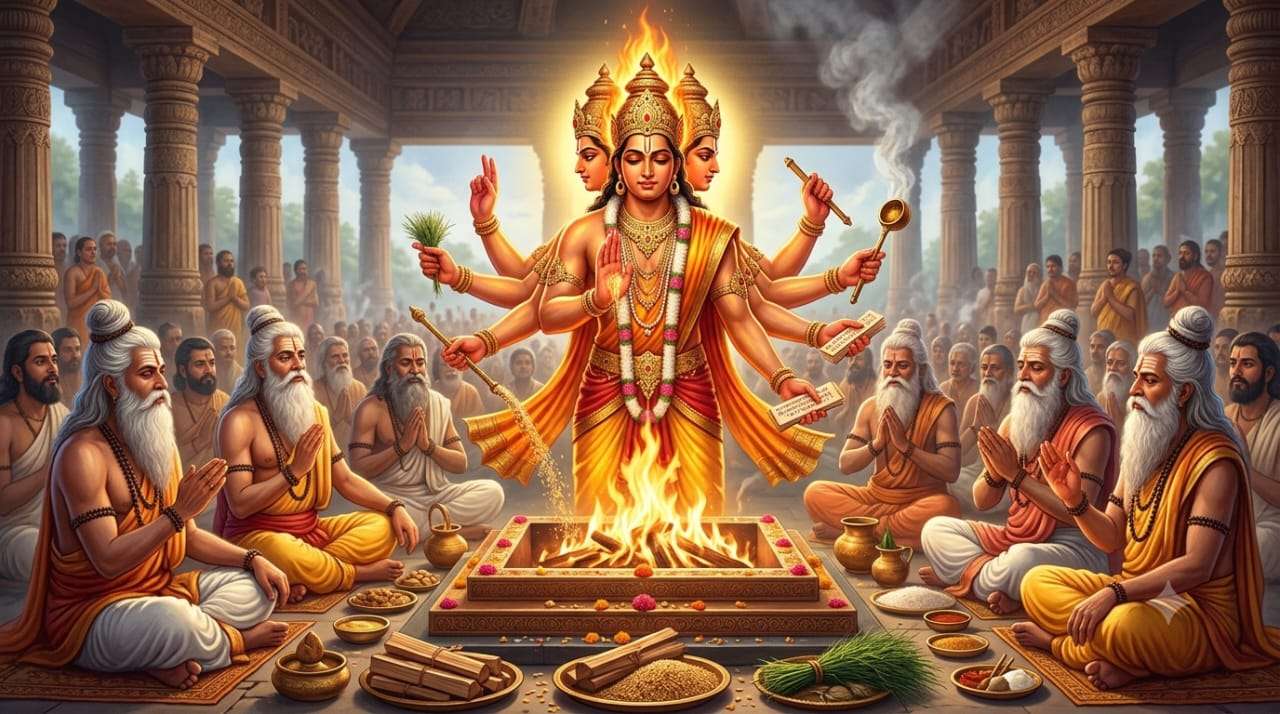
Agni is invoked as the Hota, the divine priest who conducts the sacrifice with flawless precision. He is the Purohita, the sacred guide placed in the forefront of spiritual endeavour, and the Yajna-Drashta, the knower and witness of every sacrificial act. The hymns proclaim that Agni alone fully understands the systematic procedure of yajna, for he embodies the sacred order upon which the ritual universe is established. In the Vedic vision, yajna was not a mere ceremonial offering but a profound principle of cosmic reciprocity, where every act of giving sustained the rhythm of existence itself. Agni became the living intelligence that transformed material offerings into subtle spiritual forces capable of ascending toward the divine realms.
The sages revered Agni as the eternal carrier of oblations, the luminous messenger who moves ceaselessly between humanity and the Gods. Every offering placed into the sacred fire was believed to travel through Agni into the invisible regions of divine consciousness. Thus, Agni was celebrated as the divine envoy, the mouth of the Gods, and the sacred bridge linking mortal existence with celestial reality. The perpetual nature of fire symbolised continuity, transformation, and the immortality hidden within transient existence. Even in physical observation, the Vedic thinkers recognised the mysterious power of fire to alter substances, release hidden energies, and sustain life through warmth, nourishment, and illumination. Their spiritual symbolism was therefore inseparably connected with careful observation of nature and its laws.
Agni is described as the lover of food and the enjoyer of offerings, yet this symbolism carries profound philosophical depth. The fire consumes all substances without attachment and transforms them into subtle essence. Likewise, the human spirit, through discipline and wisdom, must transform worldly experiences into higher consciousness. The Vedic sages perceived in fire the eternal principle of conversion and renewal. In the domestic hearth, in the sacrificial altar, in the lightning of the sky, and within the metabolic warmth of living beings, they recognised one universal energy expressing itself in many forms. Such insight reveals an astonishing scientific temperament woven into spiritual contemplation, where physical phenomena and metaphysical truth were understood as reflections of the same cosmic reality.
Agni is also praised as the flag of yajna, the visible emblem of sacred aspiration rising upward toward the heavens. The upward movement of flame became a symbol of the soul’s longing for transcendence. Ancient though he is, Agni remains ever-young, for the principle of divine energy never decays. Through his flawless ability, he became omniscient, knowing every being and every movement within creation. The hymns call him the Son of Strength, born from the hidden powers of nature and sustained by the disciplined invocation of the sages. His radiance signifies both spiritual illumination and intellectual clarity, reminding humanity that true wisdom arises when purity of conduct is united with disciplined understanding.
The Vedic seers extolled Agni as the knower of all living beings. Nothing remains concealed from the divine flame, for Agni resides within every form of life as vitality, perception, and awareness. In this profound symbolism, the sages anticipated the insight that energy permeates all existence. Agni was therefore regarded not only as an external deity but also as the inner fire of consciousness, the illuminating intelligence dwelling within the human heart. To invoke Agni was to awaken courage, discernment, ethical order, and spiritual aspiration. The sacrificial fire outside the altar mirrored the inner sacrifice through which ignorance, selfishness, and impurity were gradually consumed.
Agni is celebrated as the leader of men, swift in action and unconquerable in battle. The hymns portray him as a mighty warrior who destroys hostile forces and protects the righteous sacrificer from harm. Yet the enemies described in the Vedic tradition were not merely external adversaries; they also symbolised inner darkness, inertia, greed, hatred, and ignorance. Agni’s victory represents the triumph of enlightened consciousness over destructive tendencies. Ever youthful and perpetually active, he inspires humanity toward effort, discipline, and fearless pursuit of truth. No hostile force can overpower the sacrifice guarded by Agni, for divine knowledge itself becomes the shield of the seeker.
The sages further glorify Agni as the patron and beloved of the Gods, surrounded by abundant offerings and nourished through sacred devotion. The yajamana, or donor of oblations, participates in this divine exchange by offering with sincerity and humility. Through Agni, the sacrificer receives prosperity, nourishment, and spiritual merit. The Vedic understanding of wealth extended far beyond material possessions; it included wisdom, harmony, strength, character, cattle, fertile lands, healthy progeny, and inner peace. Thus, Agni became the bestower of holistic abundance, sustaining both the visible and invisible dimensions of life.
The hymns affirm that the man who offers oblations through Agni becomes a source of holiness. Purified by sacrifice, disciplined living, and righteous intention, he earns the grace of divine radiance. Agni grants such a person a secure dwelling place, symbolising not merely physical shelter but also stability of mind and spiritual refuge. The sacred fire sanctifies the home, the community, and the human heart. In this manner, Vedic civilisation cultivated a worldview in which spiritual practice, ethical living, social responsibility, and scientific observation formed one integrated vision of existence.
Agni is finally invoked as the intelligent knower of all beings born in creation. By worshipping him with sincerity, humanity seeks every form of wealth and auspiciousness. The prayer for desired prosperity is not driven by selfish craving but by the aspiration to live in harmony with cosmic order. The sages prayed that the spirit and blessings of the Gods might enter all people, illuminating humanity with wisdom, compassion, and righteous action. Thus, the Gayatri hymns of Vishwamitra reveal a majestic synthesis of spiritual depth and intellectual refinement, where fire becomes the eternal symbol of divine consciousness, scientific wonder, sacrificial purity, and the upward journey of the human soul toward immortal truth.