



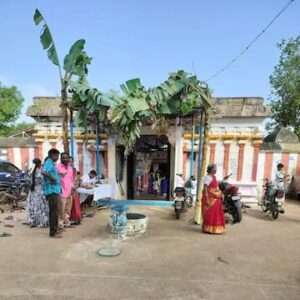
Vallam Madhava Yoga Narasimha Perumal Temple is located in Vallam, about 10 km southwest of Thanjavur city in Thanjavur District, Tamil Nadu. Perched atop a small granite hill, the temple overlooks the historic town of Vallam, which served as an important military outpost during the Chola and Nayak periods. The serene hilltop setting offers a peaceful atmosphere for worship and meditation.
The temple is believed to be more than 1,000 years old, with its origins tracing back to the Later Chola period around the 10th or 11th century CE. The shrine received patronage from the Cholas, followed by the Thanjavur Nayaks and the Maratha rulers of Thanjavur, who undertook renovations and ensured the continuation of daily worship and annual festivals.
The presiding deity is Sri Madhava Yoga Narasimha Perumal, an east-facing form of Lord Vishnu seated in Padmasana (lotus posture) in deep meditation. Unlike the fierce Ugra Narasimha seen in many temples, the Lord here appears calm and compassionate, symbolising the transformation of divine anger into supreme peace after protecting Prahlada and destroying Hiranyakashipu.
The Divine Consort is Sri Amirthavalli Thayar, who is believed to have pacified the Lord’s fierce form through her compassion. Together, the divine couple represents the perfect balance of strength, protection, grace and mercy. Devotees believe that worshipping them brings courage, mental peace, prosperity, family harmony and protection from negative influences.
The temple is built in the traditional Dravidian style and is approached by climbing a flight of stone steps leading up the hill. The sanctum enshrines a beautifully sculpted stone idol of Yoga Narasimha with a serene expression that reflects inner peace and spiritual wisdom.
The temple consists of the Garbhagriha, Ardha Mandapa and Maha Mandapa. Separate shrines are dedicated to Sri Amirthavalli Thayar, Garuda, Hanuman, Andal and the Alwars. Though modest in size, the temple possesses an atmosphere of great spiritual tranquillity.
Vallam has been an important settlement since the Chola period and was known for its strategic fortifications. The temple was established during this era and later expanded under the Nayak and Maratha rulers of Thanjavur.
Several inscriptions found in and around the temple record donations of land, lamps and resources for conducting daily worship and temple festivals. The temple remained an important centre of Vaishnavite worship for centuries and continues to preserve ancient traditions of Narasimha worship. Despite its historical and spiritual importance, it remains relatively unknown outside the Thanjavur region, making it a hidden gem for devotees seeking a peaceful pilgrimage.
The sacred legend of Vallam Madhava Yoga Narasimha Perumal Temple is deeply connected with the events that followed one of the most celebrated episodes in the Bhagavata Purana—the destruction of the demon king Hiranyakashipu.
When the arrogant Hiranyakashipu repeatedly tortured his son Prahlada for his unwavering devotion to Lord Vishnu, the Lord manifested from a pillar as Narasimha, the half-man, half-lion incarnation. At twilight, on the threshold of the royal palace, he destroyed the demon without violating any of the boons granted by Lord Brahma.
Although Dharma had been restored, Lord Narasimha’s divine fury did not subside immediately. His blazing energy spread across the universe, causing even the Devas, sages and celestial beings to tremble. Lord Brahma, Lord Shiva and Indra offered prayers, but none dared approach the Lord in his fierce form.
The Devas then prayed to Goddess Mahalakshmi, knowing that only her divine grace could calm the Lord. According to the temple’s ancient Sthala tradition, the Goddess appeared before Narasimha on this sacred hill at Vallam. With words of compassion and devotion, She reminded him that his mission of protecting righteousness had been fulfilled and that the universe now awaited his blessings in a peaceful form.
Pleased by her prayers, the Lord gradually withdrew his fierce energy and entered a state of profound meditation. Seated in Padmasana, he assumed the tranquil form of Yoga Narasimha, radiating divine peace instead of divine wrath. This sacred hill is believed to be the very place where this transformation took place, making it a symbol of the victory of peace over anger and compassion over destruction.
Another long-standing local tradition narrates that several sages were performing intense penance on this hill, praying for the welfare of humanity and seeking permanent protection from evil forces. After witnessing the Lord’s peaceful form, they requested him to remain here forever so that devotees of future generations could receive his blessings. Accepting their prayers, Lord Narasimha chose Vallam as his eternal abode.
It is believed that the Lord assured the sages that anyone who sincerely worshipped him here would be freed from fear, anxiety, obstacles, evil influences and planetary afflictions. Devotees also believe that prayers offered to Sri Madhava Yoga Narasimha help overcome delays in marriage, career setbacks, financial difficulties and health-related problems while granting courage, wisdom, prosperity and inner peace.
Narasimha Jayanti is the temple’s most important festival and is celebrated with grand abhishekams, alankarams, special homams and processions. Vaikunta Ekadasi, Purattasi Saturdays, Panguni Uthiram, Sri Rama Navami, Krishna Jayanti and the annual Brahmotsavam are observed with great devotion. Special Lakshmi Narasimha Homam, Sahasranama Archana and Deepa Aradhana are performed on auspicious days, attracting devotees from Thanjavur and neighbouring districts.


