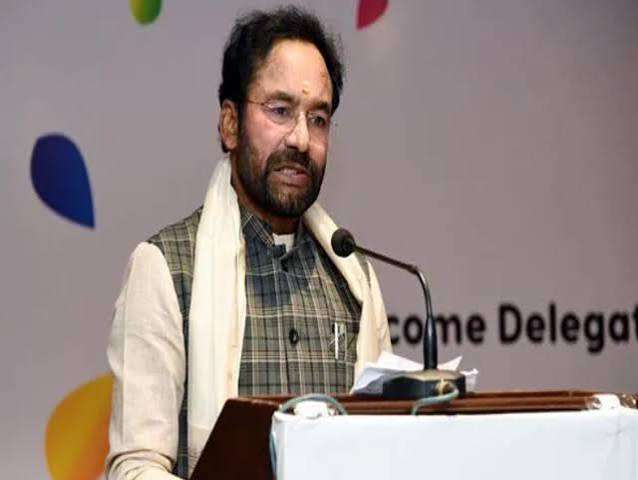
New Delhi: Union Coal and Mines Minister G Kishan Reddy on Monday said the government will hold separate meetings to resolve key demands of the recycling industry, while highlighting the sector’s crucial role in India’s clean energy transition and strategic manufacturing.
In his address at the National Seminar on ‘India’s Critical Minerals Recycling Ecosystem and Circular Economy’, Reddy highlighted the strategic importance of critical minerals recycling for India’s clean energy transition, defence preparedness, digital economy and advanced manufacturing.
Reddy said India could emerge as a significant secondary source of critical minerals by recovering valuable materials from waste, thereby reducing dependence on conventional mining as well as the environmental burden associated with it.
Because the challenges faced by the recycling sector cross various departmental jurisdictions, the government is initiating dedicated inter-ministerial discussions involving the Ministries of Finance, Commerce, Environment, and Electronics & Information Technology alongside the Ministry of Mines.
Resolving the PSIC Regime: A major bottleneck raised by the industry is the mandatory Pre-Shipment Inspection Certificate (PSIC) for imported metal scrap. Recyclers argue the overseas agency framework causes severe procedural delays. The government has committed to a separate inter-ministerial meeting to evaluate building a smarter domestic scanning and verification network at Indian ports instead.
Acknowledging that global geopolitical tensions and rising freight costs are impacting the mineral supply chain, Reddy noted that the Prime Minister’s Office (PMO) and the Ministry of External Affairs (MEA) are actively addressing these risks via diplomatic channels.
The Ministry is pushing forward with its National Critical Minerals Mission, emphasizing “urban mining”—recovering critical metals from electronic waste (e-waste) and End-of-Life (EOL) products. The push aims to meet 25–30% of India’s critical mineral needs locally, reducing dependency on external imports.
The announcements come on the heels of the government formulating a dedicated incentive scheme for critical mineral recycling, supported by a large-scale allocation toward overall critical mineral development to drive private investment, startups, and technological innovation.