Upadhyayula Lakshman Rao
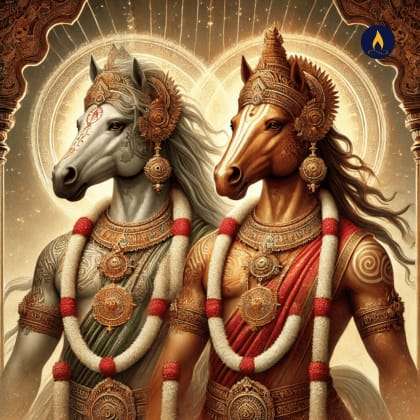
In the sacred cadence of Trishtubh chandas, the seer Agastya raises his luminous invocation to the twin deities known as the Ashvins, the celestial physicians and harbingers of swift grace. Their chariot, a marvel of divine craftsmanship, is described not merely as a vehicle but as a symbolic embodiment of cosmic order. Fashioned in a triangular form and mounted upon three wheels, it reflects the tripartite structure of existence—earth, atmosphere, and heaven. Its composition of gold, silver, and copper signifies the harmonious blending of subtle energies: the radiant, the reflective, and the conductive. Thus, the chariot becomes not only a means of travel but an instrument of transformation, capable of transcending the speed of mind and carrying divine intent across the planes of reality.
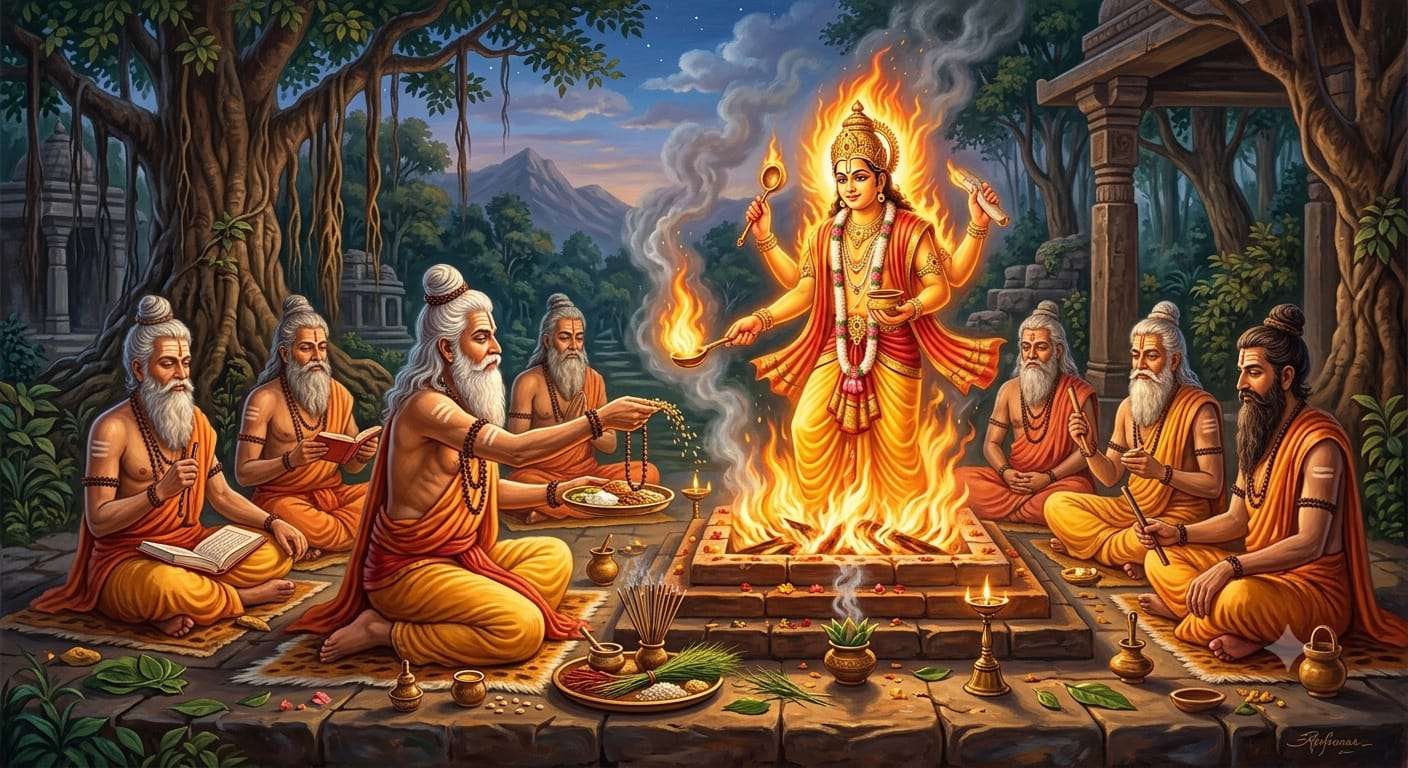
As the hymn unfolds, the Ashvins are summoned with reverence and urgency, their arrival likened to birds borne upon powerful winds. This imagery conveys both गति (motion) and प्राण (vital force), suggesting a profound understanding of natural dynamics akin to the principles of motion and energy in modern scientific thought. The sages perceive divine movement not as arbitrary, but as governed by laws that mirror the rhythms of nature. When the Ashvins resolve to partake in the sacred oblations, their chariot becomes aligned with the spiritual frequency of the yajna, transporting them to the sanctified precincts where human aspiration meets divine reception.
In this sacred encounter, the Ashvins are said to meet Ushas, the daughter of the heavens and the radiant embodiment of dawn. Her presence signifies the dissolution of darkness and the awakening of consciousness. The hymn thus weaves a subtle metaphor: just as dawn dispels night, so does divine knowledge dispel ignorance. The yajna, therefore, is not merely a ritualistic offering but a transformative process wherein the seeker aligns with higher truths. The Ashvins, as recipients of these offerings, become mediators of this transformation, guiding the devotee toward clarity and illumination.
The invocation continues with a plea for protection and abundance. The wild wolves, symbolic of untamed fears and adversities, are beseeched to be restrained by the grace of the Ashvins. The devotee seeks not only material blessings but also inner fortitude, requesting that the divine gifts be directed with discernment. This reflects a nuanced understanding of इच्छा (desire) and its regulation, resonating with the ethical frameworks of both Vedic philosophy and contemporary psychology. The offering of Soma, the sacred elixir, further elevates the ritual, representing the nectar of consciousness and the pursuit of immortality through ज्ञान (knowledge).
The sages—Gautama, Purumidha, and Atri—are invoked as exemplars of devotion, their voices echoing through the corridors of time as they call upon the Ashvins to accept their offerings. This continuity of invocation underscores the वैज्ञानिक दृष्टि (scientific temperament) inherent in Vedic tradition, where observation, repetition, and refinement form the basis of both ritual and understanding. The hymn becomes a repository of collective wisdom, encoded in poetic form yet grounded in experiential truth.
As the hymn reaches its culmination, the Ashvins are portrayed as embodiments of solar and lunar forces, traversing the cosmos with unmatched गति. Their union with the daughter of the Sun symbolizes the integration of dynamic and luminous energies, a concept that parallels the balance of القوى (forces) in modern physics. The destruction of Panis and Dasyus—figures representing ignorance and obstruction—further emphasizes the triumph of प्रकाश (light) over तमस (darkness), a theme central to both spiritual and scientific inquiry.
In this sacred composition, the devotee expresses a profound yearning for sustenance, strength, and longevity. The hymn, meticulously crafted, becomes a vessel of intention, carrying the aspirations of the seeker to the divine realm. The Ashvins, in their benevolence, are invited to partake in this offering and to bless the patron with progeny and prosperity. Thus, the hymn stands as a testament to the enduring dialogue between humanity and the cosmos, where faith and reason converge in the pursuit of harmony and transcendence.