


Politics is no longer public service. It is a profession.
MS Shanker
There was a time when entering politics was considered an act of public service. Today, it has become one of the most lucrative professions in Bharat.
That single transformation perhaps explains why political parties are breaking up at an unprecedented pace across the country.
Unlike medicine, law, engineering or even sports, politics demands no formal qualification. Yet, it has emerged as one of the most powerful avenues to wealth, influence, and social mobility. Ironically, politics today resembles modern cricket more than the noble ideals that once defined it.
There was a generation of leaders who entered public life armed with education, experience and a sense of constitutional responsibility. Many were lawyers and barristers who understood governance and institutions. Likewise, Bharat’s cricket too was once represented by educated professionals — from the engineering graduates like Erapalli Prasanna and Srinivas Venkataraghavan to Javagal Srinath, Venkatesh Prasad and Anil Kumble.
That era is rapidly fading.
Politics today is no longer driven by ideology. It is driven by investment and returns.
Even contesting a village panchayat election requires several lakhs of rupees. Assembly elections demand crores. Lok Sabha elections multiply those expenditures several times over. Politics has become a high-investment enterprise and, naturally, investors expect returns.
This harsh reality explains much of the political churning Bharat is witnessing today.
For decades after Independence, the Congress party dominated the national landscape. Until the mid-1970s, there was no formidable opposition capable of challenging its supremacy, except during the period following the Emergency.
Regional forces subsequently emerged. The Dravidian parties in Tamil Nadu challenged Congress. Caste-based parties rose in northern India. In the Telugu-speaking states, economically powerful communities such as Reddys and Kammas became politically influential, while Velamas later emerged as a significant force in Telangana.
These developments fundamentally altered the character of Indian politics.
However, the biggest transformation arrived after 2014.
The Narendra Modi-Amit Shah combination rewrote the rules of electoral politics. Through relentless organisational expansion, booth-level management and strategic alliances, the BJP-led NDA steadily dismantled long-standing political equations.
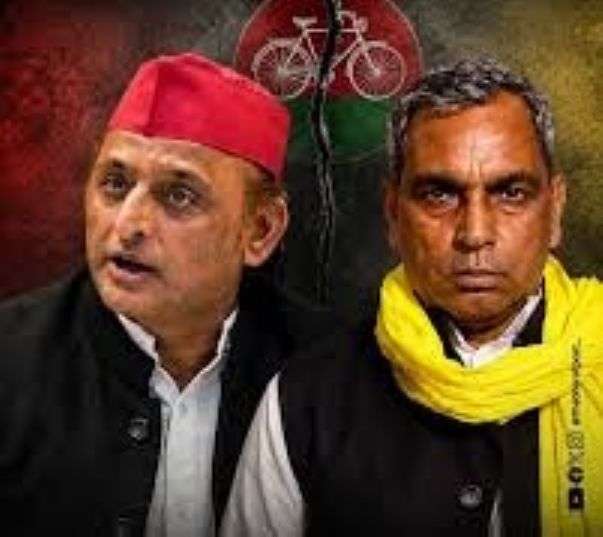
Once-dominant caste-based parties found themselves weakened. The Samajwadi Party and Bahujan Samaj Party in Uttar Pradesh lost their political invincibility. The Rashtriya Janata Dal in Bihar struggled to expand beyond its traditional base. Regional forces in Jammu and Kashmir were reduced considerably. Most significantly, Congress, once a pan-Bharat national movement, has shrunk into a party heavily dependent on a handful of southern states.
Today, its independent governments are limited to Karnataka and Telangana, while it leads a coalition in Kerala. Even these bastions are under pressure as the BJP aggressively expands its footprint.
The consequences are now visible everywhere.
Regional parties are increasingly vulnerable. Legislators and Members of Parliament are abandoning their parties in large numbers. Maharashtra has already witnessed the fragmentation of the Shiv Sena. Rumours of internal unrest continue to surround several other opposition parties.
Why is this happening?
The answer is brutally simple.
Politics has become a profession and politicians cannot afford prolonged unemployment.
Sitting on opposition benches for ten or fifteen years is no longer an attractive proposition. Unlike earlier generations that were willing to spend decades building ideological movements, contemporary politicians increasingly see politics as a career. If the party’s future appears uncertain, they begin searching for better opportunities elsewhere.
Survival has replaced conviction.
Naturally, critics accuse Modi and Shah of engineering these defections. There may indeed be strategic calculations involved. After all, the NDA would undoubtedly benefit from larger numbers in Parliament to push through its ambitious legislative agenda, including delimitation, women’s reservation implementation, simultaneous elections and the Uniform Civil Code.
But blaming everything solely on political strategy would be an oversimplification.
No party can be broken from the outside unless it has already become hollow from within.
The deeper problem is the disappearance of ideology. Most parties today revolve around families, personalities or caste arithmetic rather than enduring principles. The moment leaders and legislators perceive that their political future is insecure, loyalty evaporates.
The tragedy is that Bharat is witnessing the professionalisation of politics without the institutional safeguards that professional systems demand.
Political parties are no longer schools of thought. They have become employment exchanges.
Perhaps that is the biggest warning sign for Bharat’s democracy.
If politics continues to be treated as a profession rather than a mission of public service, defections, break-ups and mergers will become the new normal. Parties will rise and collapse not because of ideological battles, but because individuals will simply migrate to wherever power resides.
The question, therefore, is no longer why parties are breaking up.
The real question is: Can Bharat reclaim the original spirit of politics — service before self — before politics is reduced entirely to a marketplace of careers, calculations, and convenience?


very well written and expounded article on money driven politics of
the day and the slow death of ideology.