Upadhyayula Lakshman Rao
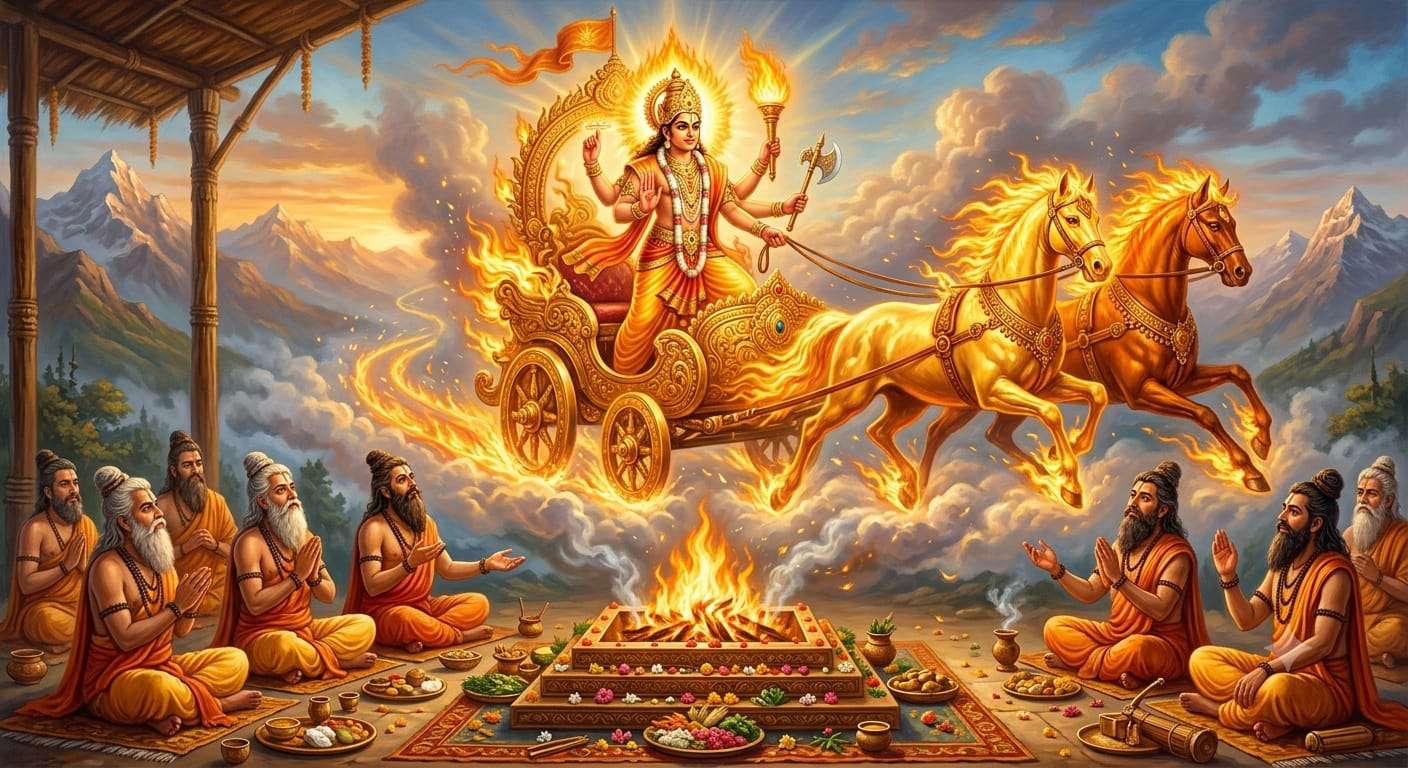
In the measured cadences of the Jagatī and Triṣṭubh metres, the sage Agastya raises a luminous invocation to the divine twins, the Ashvins, whose chariot of benevolent fulfilment is perceived as having arrived at the threshold of the sacred rite. The priests, attuned to subtle vibrations of the sacrificial field, are enjoined to advance with reverence and welcome these celestial physicians through sanctified hymns. In the Vedic vision, sound is not mere utterance but an energetic principle, where mantra operates as a precise modulation of consciousness, aligning the human with the cosmic order.
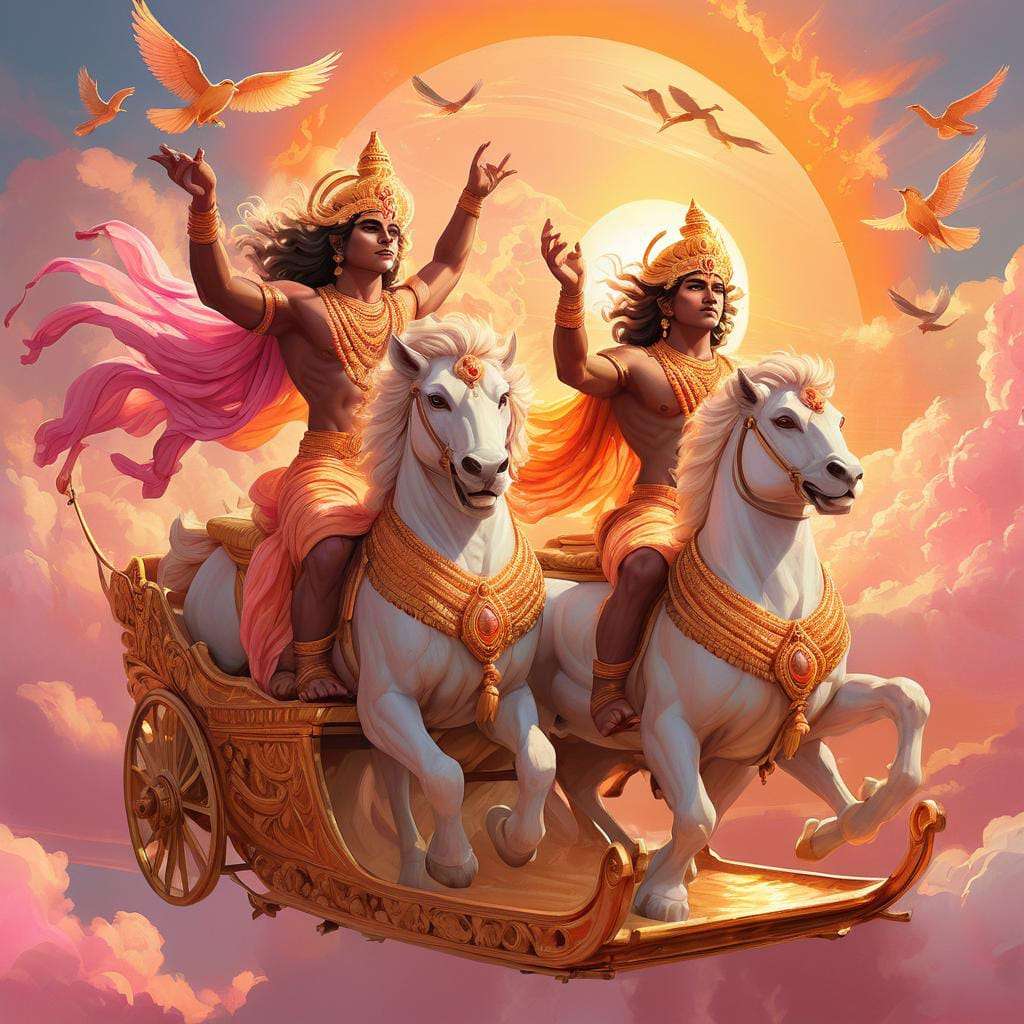
The Aśvins are extolled as meritorious bestowers of boons, radiant in origin and action, whose presence bridges heaven and earth with harmonious efficacy. Their grace once restored Vispala, symbolizing not only physical healing but the restoration of functional integrity—an idea that resonates with early intuitive notions of regenerative science. Their deeds, pure and sanctified, reflect a cosmic ethic where intervention is guided by balance, much like the regulatory principles observed in natural systems. In their dynamism, they are likened to Indra in might and to the Maruts in swift and vibrant motion.
Swift-horsed and supreme among charioteers, the Aśvins are envisioned as masters of directional movement, their vehicle traversing the four quarters with seamless command. This imagery evokes not only divine mobility but an early symbolic grasp of multidirectional forces, akin to the comprehension of vectors in motion. They are invoked to arrive at the sanctified precincts of the yajña, where the priest awaits with offerings, aligning intention, action, and cosmic rhythm. The sacrificial ground becomes a field of transformation, where matter and consciousness interact in a disciplined and meaningful exchange.
Yet the hymn does not merely praise; it also discerns. The sage questions the purpose of their arrival and implores them to reject those who obstruct the sacred order. The imagery of the deceitful or hostile presence, likened to serpentine distortion or the discordant barking of stray forces, reflects an acute awareness of disruption—both external and internal. The Aśvins are called upon to exercise their discerning power, eliminating forces that hinder clarity and progress. This reflects a proto-scientific temperament, where observation, discrimination, and correction are essential for sustaining harmony within a system.
The narrative deepens with the evocative account of the son of Tugra, who, cast into the vast and perilous ocean, finds himself bereft of support, suspended between despair and hope. The Aśvins, in their compassionate ingenuity, deploy not one but four steadfast ships, rescuing him from the abyss and guiding him safely to the shore. This episode, rich in symbolic resonance, mirrors the human condition in moments of existential crisis, where rescue emerges through layered interventions—suggestive of coordinated systems working in unison, much like modern concepts of redundancy and safety in engineering.
The image of the distressed being clinging to a solitary support amidst the boundless waters speaks to the fragile yet resilient nature of human endurance. The question, “Where is that tree?” becomes a philosophical inquiry into the nature of support, stability, and deliverance. The Aśvins’ act of upliftment is not merely physical rescue but an elevation of consciousness, transforming vulnerability into renewed strength. Their glory is thus not only in power but in precision and compassion.
In their human-like accessibility, the Aśvins are invited to accept the hymns crafted with devotion and insight. The yajña of the present day becomes a living continuum of ancient wisdom, where the ritual of Soma symbolizes not intoxication but the refinement of perception and vitality. The sage petitions for nourishment, strength, and abundance—not as mere material gain but as integrated well-being, where body, mind, and spirit are harmonized.
Thus, the hymn stands as a profound synthesis of devotion and discernment, where spiritual aspiration is interwoven with an early scientific sensibility. It reflects a worldview in which the cosmos is intelligible, responsive, and participatory, inviting humanity to engage with it through clarity, discipline, and reverence.