Upadhyayula Lakshman Rao
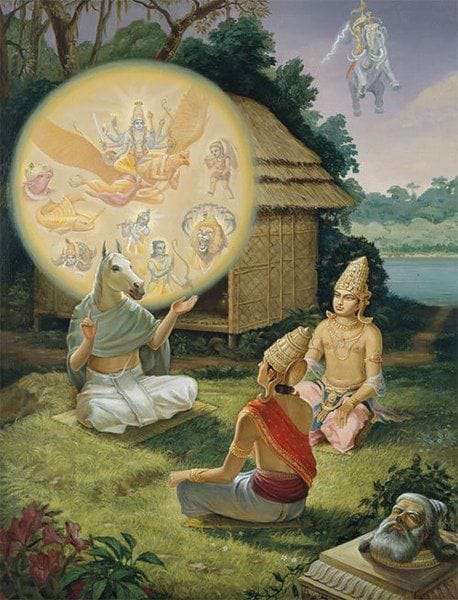
In the measured cadence of the Trishtubh, the sage Agastya raises his contemplative voice to the divine twins, the Ashvins, whose presence bridges the luminous realms of heaven and the sustaining fields of earth. His prayer unfolds not merely as devotion, but as a profound inquiry into the cosmic cycle, wherein nourishment, energy, and life descend from the vastness of space as rain, completing the sacred circuitry of the yajña. The Aśvins, as celestial physicians and benefactors, are invoked as those who carry sustenance through the unseen pathways of the atmosphere, transforming the subtle into the manifest, and ensuring that the sacrificial act harmonizes with the rhythms of nature.
Their radiant horses, described as luminous and swift as the wind, symbolize forces of motion and energy that pervade both the physical and metaphysical domains. These steeds, youthful and auspicious in form, embody the dynamic principles of velocity and vitality, akin to the unseen currents that govern atmospheric movement and precipitation. In this imagery lies an early scientific intuition: the understanding that the same forces that move the winds also bear the clouds, and that the descent of rain is not arbitrary, but part of a grand, ordered system. Thus, the invocation of the Aśvins to arrive at the yajña becomes an appeal for alignment with these natural laws, ensuring prosperity and balance.
Their chariot, vast as the earth and swift as the mind, is a symbol of cosmic mobility and integration. Drawn by two powerful horses, it traverses the realms with elegance and purpose, representing the unity of dual principles—light and motion, matter and energy, heaven and earth. Its capacity to “rain” suggests an understanding of the cyclical transformation of elements, where the celestial becomes terrestrial. The chariot’s grandeur reflects not only divine majesty but also the intricate structure of the universe, where every movement is governed by order and intelligence. To invite this chariot into the sacred precincts is to invite harmony, abundance, and the precise functioning of cosmic law.
The twins themselves are envisioned as embodiments of solar and lunar radiance, free from impurity and resplendent in form. One is the initiator of the yajña, sustaining the world through action and order; the other, born of the heavens, adorns the cosmos with rays and subtle energies. This duality reflects the interplay of visible and invisible forces, the manifest and the latent, suggesting an early recognition of complementary principles that sustain existence. Their golden chariot and their association with radiant steeds further emphasize their role as mediators between realms, guiding the flow of energy that sustains life.
In their functions, one disperses clouds and removes obstacles like Indra, while the other ensures the flow of nourishment through rivers and rains. This division of roles mirrors the processes observed in nature, where atmospheric disturbances lead to rainfall, and water systems sustain life across the land. The hymns recognize that intention, ritual, and natural phenomena are interlinked, and that the offering of oblations is not merely symbolic, but part of a reciprocal relationship with the cosmos. The yajña thus becomes a model of ecological balance, where human action aligns with natural processes.
The rivers, flowing vast and unceasing, are seen as extensions of divine will, reaching the devotees as channels of life and fertility. The Aśvins, as creators and sustainers, are praised through hymns that move in threefold patterns—perhaps reflecting the triadic structure of existence: earth, atmosphere, and heaven. These hymns, carefully composed, are not only acts of praise but also vehicles of intention, carrying the aspirations of the patron toward the divine. The emphasis on their reception and satisfaction underscores the belief that harmony arises when communication between human and cosmic realms is clear and sincere.
The brilliance of their hymn is described as triangular, suggesting stability and balance, much like a संरचना grounded in three points. This geometric metaphor may hint at an early symbolic understanding of structural integrity, whether in ritual, thought, or the cosmos itself. Through the path of yajña, the patrons seek not only material wealth but also alignment with truth and order. The Aśvins, like rain-bearing clouds, are invoked to shower abundance, reflecting the natural cycle of giving and receiving that sustains life.
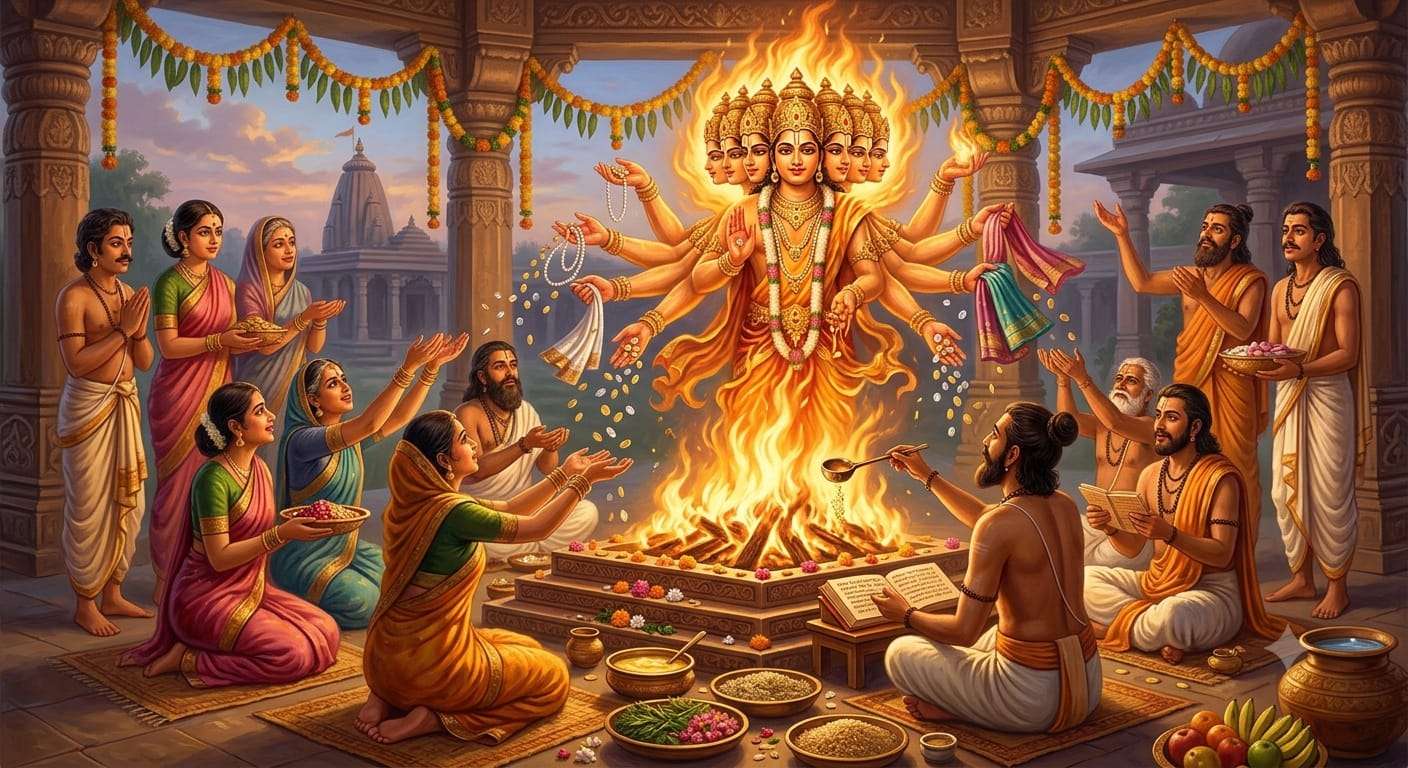
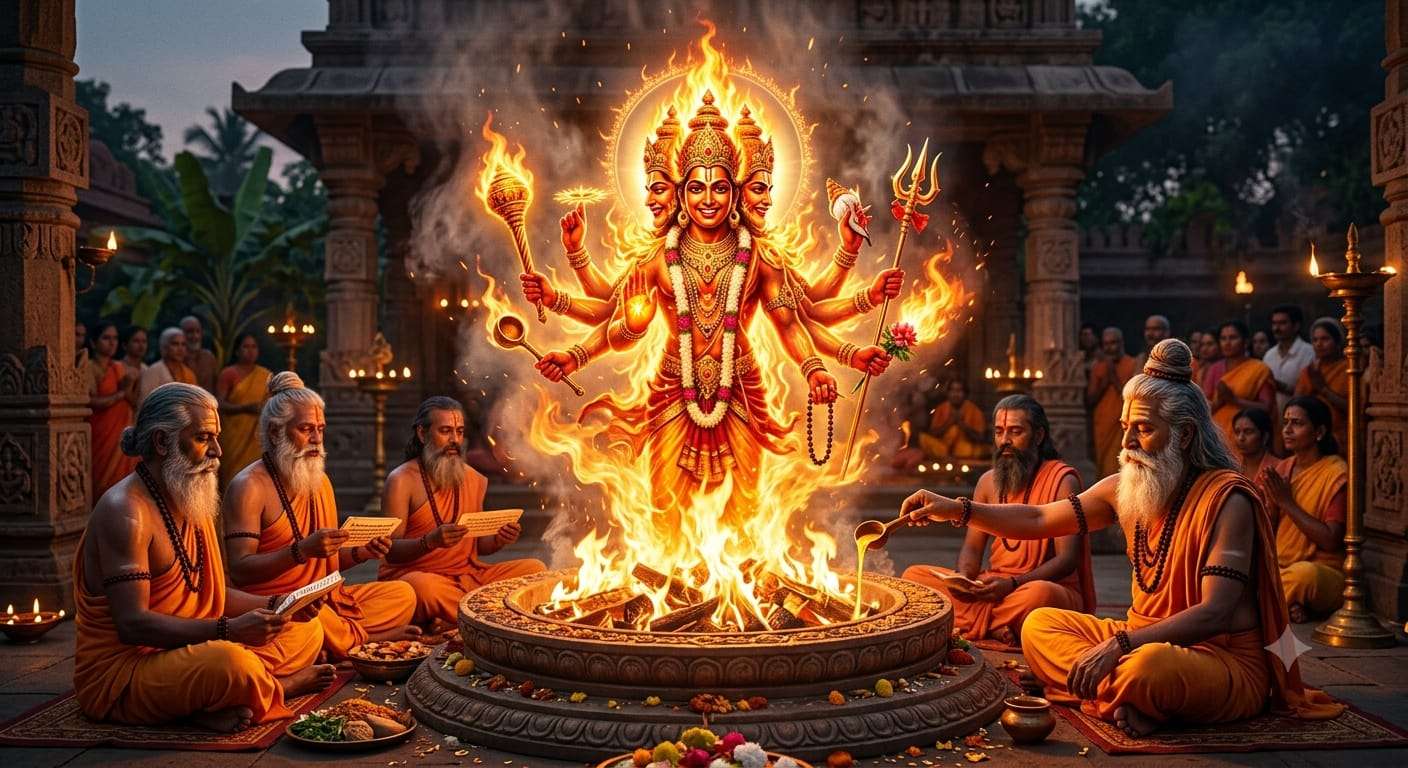
The patron, likened to Pushan, performs the ritual with diligence, offering oblations into the sacred fire as in the worship of Agni and the dawn goddess Usha. The priest’s chants are echoed by the patron, indicating a unity of purpose and participation. In this shared act, the boundaries between officiant and devotee dissolve, and the ritual becomes a collective alignment with cosmic principles. The prayer concludes with a humble yet profound request—for food, strength, and longevity—essentials that are both biological necessities and symbols of sustained harmony with the universe.