Upadhyayula Lakshman Rao
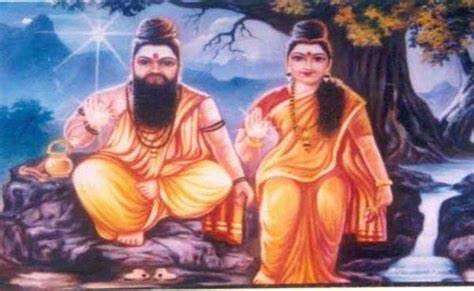
In the contemplative stillness of Vedic life, where austerity and inward vision shaped the rhythm of existence, the sage Agastya, his devoted consort Lopamudra, and the disciplined disciple Brahmachari stand as embodiments of the eternal dialogue between restraint and fulfillment. Their invocation to the divine principle of Rathi, expressed through the measured cadences of Tristubh and Bruhati chandas, reflects not merely a prayer, but a profound inquiry into the nature of human longing, duty, and transcendence.
Lopamudra, in her deeply reflective utterance, reveals the quiet erosion of time upon the human frame. She speaks not with complaint, but with clarity born of long endurance. Having served through countless dawns, each Usha bearing witness to her dedication, she acknowledges the diminishing vitality of the body and the fading of physical grace. Yet within this awareness arises a deeper question—how does desire persist even as form declines? Her words illuminate a timeless psychological truth: that longing is not merely of the body, but rooted in consciousness itself, extending beyond the visible into the subtle.
The sage, hearing her, does not dismiss her concern, nor does he deny the presence of desire. Instead, he reframes it within a higher order of understanding. He affirms that their austerities are not futile, for the divine preserves those who walk the path of truth. He speaks of the possibility of embracing both restraint and fulfillment, suggesting that material and spiritual attainments need not stand opposed when governed by wisdom. His admission of arising desire is not weakness, but honesty—an acknowledgment that even the illumined mind encounters impulses, yet holds the power to guide them.
Within this sacred exchange lies an early recognition of the balance between renunciation and participation in life. The desire for union is neither rejected nor blindly pursued; it is sanctified through awareness and mutual consent. Lopamudra’s rightful place beside her husband is affirmed not as submission, but as a harmonious alignment of purpose. The union of husband and wife becomes a sacred act, reflecting cosmic principles of creation, where aspiration and fulfillment meet in equilibrium.
The disciple Brahmachari, observing this subtle interplay, adds his own voice through hymnic contemplation. His reflection upon Soma, likened to the cooling and nourishing essence of the moon, reveals an understanding of the mind’s restless nature. He recognizes that human desire multiplies, yet seeks a state where satisfaction arises not from excess, but from inner balance. His aspiration is not merely personal comfort, but the continuity of wisdom through progeny, born of a union that is both righteous and elevated.
Agastya’s life itself becomes a testament to integrated living. Through countless dawn meditations, he has invoked strength, sought continuity through offspring, and performed rigorous penance. His achievements are not fragmented pursuits, but unified expressions of a life aligned with cosmic order. The blessings he receives are not accidental, but the natural consequence of a mind attuned to truth and discipline.
In this narrative, the desire for progeny is neither base nor indulgent; it is understood as a sacred responsibility, approached through the sanctity of marriage. The disciple’s wish for his teacher’s lineage to continue reflects not personal attachment, but reverence for knowledge and its preservation. It highlights the deep relational bond where the well-being of the teacher is inseparable from the spiritual growth of the disciple.
The communication between the sage and his wife, mediated through reverence to the divine feminine principle, reveals a refined sensitivity. It signifies that even intimate desires are elevated through respect, consent, and spiritual awareness. Such a relationship, grounded in mutual dignity and independence, transcends the transient and becomes enduring, reflecting an ideal where love, duty, and wisdom coexist without conflict.
Thus, this ancient dialogue stands not merely as a tale of individuals, but as a mirror to the human condition—where desire is neither denied nor deified, but understood, guided, and harmonized within the vast framework of spiritual realization.