



Sri Khadgeshwari Brahmasthana is one of the most revered Shakti shrines in the Tulunadu region of Karnataka, located at Padubidri in Udupi district. Situated amidst a sacred Nagabana (serpent grove), the temple is dedicated to Goddess Khadgeshwari, also known as Vanadurga. Unlike conventional temples, this ancient Brahmasthana preserves the age-old traditions of Shakti and Naga worship and is renowned throughout coastal Karnataka for the unique Dakke Bali ritual, held once every two years.
Sri Khadgeshwari Brahmasthana has no grand stone temple or towering gopuram. The Goddess is worshipped amidst a sacred Nagabana under ancient trees. Traditional wooden structures, oil lamps and the natural surroundings preserve the unique Brahmasthana style of worship followed in Tulunadu.
The presiding deity is Goddess Khadgeshwari, also worshipped as Vanadurga. She is believed to have manifested here in a Swayambhu (self-manifested) form in the midst of the sacred forest. Along with the Goddess, devotees worship the Panchadaivikas—Brahma, Naga, Raktheshwari, Nandigona and Kshetrapala—who are regarded as the divine guardians of the shrine. Devotees visit the temple seeking protection, prosperity, relief from obstacles and blessings for family welfare.
Sri Khadgeshwari Brahmasthana has no grand stone temple or towering gopuram. The Goddess is worshipped amidst a sacred Nagabana under ancient trees. Traditional wooden structures, oil lamps and the natural surroundings preserve the unique Brahmasthana style of worship followed in Tulunadu.
For centuries, Sri Khadgeshwari Brahmasthana has been an important spiritual centre in coastal Karnataka. It preserves the ancient Brahmasthana tradition of worshipping divine energies in sacred groves. The shrine is traditionally managed by the local Bunt community and shares a close ritual connection with Sri Mahalingeshwara Mahaganapathi Temple, from where the Dakke Bali procession begins.
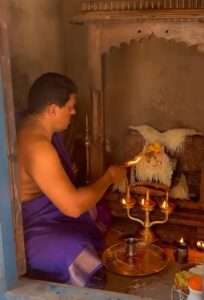
According to local tradition, this sacred grove was once a dense forest where great sages performed penance. Pleased with their devotion, Adi Shakti manifested herself here as Goddess Khadgeshwari, holding a divine sword (Khadga) to destroy evil and protect righteousness. As the Goddess appeared on her own without human consecration, the place became revered as a Swayambhu Udbhava Sthala.
The surrounding Nagabana was believed to be inhabited by sacred serpent deities and guardian spirits who protected the forests, farmlands and nearby villages. The Goddess accepted them as her divine attendants, and together they continue to bless devotees with health, prosperity, protection from negative forces, and harmony in family life. This ancient tradition of worshipping both the Goddess and the guardian deities continues to this day.
Dakke Bali is the temple’s most sacred and distinctive ritual, performed once every two years as part of the ancient Tulunadu tradition of Nagaradhane (serpent worship). The festival begins with a grand procession from Sri Mahalingeshwara Mahaganapathi Temple to the Khadgeshwari Brahmasthana, accompanied by the rhythmic beats of the traditional Dakke drum, from which the ritual derives its name.
At the sacred grove, colourful serpent mandalas (Nagamandalas) are created using natural colours, offerings are made, and a chosen Pathri (oracle), guided by the Nagakannika, enters a divine trance and performs the sacred dance believed to invoke Goddess Khadgeshwari and the serpent deities. The rituals continue through the night under the light of traditional oil lamps. Devotees believe that participating in Dakke Bali removes obstacles, grants prosperity, protects families, cures Naga Dosha and fulfils sincere prayers. As a mark of reverence, photography and videography are traditionally prohibited during the ritual.
Navaratri is celebrated with special pujas and devotional programmes. The biennial Dakke Bali Mahotsava, held during the Tulu months of Makara and Meena, is the temple’s biggest festival, attracting thousands of devotees. Annual Brahmasthana pujas and Naga-related rituals are also observed.

