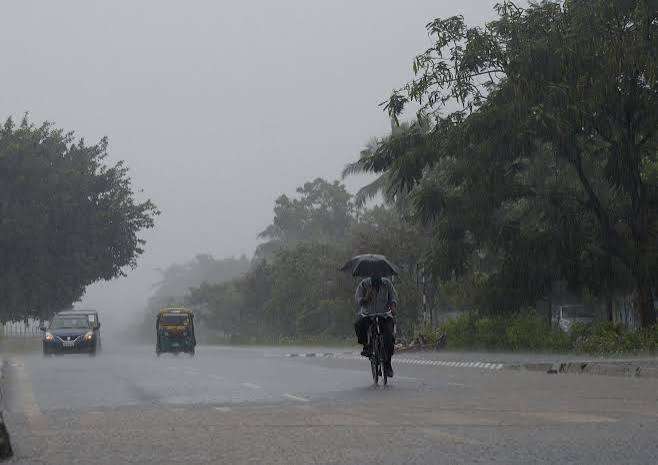
Bhubaneshwar: The India Meteorological Department (IMD) on Sunday issued a ‘red warning’ for extremely heavy rainfall in parts of Odisha as a fresh low-pressure area has formed in the Bay of Bengal.
It advised fishermen not to venture into the sea along and off the West Bengal and adjoining Bangladesh, Odisha and North Andhra Pradesh coasts from August 16 to 18.
A fresh low-pressure area has formed as Odisha faces a flood situation in six districts, where around one lakh people have been evacuated to relief centres due to inundation of their villages.
The previous low-pressure area was formed in the Bay of Bengal on August 12, which later intensified into a depression and triggered heavy rain, leading to a flood situation in northern districts.
“The IMD on Sunday issued the red warning as some parts of Odisha are likely to receive over 20 cm of rain within 24 hours,” an official said, adding that the administration needs to take action to reduce the impact of the calamity.
According to a morning bulletin issued by the IMD, “a low-pressure area (LoPA) has formed over northwest and adjoining West Bengal-North Odisha coasts. It is very likely to move nearly northwestwards and become more marked during the next 24 hours.”
Under its influence, squally weather with wind speed reaching 40-50 gusting to 60 kmph is very likely to prevail over northwest and adjoining west central Bay of Bengal and along and off West Bengal and adjoining Bangladesh, Odisha and North coastal Andhra Pradesh from August 16 to August 18.
Keeping in view the IMD forecast, the state government has put all district collectors on alert, while Additional Chief Secretary (ACS), Housing & Urban Development Department Usha Padhee has directed all urban authorities to remain on high alert and ensure prompt, coordinated and citizen-centric response to any emerging situation.
As a confidence-building measure, Padhee also directed urban authorities to proactively communicate their preparedness and field actions through regular press briefings and social media updates.