Upadhyayula Lakshman Rao
In the resonant cadence of Tristubh chandas, the sage Agastya raises a luminous invocation to the Aswins, the divine twins who traverse the thresholds between night and dawn, matter and vitality, mortality and renewal. Their chariot, adorned with subtle brilliance and guided by steeds of auspicious gait, is not merely a vehicle but a symbol of cosmic motion itself—the ceaseless dynamism that carries intention into manifestation. The axis of their chariot becomes the metaphysical pivot through which desires align with destiny, suggesting a profound Vedic insight: that motion governed by harmony yields fulfillment. Thus, the prayer is not a request alone, but an alignment with universal rhythm.
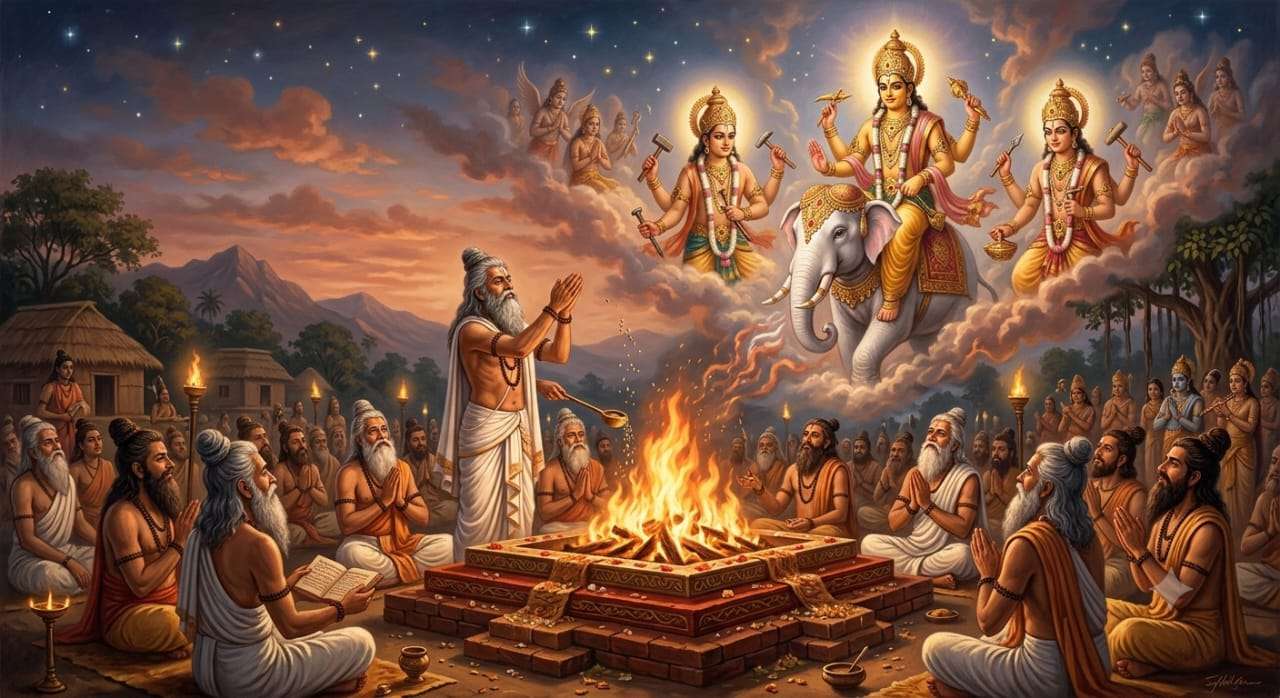
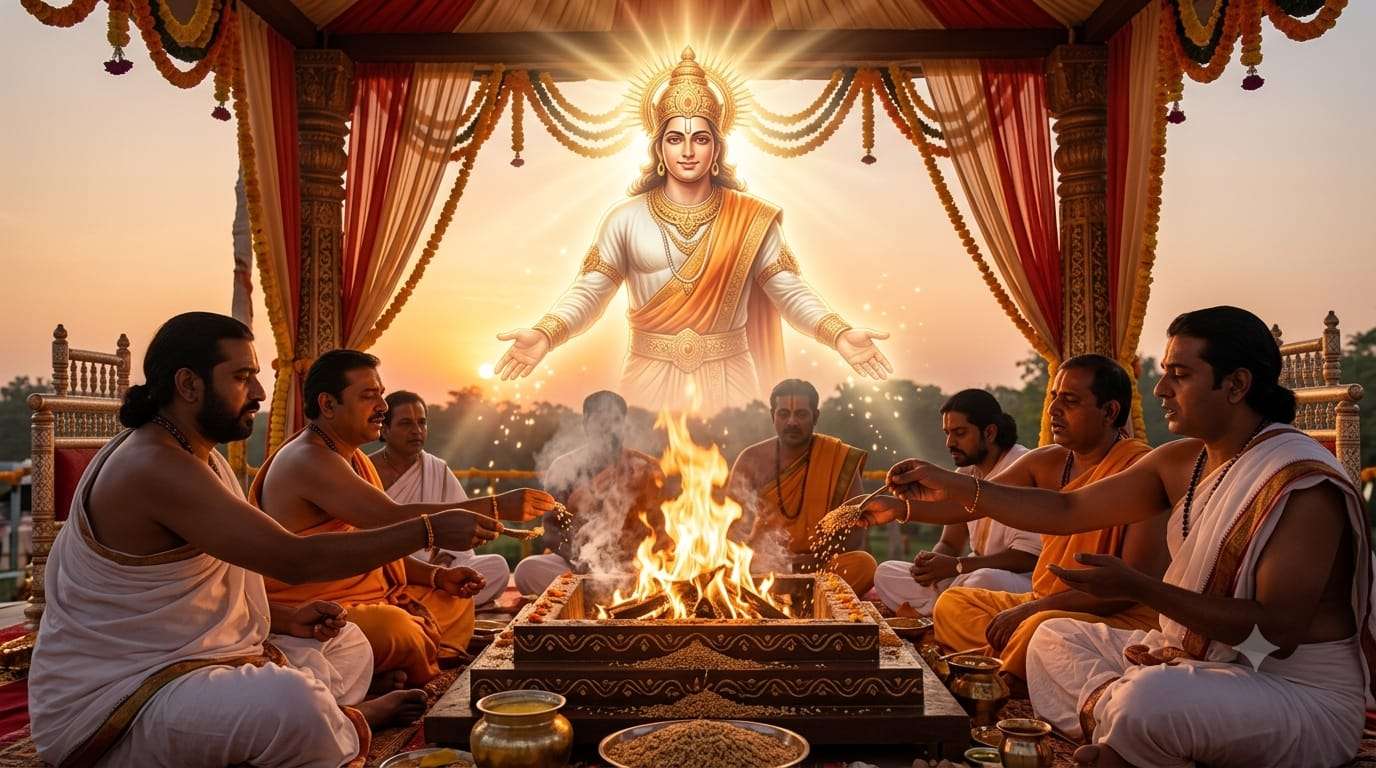
At the sacred juncture of dawn, when Usha unveils her radiant presence, the hymn situates the Aswins within the liminal moment where darkness yields to illumination. The soma, described as a flowing elixir of consciousness, awaits them in the yajna precincts, embodying both a ritual offering and a symbolic distillation of life’s essence. In scientific temperament, this reflects an intuitive recognition of cycles—circadian rhythms, renewal processes, and the transformation of energy. The invitation to partake in soma is thus an invocation of participation in cosmic reciprocity, where divine forces and human intention co-create order.
The hymn recalls the primordial emergence of nourishment, attributing to the Aswins the establishment of milk within cows—a poetic articulation of sustenance embedded within nature. This imagery carries both agricultural realism and symbolic depth: milk as life-sustaining purity, and the cow as a vessel of abundance. The mention of “pure milk organs” subtly reflects an observational awareness of biological function, rendered through sacred metaphor. Such passages reveal how Vedic seers perceived nature not as inert matter, but as a living system infused with intelligence and purpose.
The patron, vigilant like a hidden observer within dense forests, represents the inwardly alert human consciousness—attuned, disciplined, and reverent. His prayer is not loud but precise, emerging from a state of purity and intention. The yajna hall becomes a microcosm of the cosmos, where offerings symbolize transformation and the act of invocation mirrors the human quest for alignment with higher principles. The Aswins are invited not merely as deities, but as facilitators of balance, healing, and continuity.
The narrative recalls the aid extended to the sage Atri, for whom streams of milk and clarified butter were made to flow. This is not only a gesture of divine benevolence but an allegory of restoration—where scarcity is transformed into abundance through alignment with cosmic forces. In a broader sense, it reflects the Vedic understanding that harmony with natural laws yields prosperity, while dissonance leads to depletion. The Aswins, in their human-like accessibility, bridge the divine and the terrestrial, embodying responsiveness to sincere invocation.
The yajna, nourished by Agni, becomes a living process—a transformation of matter into subtle energy, of offering into resonance. The soma flowing like nectar from the chariot’s wheel evokes a vivid image of continuity and cyclical regeneration. Here, the wheel symbolizes time, motion, and recurrence, suggesting an early conceptualization of cyclical systems that govern both cosmos and consciousness. The ritual is thus not static but dynamic, mirroring the perpetual motion of existence.
The sage, aged and reflective, speaks with humility and urgency, seeking release from the weight of time and the residue of action. His plea for longevity and purification is deeply human, yet framed within a cosmic dialogue. The Aswins are invoked as restorers—not only of physical vitality but of moral and spiritual equilibrium. Their grace is seen as the force that reorders imbalance, extending life not merely in years but in clarity and purpose.
The hymn further celebrates the Aswins as bestowers of auspiciousness, whose steeds—Niyut—carry the potential of nourishment across the earth. The chanting of priests, likened to the movement of wind, reflects the vibrational power of sound. In this, one finds a proto-scientific appreciation of resonance, frequency, and the effect of sound on environment and psyche. The hymns are not passive recitations but active forces, shaping reality through structured vibration.
As the invocation intensifies, the sage’s voice becomes a confluence of devotion and poetic precision. The multitude of hymns, reverberating like conches, awaken the divine presence. The Aswins are envisioned as participants in the yajna, moving with purpose like priests themselves, embodying the principle that divinity is not distant but engaged. Their chariot, unbreakable and ever-refreshing, traverses space as a symbol of enduring order and resilience.
In its entirety, the hymn stands as a profound synthesis of spiritual insight and observational intelligence. It reflects a worldview where ritual, nature, and consciousness are interwoven, and where divine forces are understood not as abstractions but as principles embedded within the fabric of existence. The Aswins, in their duality, represent balance—between motion and stillness, offering and reception, human aspiration and cosmic response. Through Agastya’s voice, the hymn becomes a timeless expression of the human quest to harmonize with the universe and to find renewal within its eternal rhythms.