



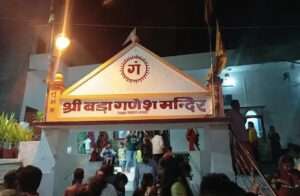
Lal Diggi Bada Ganesh Temple is one of the most revered Ganesh temples in Azamgarh district of Uttar Pradesh. The temple is situated near Ram Ghat on the sacred banks of the Tamsa (Tamasa) River at Lal Diggi Bandh in Azamgarh city.
The exact age of the temple is not known. However, local traditions regard it as an ancient shrine that has existed for many generations. Over time, it has become one of the most prominent centers of Ganesh worship in the region and continues to attract devotees throughout the year.
The presiding deity is Lord Ganesha, worshipped as Bada Ganesh Ji. He is also affectionately known as Moonga Ganesh and Kundli Nivarak Ganesh. The idol is believed to be Swayambhu (self-manifested), making the shrine especially sacred in the eyes of devotees.
Lord Ganesha is worshipped here as the remover of obstacles, bestower of wisdom, prosperity, success, and family well-being. A unique belief associated with the temple is that Bada Ganesh Ji helps devotees overcome difficulties caused by adverse planetary influences and astrological doshas. Because of this, many people visit the temple seeking relief from delays in marriage, career setbacks, financial problems, and other life challenges. The temple is also regarded as a wish-fulfilling shrine where devotees pray for education, health, prosperity, and progeny.
The temple follows a simple North Indian architectural style. The sanctum houses the sacred idol of Lord Ganesha, while the surrounding complex provides space for worship, religious gatherings, and devotional activities. Although the temple is not known for elaborate architectural ornamentation, its sacred atmosphere and location near the holy Tamsa River enhance its spiritual charm.
The temple has been an important center of devotion for centuries and is deeply connected with the religious heritage of the Tamsa River region. Through generations, devotees have preserved the traditions associated with Bada Ganesh Ji, and the temple gradually gained prominence as one of the most respected Ganesh shrines in Azamgarh.
The faith of devotees and numerous accounts of fulfilled prayers contributed significantly to the temple’s popularity. Today, it remains a major spiritual landmark where people from different parts of Uttar Pradesh come to seek the blessings of Lord Ganesha.
The sacred legend of Lal Diggi Bada Ganesh Temple is closely connected with the holy Tamsa River, an ancient river revered in the Ramayana tradition. According to local belief, Lord Rama, accompanied by Sita and Lakshmana, passed through the region and spent time on the banks of the Tamsa River during the early days of his exile. The river and its surroundings have therefore been regarded as sacred since ancient times.
The region is also associated with Maharishi Valmiki, the revered sage who composed the Ramayana. Local traditions state that the tranquil banks of the Tamsa provided an ideal setting for meditation and spiritual contemplation. It is believed that divine inspiration descended upon the sage in this sacred region, strengthening its importance in Hindu religious history.
According to temple tradition, the idol of Bada Ganesh Ji was not carved or installed by human hands but manifested on its own at this holy site. The appearance of the self-manifested deity was regarded as a divine blessing upon the region. Devotees believed that Lord Ganesha himself chose this sacred location near the Tamsa River to reside and protect his devotees.
Over the centuries, countless devotees are said to have experienced the grace of Bada Ganesh Ji after offering sincere prayers at the temple. Stories of obstacles being removed, long-pending wishes being fulfilled, and families receiving divine blessings spread throughout the region. These experiences strengthened the faith of local people and transformed the shrine into one of the most important Ganesh temples in eastern Uttar Pradesh.
The temple’s association with the sacred Tamsa River, Lord Rama, Maharishi Valmiki, and the self-manifested form of Lord Ganesha gives it a unique place in the spiritual landscape of Uttar Pradesh. Even today, devotees visit the temple with unwavering faith, believing that Bada Ganesh Ji listens to their prayers and guides them through life’s challenges.
Ganesh Chaturthi is the temple’s most important festival and attracts large numbers of devotees.
Sankashti Chaturthi is observed every month with special prayers to Lord Ganesha.
Wednesdays, considered auspicious for Ganesh worship, also witness significant devotional activity at the temple.

