



The tragic death of an IIT Bombay student last week has once again opened a deeply uncomfortable debate: are some of Bharat’s finest educational institutions increasingly being dragged into caste and political narratives before the facts have been fully established?
I raise this question deliberately—and as my personal view.
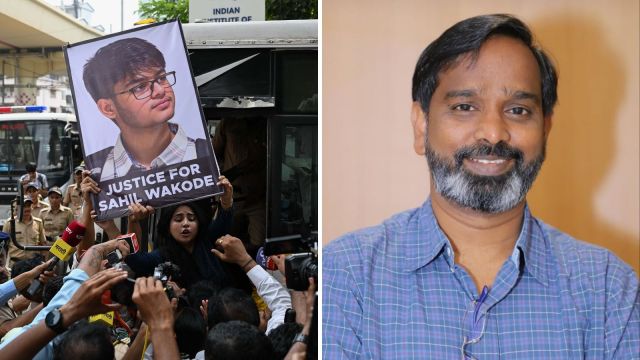
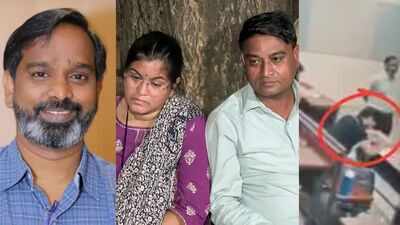
Sahil Wakode, a second-year student at IIT Bombay, died by suicide on September 18 after reportedly being caught using a mobile phone during an examination and allegedly uploading an examination paper to an AI platform. His parents subsequently alleged caste-based harassment and discrimination. Based on their complaint, police registered a case invoking provisions of the SC/ST (Prevention of Atrocities) Act and provisions relating to abetment of suicide. IIT Bombay has maintained that the student had not previously complained of caste discrimination to its SC/ST Cell or administration. The matter remains under investigation.
That distinction is crucial.
An allegation is an allegation until an investigation establishes what actually happened.
Yet the public narrative surrounding this tragedy appears to have moved much faster than the investigation. Students have protested, the institute has faced criticism over its handling of the matter, and Professor Suryanarayana Doolla was relieved of his deanship amid the controversy. At the same time, reports indicate that a section of faculty has supported him and disputed the characterisation of his conduct.
I therefore ask: why should an individual tragedy immediately become proof of institutional caste discrimination?
I am not suggesting that caste discrimination does not exist. Nor am I arguing that allegations by a grieving family should be ignored. Quite the opposite. If a student was genuinely humiliated, discriminated against or subjected to caste-based abuse, the allegation must be investigated thoroughly and anyone found responsible must face the law.
But the reverse must also hold.
If an allegation cannot ultimately be substantiated, it should not become an established political fact merely because it fits a convenient narrative.
I would go further. If caste discrimination is genuinely suspected, why not demand evidence, testimony, CCTV footage, digital records, communications and the complete sequence of events? IIT Bombay has an SC/ST Students Cell precisely to address complaints relating to caste discrimination and student grievances.
That institutional mechanism exists for a reason.
The present controversy reportedly involves examination-hall CCTV footage and other evidence that may help investigators reconstruct what actually happened. The institute’s position concerning the examination incident and the family’s allegations concerning caste-based treatment are separate questions that must be examined separately.
That is how a constitutional democracy is supposed to function.
I would therefore bell the cat and call a spade a spade: there is a growing tendency in public discourse to convert every institutional failure, student grievance or personal tragedy involving an SC/ST student into evidence of systemic caste oppression before the underlying facts are conclusively known.
That tendency itself deserves scrutiny.
Protect the Institution, Protect the Student
IIT Bombay is not merely another college. It is one of Bharat’s globally recognised institutions, producing scientists, engineers, entrepreneurs and researchers whose work has contributed enormously to the country’s technological capabilities.
These institutions must certainly be held accountable.
But accountability and vilification are not the same thing.
If the reputation of every premier institution can be damaged through allegations that remain untested, who ultimately suffers?
The students themselves—irrespective of caste.
There is another uncomfortable issue that we need to discuss openly: the evolution of affirmative action.
Reservation was conceived against the background of a society in which generations of people had suffered exclusion and discrimination. Nobody should dispute the constitutional commitment to correcting historical disadvantage. The entry of students from historically deprived communities into India’s premier institutions is a social achievement, not something to be apologetic about.
But social justice cannot mean presuming guilt.
Nor can equality mean permanently treating one section as inherently disadvantaged and another as inherently privileged or suspect.
That would merely replace one form of prejudice with another.
And this is where the younger generation needs to understand India’s constitutional history rather than inherit slogans from either side.
A particularly important point is often misunderstood.
The Constitution originally placed a 10-year time limit on reservation of seats for SCs and STs in the Lok Sabha and State Legislative Assemblies under Article 334. Parliament subsequently extended that period through successive constitutional amendments as it was considered that the underlying conditions had not sufficiently changed. The Constitution now provides for SC/ST legislative reservation for 80 years from the commencement of the Constitution.
But let us be equally precise: that constitutional sunset provision concerned political representation in legislatures. It did not prescribe a 10-year or 15-year expiry for reservations in education or public employment.
This distinction matters.
Yet the broader constitutional lesson remains relevant: the framers did not approach affirmative measures as an unquestionable principle immune from review.
A constitutional democracy can recognise historical injustice while also asking whether a particular remedy is achieving its intended objective.
That is the conversation Bharat needs today.
Entitlement or Opportunity?
My concern is not with reservation itself. My concern is with the mentality that can develop around any long-standing benefit—that something originally conceived as a means of social advancement gradually comes to be regarded as an eternal entitlement.
That distinction is fundamental.
A reservation seat is an opportunity created by public policy. It should never become a licence to demand immunity from academic standards, institutional discipline or scrutiny.
Nor should a student from a reserved category be made to feel that admission itself is a permanent stigma.
The objective should be empowerment—not perpetual political dependency.
After more than seven decades of the Republic, therefore, surely it is legitimate to ask whether India’s reservation policies require a comprehensive, evidence-based review.
How many generations have benefited?
What measurable improvements have occurred in education, income, representation and social mobility?
Which communities remain genuinely deprived?
Are benefits reaching the most disadvantaged within eligible groups?
Are there sections that have progressively moved into the mainstream and therefore require a different form of assistance?
Should economic and educational disadvantage receive greater weight in some areas?
These are not anti-Dalit, anti-Adivasi or anti-reservation questions.
They are questions of public policy.
And if the answer after such an exercise is that reservation remains necessary in particular sectors or for particular groups, it should continue with clearly defined objectives. If the evidence shows that certain interventions have achieved their purpose, they should be redesigned rather than allowed to continue indefinitely simply because successive governments fear the political consequences of reform.
That is how mature democracies evolve.
Neither Blind Defence Nor Blind Accusation
The IIT Bombay controversy therefore offers a much larger lesson.
If discrimination occurred, expose it.
If a professor abused his position, establish it and punish him according to law.
If the student was unfairly treated because of caste, the institution must answer for it.
But if the evidence does not establish caste discrimination, then the allegation should not be allowed to become a permanent indictment of the institution or the individual.
Similarly, the fact that colleagues may speak highly of an accused professor cannot by itself disprove an allegation. Character references are relevant, but they are not evidence of what happened in a particular incident.
That is precisely why investigation and due process matter.
Neither blind defence nor blind accusation is justice.
Bharat is now attempting to build institutions capable of competing globally in artificial intelligence, semiconductors, quantum technology, space, biotechnology, defence and advanced manufacturing. The country needs its brightest young minds to believe that merit, opportunity, fairness and institutional support can coexist.
Our campuses cannot become battlegrounds where every tragedy is immediately interpreted through a caste, political or ideological lens.
But neither can genuine discrimination be swept under the carpet.
The answer lies somewhere far more demanding: evidence.
Investigate everything.
Hear everyone.
Protect the student.
Protect due process.
Punish proven discrimination.
Punish proven wrongdoing.
But do not convict anyone through television studios, political speeches or social media.
And let us educate the younger generation about one more fundamental truth: constitutional safeguards are instruments of justice, not hereditary entitlements.
They were created to correct historical disadvantage and expand opportunity. Their continuation, design and scope should therefore remain matters for constitutional democracy, evidence and public debate—not something that any generation can automatically assume will exist forever.
I am prepared to bell the cat.
If discrimination exists, I will demand that it be exposed.
If there is no evidence of discrimination, I will equally insist that the allegation not be allowed to become a permanent stain on Bharat’s institutions.
This is not about protecting a professor.
It is about protecting institutional credibility.
It is not about denying social justice.
It is about ensuring that social justice ultimately produces equality, dignity and independence—not permanent dependence on political patronage.
And above all, it is about ensuring that the tragic death of a young student does not become merely another political weapon in a society already carrying far too much caste baggage.
Unless somebody speaks out against the habit of converting every tragedy into a discrimination narrative before the facts are known, the cry of discrimination will never die.
I am willing to bell the cat.


Very forthright and well written. it’s high time a relook at the whole reservation policy be made so that it is a win win for one and all in the society.