



Titlagarh Dhabaleswar Mahadev Temple is situated on Kumuda Hill (Kumuda Pahad) near Titlagarh in Balangir district of Odisha. Nestled amidst rocky hills and natural surroundings, the temple is one of the most revered Shiva shrines of western Odisha. The temple is easily accessible from Titlagarh town and attracts devotees from Balangir, Kalahandi, Nuapada, and neighboring regions throughout the year.
The exact age of the temple is not known. However, local traditions consider the shrine to be ancient, with worship having continued for several generations. While the present structures have undergone renovations over time, the sacred cave and the self-manifested Shiva Lingam are believed to have been revered since antiquity.
The presiding deity of the temple is Lord Shiva, worshipped as Dhabaleswar Mahadev. The Shiva Lingam enshrined within the cave is believed to be Swayambhu (self-manifested). Devotees visit the temple seeking blessings for health, prosperity, protection from hardships, spiritual growth, and inner peace.
The temple is unique because its sanctum is located inside a natural cave on Kumuda Hill. Unlike conventional temples, the shrine combines natural geological formations with simple temple architecture. The cave itself serves as the garbhagriha (sanctum sanctorum), creating a serene and spiritual atmosphere. The presence of a Swayambhu Shiva Lingam within a natural cave sanctum makes Dhabaleswar Mahadev Temple a rare example of a shrine where nature and worship coexist in their most ancient form.
The origins of the temple are closely connected with the sacred cave and the naturally manifested Shiva Lingam worshipped by local devotees. Over the centuries, the shrine became an important pilgrimage center for devotees across western Odisha. Although no authenticated inscriptions or archaeological records have been found to establish its exact age, the temple has been preserved through generations of local devotion and remains one of the region’s most revered Shiva shrines.
According to the temple’s preserved local tradition, Lord Shiva manifested himself as a Swayambhu Shiva Lingam within the sacred cave of Kumuda Hill. Long before the construction of a formal temple, the cave was regarded as a holy place by ascetics and villagers living in the region. Ancient sages are believed to have performed intense penance and meditation amidst the serene hills and experienced the divine presence of Mahadev within the cave.
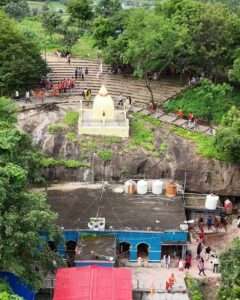
Over time, these spiritual experiences led local devotees to recognize the sanctity of the cave. Worship of the self-manifested Lingam gradually became established, and the deity came to be revered as Dhabaleswar Mahadev. The shrine evolved into an important center of devotion where devotees gathered to seek Lord Shiva’s blessings.
A deeply rooted local belief states that Lord Shiva chose this cave as his abode to bless and protect the people of this region, which is known for its harsh climatic conditions and extreme summer temperatures. Devotees believe that the cave represents a manifestation of Mount Kailasa, the celestial abode of Lord Shiva, and that Mahadev’s divine energy continuously permeates the sacred space.
One of the most remarkable aspects associated with the temple tradition is the naturally cool atmosphere inside the cave. Despite Titlagarh being one of the hottest regions of Odisha, with summer temperatures often exceeding 45°C and sometimes approaching 50°C, the cave remains surprisingly cool throughout the year. Devotees regard this phenomenon as a visible sign of Lord Shiva’s divine presence and grace. Many believe that just as the cave provides relief from the scorching heat outside, Mahadev protects devotees from the hardships, anxieties, and sufferings of worldly life.
According to local faith, sincere prayers offered before Dhabaleswar Mahadev help remove obstacles, bring mental peace, grant courage during difficult times, and promote spiritual growth. The serene atmosphere of the cave naturally inspires meditation, devotion, and self-reflection, making the temple a cherished spiritual destination for countless pilgrims.
Maha Shivaratri is the most important festival celebrated at the temple and attracts thousands of devotees from across western Odisha.
The holy month of Shravana (July–August) is also observed with special pujas, abhishekams, and devotional activities dedicated to Lord Shiva.
Mondays during the Shravana month are considered especially auspicious and witness large gatherings of devotees who come to offer prayers and seek the blessings of Dhabaleswar Mahadev.

