MS Sparsha
India’s territorial unification is usually told through familiar names—Sardar Vallabhbhai Patel, the princely states and the monumental task of bringing hundreds of disparate territories into the Union. But hidden in that larger story is an extraordinary episode that sounds almost fictional: for seven years, a tiny territory existed as a self-governing “free” enclave inside India, administered locally and operating in a delicate legal limbo between liberation and formal accession.
That forgotten chapter is the story of Free Dadra and Nagar Haveli—and the men and women who quietly made it possible.
When India became independent in 1947, Portugal refused to surrender its possessions on the subcontinent. Dictator António de Oliveira Salazar remained determined to retain Goa, Daman, Diu, Dadra and Nagar Haveli as Portuguese territories.
Dadra and Nagar Haveli presented a peculiar geographical problem. They were two tiny Portuguese enclaves, completely surrounded by Indian territory. Yet New Delhi, wary of provoking an international confrontation with a European power and NATO member, did not immediately resort to military action.
The breakthrough came not from a conventional army operation but from local nationalists and volunteers.
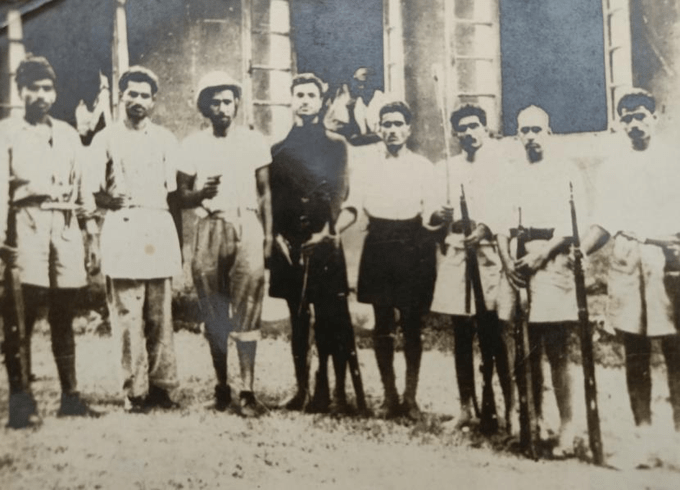
In July 1954, activists associated with the Azad Gomantak Dal, the United Front of Goans and other nationalist groups, with participation from volunteers including RSS activists Raja Wakankar and Nana Kajrekar, moved against Portuguese authority. Portuguese police posts were taken, resistance collapsed and the Portuguese flag was lowered.
Dadra was liberated on July 22. Nagar Haveli followed, and on August 2, 1954, Silvassa—the capital—was taken, effectively ending Portuguese control over the enclaves.
There was, however, a problem that liberation did not automatically solve: What happens to a territory after its foreign rulers have been driven out, but before it can legally become part of another country?
The answer was remarkably ingenious.
A local administration called the Varishta Panchayat of Free Dadra and Nagar Haveli was established. Rather than immediately announcing formal annexation, the territory functioned as a self-governing administration. It collected revenue, maintained civil administration and handled everyday governance.
This was not merely a romantic experiment in local self-rule. It was also a remarkably careful diplomatic and legal manoeuvre.
Portugal challenged India at the International Court of Justice, arguing that it possessed a right of passage through Indian territory to reach the enclaves. The case, Right of Passage over Indian Territory (Portugal v. India), eventually produced a significant judgment on April 12, 1960.
The ICJ recognised Portugal’s limited right of passage for private persons, civil officials and goods, subject to India’s regulation and control. But it did not recognise a Portuguese right of passage for armed forces, armed police or arms and ammunition.
The legal uncertainty therefore did not derail the liberation. Instead, the free administration continued until the political and constitutional path for integration became clear.
In June 1961, the Varishta Panchayat decided to accede to India.
Then came perhaps the most extraordinary footnote in this extraordinary story.
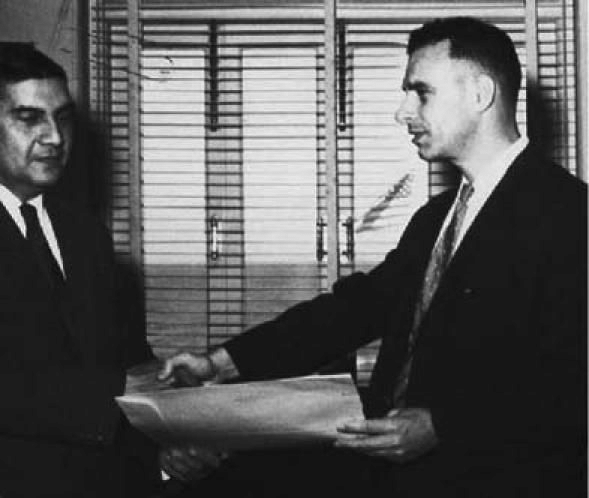
On August 11, 1961, Kishinchand Gobindram Badlani, an Indian civil servant who had been serving as administrator, was formally designated Prime Minister of Free Dadra and Nagar Haveli—for one day.
Why? Because the territory still existed in its peculiar legal status. As its head, Badlani signed the Instrument of Accession with Prime Minister Jawaharlal Nehru, completing the formal transfer of sovereignty.
On that very day, India’s Parliament enacted the Constitution (Tenth Amendment) Act, 1961, incorporating Dadra and Nagar Haveli into India as a Union Territory.
And just like that, the seven-year experiment ended.
For seven years, Free Dadra and Nagar Haveli existed in a fascinating political twilight—liberated from Portuguese control, administered locally and surrounded entirely by India, while New Delhi patiently navigated the complications of international law.
The episode deserves more than a footnote in history.
It was a story of ordinary nationalists taking extraordinary risks, local administrators keeping a fragile system functioning, and Indian diplomacy resisting the temptation to turn every territorial dispute into a military confrontation.
Most importantly, it reminds us that nation-building is not always accompanied by cannon fire, victory parades or towering statues.
Sometimes, it happens quietly.
Sometimes, the heroes are volunteers whose names barely survive in the archives.
And sometimes, history requires an administrator to become a Prime Minister for exactly one day—just long enough to sign away a country’s last legal ambiguity and bring a piece of free territory home to India.
That is the remarkable, largely forgotten story of Free Dadra and Nagar Haveli—and precisely why its unsung heroes deserve to be remembered.