Upadhyayula Lakshman Rao
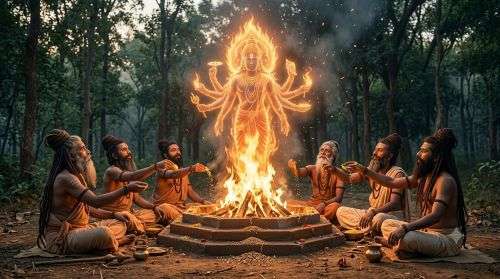
In the luminous age of Vedic revelation, the sages Kakshivantha and Romasa, along with the seer Bayavya, raised their voices in solemn devotion, composing hymns in the measured cadence of Tristubh and Anustubh metres of the Rigveda. Their prayers were not merely poetic utterances but living invocations, directed toward the divine principle of charity and cosmic order. In their vision, generosity was not an act confined to the mortal plane; it was a sacred force that harmonized the rhythms of the universe with the ethical duties of humankind.
At the center of this sacred narrative stands Swanayu, the noble king of Sindhu, a ruler whose strength rendered him invincible to adversaries and whose virtue elevated him beyond the reach of malice. His sovereignty was not secured merely by arms but by righteousness and benevolence. Through the performance of a thousand Soma sacrifices, he aligned himself with the cosmic law, seeking not personal glory but the welfare of his realm. These yajñas, conducted with precision and purity, reflected an early scientific temperament—an understanding that order, repetition, and disciplined ritual could sustain both societal harmony and ecological balance.
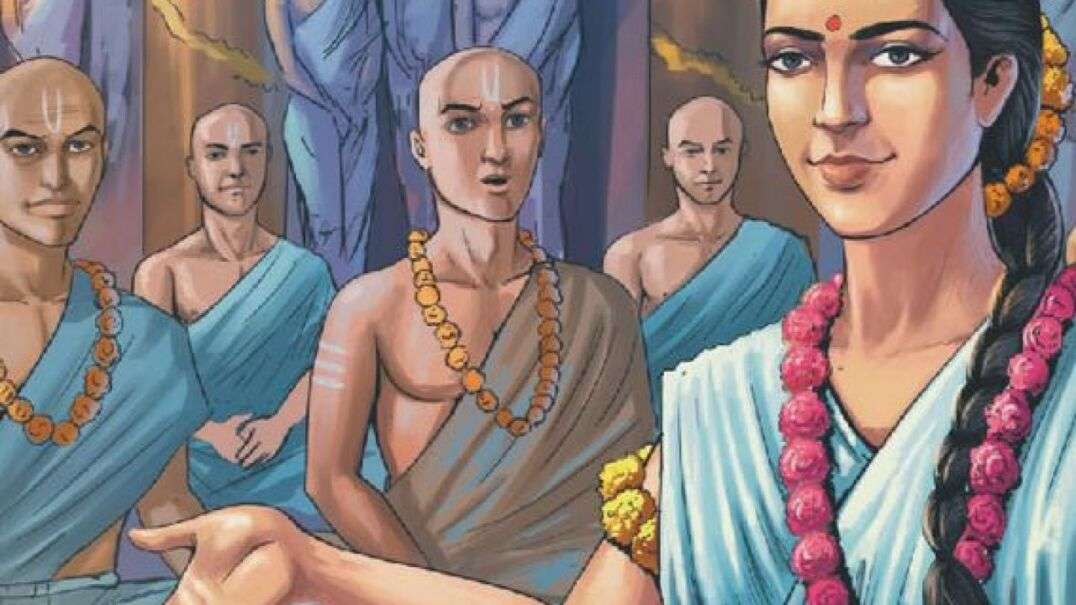
Moved by the king’s sincerity, the sage Kakshivantha, born of the lineage of Usija, composed exalted hymns celebrating Swanayu’s virtues. In recognition of this sacred exchange between wisdom and kingship, the ruler bestowed upon the sage abundant gifts—ornaments of fine craftsmanship, vigorous and well-bred horses, and chariots adorned with elegance. These offerings were not mere tokens of wealth but symbols of the mutual sustenance between knowledge and power. The sage, accepting them with humility, transformed material wealth into instruments of dharma, ensuring that the king’s glory would endure in the higher realms of existence.
Among the most striking gifts were ten chariots drawn by dark-hued horses, guided with skill and grace, and followed by vast herds of cattle numbering in the tens of thousands. This procession of abundance symbolized the flourishing of life under righteous rule. Yet Kakshivantha, embodying detachment and filial reverence, passed these riches onward to his father, affirming the continuity of lineage and the sacred duty of sharing. The movement of wealth—from king to sage, and from sage to family—illustrates an early economic philosophy rooted in circulation rather than accumulation.
The narrative further reveals a community bound by affection and unity, descendants of the revered Angirasa lineage. Their collective prosperity, marked by chariots, attendants, horses, and provisions, was sustained through cooperation and shared purpose. Each act of giving generated further abundance, culminating in the gathering of chariots filled with wealth for the welfare of their kin. This reflects a profound insight into social cohesion: that generosity, when practiced with sincerity, multiplies itself across generations.
In this sacred tapestry, Romasa emerges not only as the devoted wife of Kakshivantha but as a seer in her own right. Her presence in the rituals and hymns signifies the integral role of feminine wisdom in Vedic life. She embodies grace, compassion, and participation in the sacred act of creation—both spiritual and biological. Her gentle invocation to her husband, expressing readiness for motherhood, is not merely personal but symbolic of continuity, fertility, and the perpetuation of sacred knowledge. In her voice resounds the harmony between human affection and cosmic purpose.
Thus, the narrative weaves together devotion, generosity, ritual precision, and social harmony into a unified vision of life. It reveals a civilization where spiritual insight and empirical discipline coexisted, where the act of giving was both a moral duty and a cosmic principle, and where the bonds between individuals, families, and the divine were sustained through shared reverence and purposeful action.