



A renaissance of tradition, health, and the environment amidst modern lifestyles
There was a time when wooden cots were an integral part of life in Indian homes, courtyards, community halls, and fields. From morning tea to nighttime sleep, the cot was not just a piece of furniture but the center of social, cultural, and family life. But as the influence of modernity increased, urbanization gained momentum, and new types of beds, sofa-cum-beds, and expensive mattresses began to appear on the market, the cot gradually began to disappear from homes. It was considered archaic, rural, and a symbol of backwardness. But the wheel of time is turning once again. Today, people are returning to the wooden cot. This return is not just a return to a traditional object but also a symbol of changing attitudes towards life, greater health awareness, and the search for balance with nature.
The cot has a long history in Indian society. It is also known by names like charpai, manji, or khatiya. This structure, made of a sturdy wooden frame and woven with ropes or strips, formed the foundation of Indian life for centuries. Cots were the hallmark of village community gatherings. Family elders made decisions while sitting on cots, farmers rested on them after a hard day’s work, and children grew up playing and playing on them. It was not only a means of rest but also a platform for social dialogue. Even today, discussions held on cots in rural India are considered the most spontaneous and natural expression of democratic dialogue.
The past few decades have seen significant lifestyle changes. People have embraced modern furniture as a symbol of progress and prosperity. Large beds, thick mattresses, and attractively designed furniture have become essential household items. Advertisements have also convinced people that comfort lies only in expensive mattresses and modern beds. As a result, the cot gradually faded from use. But now, as people face health problems, increased stress, and the adverse effects of a sedentary lifestyle, they are beginning to reconsider traditional options they once abandoned.
The biggest reason for the popularity of wooden cots is their health benefits. Modern lifestyles have rapidly increased back pain, neck pain, and spinal problems. Sleeping on overly soft mattresses has proven uncomfortable for many. In contrast, the frame of a cot provides balanced support. The cot, woven from ropes, distributes body weight evenly, reducing unnecessary pressure on the spine. Even today, many elderly people in rural areas appear to be in good physical condition due to years of sleeping on cots. Although each person’s health needs vary, cots are considered a natural and balanced means of rest.
In India, where the climate is hot, the usefulness of a cot is even greater. Foam and spring mattresses often trap body heat, increasing discomfort in summer. In contrast, a cot allows for airflow both above and below the bed. This natural ventilation cools the body and improves sleep quality. This feature of a cot becomes especially important in an era of increasing electricity consumption and dependence on air conditioners.
The importance of cots is also increasing from an environmental perspective. Today, the world is talking about sustainable development and environmental protection. The modern furniture industry widely uses plastic, synthetic foam, and chemicals, which have adverse environmental impacts. In contrast, cots made from wood and natural ropes are relatively eco-friendly. They last longer, are easily repaired, and most of their parts can be recycled or decomposed naturally. At a time when people are becoming more sensitive to the environment, cots are seen as a sustainable option.
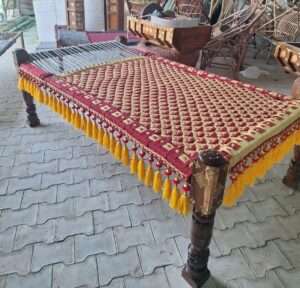
One reason for the return of the khat is economic. The prices of expensive furniture and branded mattresses are constantly rising. On the other hand, khats made by local artisans are relatively inexpensive and durable. Khats are still available at low cost in rural and semi-urban areas. They can last for years and can be refurbished by replacing the ropes when needed. Thus, the khat is not only a cultural heritage but also an economically viable option.
Interestingly, the return of the khat isn’t limited to rural areas. Even in larger cities, people are embracing it in new forms. Interior designers have begun reimagining the traditional khat with a modern aesthetic. Many homes today feature khats as both decorative and functional pieces in balconies, gardens, terraces, or living spaces. Resorts, cafes, and homestays are also incorporating khats into their premises to offer customers a desi and traditional experience. This demonstrates how blending tradition and modernity is possible.
Social media has also played a significant role in increasing the popularity of the khat. Today, themes like “sustainable living,” “slow life,” “desi lifestyle,” and “return to the roots” are gaining popularity among young people. People share photos of the khat in their homes and farmhouses. Many young people, who once considered the khat a village-only item, now see it as a part of their lifestyle and identity. This change indicates that the new generation is viewing its cultural heritage from a new perspective.
The khat holds no less cultural significance. It is frequently mentioned in Indian literature, folk songs, and films. It has been a symbol of rural life, intimacy, and togetherness. When family members sat together on the khat and conversed, communication evolved naturally. Today, in the digital age, when people are often preoccupied with mobile screens even while living in the same home, communal seating spaces like the khat can once again serve as a medium for social closeness.
However, the return of the cot doesn’t mean that modern furniture has become completely irrelevant. Modern life demands different demands, and modern beds may be more convenient in many situations. However, the growing popularity of cots does indicate that people are increasingly prioritizing not just convenience, but also health, the environment, and cultural connection. They are seeking alternatives that can make life more balanced and natural.
In fact, the return of the khat is part of a broader social shift in which people are striving to return to their roots. Whether it’s traditional food, organic farming, pottery, or wooden khats—people are now realizing that development doesn’t just mean adopting new technologies. Development also means understanding traditions that have stood the test of time and have the potential to make life simpler, healthier, and balanced.
Today, as the world changes rapidly and life becomes ever more complex, the wooden cot offers a message of simplicity. It reminds us that comfort can be achieved not only through expensive means, but also through a lifestyle in harmony with nature. The return to the cot is a sign that society is beginning to re-value its cultural memories, traditional knowledge, and environmental understanding.
The cot may never again become a staple in every home in the years to come, but its renaissance certainly proves that tradition never completely disappears. As the challenges of modern life increase, society often seeks solutions within its roots. The return of the wooden cot is a story of this search—a story that encompasses health, the environment, culture, and the desire to make life more humane.
This is why people today are returning to wooden cots. They are not simply adopting an old piece of furniture, but are reviving a philosophy of life based on simplicity, balance, intimacy, and harmony with nature. This is the ultimate meaning and greatest achievement of this return.


