



Sweets sold on the streets and in the neighbourhoods without a production date or quality check are a matter of serious concern.
The arrival of monsoon brings a special charm to North India. During Sawan and Teej, the festive atmosphere is filled with joy and happiness, with lush green fields, swings, mehndi, folk songs, and more. Ghevar holds a special place among the many traditional dishes of this season. In Haryana, Rajasthan, Uttar Pradesh, Delhi, and many other parts of North India, Ghevar is more than just a sweet. It is also associated with family traditions, affection, festivals, and the emotional bond between daughters and their parents’ home.
During Teej and other monsoon festivals, Ghevar is commonly given to daughters, relatives, and friends as a symbol of love and good wishes. Known for its unique texture, crunchiness, and sweetness, it’s a favorite festival delicacy. Yet, a worrying issue is being overlooked, and it’s one that deserves serious public discussion: food adulteration, unsanitary practices, and the sale of sweets without proper information about freshness or shelf life.
With the onset of the festive season, Ghevar is seen not only in traditional sweet shops, but also in makeshift stalls and small shops set up in neighborhoods and streets. The surging demand presents a lucrative business opportunity for vendors. On the other hand, this also leads some traders to compromise on quality to fulfill orders and increase profits.
One of the biggest concerns is the lack of information regarding the manufacturing date and shelf life of sweets. In many local markets, customers purchase loose ghevar based on the vendor’s claim that it is fresh or “made today.” However, consumers generally lack independent means to verify these claims. Relevant information helps consumers make informed decisions about packaged sweets. An additional challenge related to freshness and safe storage becomes even more severe in the case of loose sweets.
Proper storage and handling of Ghevar is also essential. Regular Ghevar and those made with cream, khoya, or other perishable ingredients may require different storage conditions. Heat, humidity, dust, and unsanitary conditions can affect food quality. Humidity is high during the monsoon months, making proper handling even more important. The sweet may look good on the outside, but improper storage can lead to spoilage on the inside.
Adulteration is also a serious problem. Sweets are made with artificial colors, cooking oil, ghee, khoya, and milk; the quality of all these ingredients directly impacts the safety of sweets. When the ingredients used are not of high quality, consumers may be at risk. It is equally important not to conclude that any sweet sold openly is adulterated without any evidence. Food quality should be assessed based on proper inspection, sampling, and laboratory testing, not on conjecture or rumors.
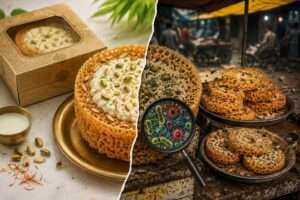
Food safety monitoring shouldn’t be limited to well-known sweet shops or large commercial markets. The food supply chain also includes small local shops, makeshift stalls, and local vendors. In fact, these smaller outlets deserve more attention because they may have limited storage and sanitation facilities.
It is essential to increase the number of food samples during the festive season, which food safety authorities frequently conduct. Food safety cannot be a periodic activity. Continuous inspections, awareness-raising, and effective enforcement must be implemented year-round. If samples do not meet established standards, legal action should be taken. Furthermore, inspection procedures must be fair and consistent, and consumers must have complete confidence in the regulations.
Sweets sellers also have a significant responsibility. A food seller isn’t just selling a product, but something that children, the elderly, and the entire family will eat. Therefore, clean preparation areas, quality ingredients, hygienic handling, proper storage, and providing consumers with accurate product information should be considered essential, not optional.
Consumers also cannot rely solely on authorities. They should learn to be more vigilant when purchasing sweets. When purchasing sweets, they should pay attention to store cleanliness, the appearance and freshness of the sweets, storage conditions, and product information provided at the store. If a sweet has any off-flavors in its smell, taste, and/or appearance, avoid it. Low prices should never be used as an excuse to avoid purchasing healthy foods.
The role of social media has also become crucial in such cases. A photo, video, or allegation of food adulteration can go viral within hours. Social media is certainly a great medium for communicating information and drawing attention to real problems, but an allegation should not be taken at face value. If the person or shop concerned is not supported, it can negatively impact their reputation. If it is not verified, it can completely destroy the reputation of the shop or individual. There must be a distinction between a claim, an investigation, and a proven fact; without this distinction, responsible reporting cannot occur.
It’s not appropriate to make Ghevar a symbol of fear due to concerns about adulteration. Rather, our primary goal should be to make this traditional dish more safe and reliable. Sharing food and strengthening relationships are integral to our festivals. This tradition can only be sustained if people have confidence that the food they share with their loved ones is completely safe for them.
Therefore, the administration should increase surveillance on sweet shops and temporary food stalls, especially during festivals, and conduct regular inspections throughout the year. Vendors should be made aware of food safety guidelines, and action should be taken if they fail to comply. The law should apply equally to all vendors, regardless of shop size, social status, or the relationships between the owners.
Ghevar is a symbol of Sawan, Teej, love for family, and the rich culinary culture of North India. Its sweetness should not be tainted by adulteration, negligence, or lack of transparency. Officials, traders, and consumers are all responsible for this.
Ghevar isn’t just about its flavor and syrup: it also encompasses the trust with which it’s shared. Every ghevar should have a taste of tradition, a sense of security, and a touch of trust.


No one cares about food hygiene practices. No food manufacturer is bothered about preparation with hygiene as he has no responsibility and no proper regulatory authority seriously overseeing their kitchens/ products, and just thinks of selling as much as possible. One should have the divine responsibility towards the customers