



Having received the counsel of Śrī Kṛṣṇa and Arjuna, the mighty Ghaṭotkaca advanced with vigilance and purpose toward Karṇa. At that very moment, Alambusa, the son of the demon Jatāsura, approached Duryodhana and sought permission to avenge the wrongs suffered by his lineage at the hands of the Pāṇḍavas. Delighted by his arrival, Duryodhana praised the fierce rākṣasa and urged him to devastate the armies and encampments of the Pāṇḍavas. Filled with wrath and determination, Alambusa rushed forward and placed himself between Karṇa and Ghaṭotkaca, confronting his formidable foe with all the vigor of his demonic might.
Mounted upon their chariots, the two warriors commenced a dreadful contest. Arrows flew in torrents, celestial weapons blazed through the darkness, and their missiles illuminated the sky in every direction. Neither warrior yielded an advantage, for both possessed equal mastery, strength, and courage. Perceiving that ordinary warfare would not secure victory, they abandoned conventional methods and entered the bewildering realm of illusion. One assumed the form of a colossal serpent, while the other transformed into a mighty eagle and subdued him. One became a furious elephant, while the other took the shape of a lion and sprang to attack. They opposed each other as the sun opposes Rāhu, as the wind scatters clouds, and as rival cosmic forces contend for dominion. Assuming countless forms, they waged a magical war that astonished all who beheld it.
The struggle soon became physical. Seizing one another with tremendous force, they wrestled like enraged mountains come to life. At last Ghaṭotkaca overpowered Alambusa, hurled him to the ground, and pinned him beneath his immense strength. Then, with terrifying fury, he tore the demon’s head from his body. The headless trunk writhed upon the earth like a serpent deprived of its hood. Holding the blood-soaked head aloft, Ghaṭotkaca roared with a voice that shook the heavens and the earth. Moving around the battlefield in dreadful triumph, he filled the Kaurava ranks with terror before casting the severed head onto Duryodhana’s chariot.
Addressing the Kaurava king, Ghaṭotkaca declared, “Receive the head of your friend, O Duryodhana. Soon I shall sever the head of another beloved ally, Karṇa himself. Await that gift as well. Thereafter, when your own hour arrives, you shall meet the same fate. Know that I am the son of mighty Bhīmasena.” Having spoken thus, the rākṣasa mounted his chariot and surged toward Karṇa like a tempest released from the mountains.
Sañjaya described the fearsome sight to Dhṛtarāṣṭra. Ghaṭotkaca’s chariot shone crimson beneath the night sky, while a banner bearing the emblem of a great eagle fluttered above him. Dark as a rain-laden cloud and vast in frame, he appeared like a living embodiment of terror. Two gleaming fangs shone white against his dark visage. His thick matted hair, streaked with red and yellow hues, stood erect upon his body like sharp thorns. Adorned with radiant golden ornaments, he blazed amidst the darkness like a supernatural being born of destruction itself.
As he neared Karṇa, Ghaṭotkaca unleashed a storm of arrows. Karṇa answered with equal ferocity, piercing the demon with shafts that flashed like tongues of fire. The spectators in the heavens watched in amazement as the two champions drenched each other with missiles. Their bodies became torn and bloodstained, glowing red like the first rays of dawn. The battle resembled a clash between primordial titans, neither warrior able to gain decisive supremacy.
Realizing the difficulty of overcoming his adversary, Karṇa invoked a divine weapon. Ghaṭotkaca countered it with a celestial missile of equal power. The heavens resounded with the collision of astras and śastras. Yet the son of Bhīma perceived that ordinary combat would not suffice. Employing his rākṣasa powers, he conjured vast hosts of demons and spread terror throughout the battlefield. Thorny arrows, flaming pestles, showers of stones, and mountainous illusions appeared from every direction. Nevertheless, Karṇa shattered each illusion with unshakable composure and martial brilliance.
Ghaṭotkaca hurled a sacred discus, but Karṇa broke it apart. He cast a mighty mace, only to see it shattered into fragments. Rising into the sky, the demon rained trees and boulders upon his enemy, yet Karṇa cut them all to pieces before they could strike. The gathered warriors marveled at Karṇa’s astonishing skill, for he countered every assault with effortless precision.
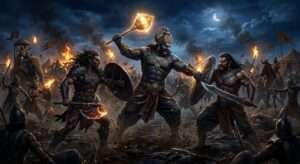
Finding no success through these methods, Ghaṭotkaca returned to direct combat. Karṇa slew his charioteer, killed his horses, smashed his chariot, and riddled his body with arrows until he resembled a gigantic porcupine. Yet the demon refused to yield. Opening his vast mouth, he swallowed the arrows and weapons launched by Karṇa and spat them back toward him. Even then, Karṇa destroyed them in midair. Ghaṭotkaca expanded into monstrous forms adorned with countless heads and faces, seeking to terrify his foe. Karṇa calmly shattered these magical manifestations and reduced the demon once more to his natural form.
Karṇa’s valor inspired the Kaurava army, restoring courage to many who had begun to despair. He struck Ghaṭotkaca with a sanctified weapon, causing him to collapse. The spectators believed the demon slain. Yet within moments he rose again and assumed the shape of a moving mountain. Karṇa destroyed that illusion as well. Undeterred, Ghaṭotkaca returned with a fourfold army and renewed the assault. His relentless arrows harassed Karṇa continuously, and to the astonishment of all, he succeeded in breaking Karṇa’s bow, momentarily gaining the upper hand.
At that time another formidable rākṣasa arrived in Duryodhana’s camp. This was Alāyudha, brother of the slain Bakāsura. Ever since Bhīmasena had slain Bakāsura at Ekacakrapura, Alāyudha had cherished a burning desire for vengeance. Believing the darkness of night favorable to his kind, he approached Duryodhana and declared, “Grant me leave to fight. This very night I shall slay the Pāṇḍavas, Kṛṣṇa, and all who stand with them. I shall consume them and thereby satisfy the debt owed to my brother’s memory. I shall remove your grief and annihilate your enemies completely.”
Observing Ghaṭotkaca’s terrible assault upon Karṇa, Drona, Aśvatthāma, Kṛpa, Śalya, and Kṛtavarmā stood astonished by the demon’s power. Many had begun to lose hope regarding Karṇa’s survival. Therefore Duryodhana instructed Alāyudha, “First confront Ghaṭotkaca, the son of your enemy Bhīmasena. He torments Karṇa through sorcery and demonic arts. Display your greatness by conquering him.”
Thus Alāyudha charged into battle, and a fearsome contest erupted between the two rākṣasas. Sañjaya told Dhṛtarāṣṭra that only the bravest eyes could endure the sight. They fought upon chariots, with weapons, illusions, and supernatural powers. Neither yielded, and each sought mastery over the other. Seeing them evenly matched, Karṇa withdrew from that struggle and turned toward Bhīmasena.
Bhīma, however, feared that Alāyudha might overpower and kill his son. Ignoring Karṇa, he rushed to support Ghaṭotkaca. The demon’s followers attacked him in great numbers, but Bhīma scattered them with torrents of arrows. When the demonic host fled, Alāyudha remained steadfast and continued the battle alone. Bhīma pierced his chest with sharp shafts and hurled a mighty mace, yet Alāyudha countered every attack. The struggle grew increasingly severe, and for a time the demon successfully restrained the mighty son of Vāyu.
Witnessing the growing danger, Kṛṣṇa addressed Arjuna. He reminded him that demons gained extraordinary power during the night and instructed him to dispatch Sātyaki, Nakula, and Sahadeva to divert the hostile rākṣasas. Śikhaṇḍī and Dhṛṣṭadyumna were directed against Karṇa, while Arjuna himself was urged to protect King Yudhiṣṭhira and guard against the movements of Droṇācārya.
Meanwhile, Alāyudha shattered Bhīma’s bow and slew his horses and charioteer before he could take up another weapon. Unable to endure the insult, Bhīma seized a massive mace and rushed upon the demon. Their maces collided with such force that streams of fire burst forth, heating the battlefield like a blazing furnace. When the weapons were reduced to dust, they continued fighting with chariot wheels, axles, yokes, and whatever objects they could seize. Their bodies bled from countless wounds, yet neither retreated.
Perceiving that Bhīma was becoming exhausted, Kṛṣṇa summoned Ghaṭotkaca and said, “The valor of Bhīmasena has been displayed sufficiently. Let him fight no more. Go forth and destroy Alāyudha.” Obeying immediately, Ghaṭotkaca abandoned his contest with Karṇa and rushed against the new foe. At the same time, Nakula, Sahadeva, and their allies drove away the remaining demon hosts, while Karṇa continued to wreak havoc among the Pāñcāla warriors. Many brave fighters fell beneath his arrows, and others fled before his relentless assault.
Thus, O King, the dreadful night battle raged without conclusion. Neither side gained decisive advantage, yet neither showed the slightest willingness to retreat. The determination of the warriors surpassed all ordinary codes of warfare, and their resolve burned brighter than the weapons they wielded. Listening to Sañjaya’s account, King Dhṛtarāṣṭra remained torn between anxiety, frustration, and curiosity, yearning to know what fate the remaining hours of that terrible night would reveal.

