Lakshmanrao Upadhyayula
The revered sage Vishwamitra, while composing this profound hymn in the Jagatī meter of the Rigveda, raises his voice in praise of Indra and the illustrious Rubhavas. The hymn celebrates the extraordinary transformation of the Rubhavas, who were once born as mortal sons of Sudhanva. Through unwavering righteousness, disciplined action, sacred knowledge, and flawless execution of Vedic duties, they transcended the limitations of human existence and attained divine immortality. Their lives proclaim the eternal Vedic principle that divinity is not merely inherited but can be realized through truth, selfless action, wisdom, and steadfast adherence to cosmic order. Their journey stands as one of the earliest spiritual declarations that disciplined effort, guided by Dharma, elevates humanity toward the realm of the immortal.
The hymn recalls the astonishing accomplishments that earned the Rubhavas their exalted status among the gods. Their remarkable craftsmanship and profound understanding of the laws governing creation enabled them to perform deeds beyond ordinary imagination. They divided the sacred wooden vessel with perfect precision without diminishing its sanctity, demonstrating mastery over both material skill and sacred symbolism. They restored new skin to an injured cow, signifying renewal, healing, and the restoration of life’s sustaining forces. They fashioned the magnificent twin horses of Indra with unsurpassed excellence, revealing that divine craftsmanship arises from the harmonious union of intelligence, discipline, observation, and spiritual insight. These acts reflect a scientific temperament deeply embedded within Vedic culture, where careful observation, precision, innovation, and reverence for natural laws were considered sacred expressions of divine wisdom rather than separate from spirituality.
Because of these extraordinary deeds, the Rubhavas earned the rightful privilege of receiving shares of the sacred oblations offered during the Yajña. This honor was not bestowed through favoritism but was the just reward of merit, discipline, and unwavering dedication. The hymn emphasizes that the divine order recognizes every righteous action, and no noble effort performed in harmony with Dharma is ever forgotten. The Rubhavas became living testimonies that every action performed with purity of intention becomes an offering to the Supreme Reality and bears eternal fruit within the cosmic order governed by truth.
The sons of Sudhanva are remembered as exemplary human beings who observed every ritual according to the exact injunctions of the Vedas. Their friendship with Indra was established not merely through praise but through perfect alignment with sacred duty and disciplined living. Though they were originally subject to mortality like all human beings, the grace of Indra, joined with the fruits of their own righteous actions and the spiritual power accumulated through sacred rituals, elevated them beyond the law of death. Their attainment of immortality illustrates one of the deepest teachings of the Vedic tradition: divine grace descends most abundantly upon those whose lives are prepared through self-discipline, wisdom, sacrifice, and unwavering commitment to righteousness.
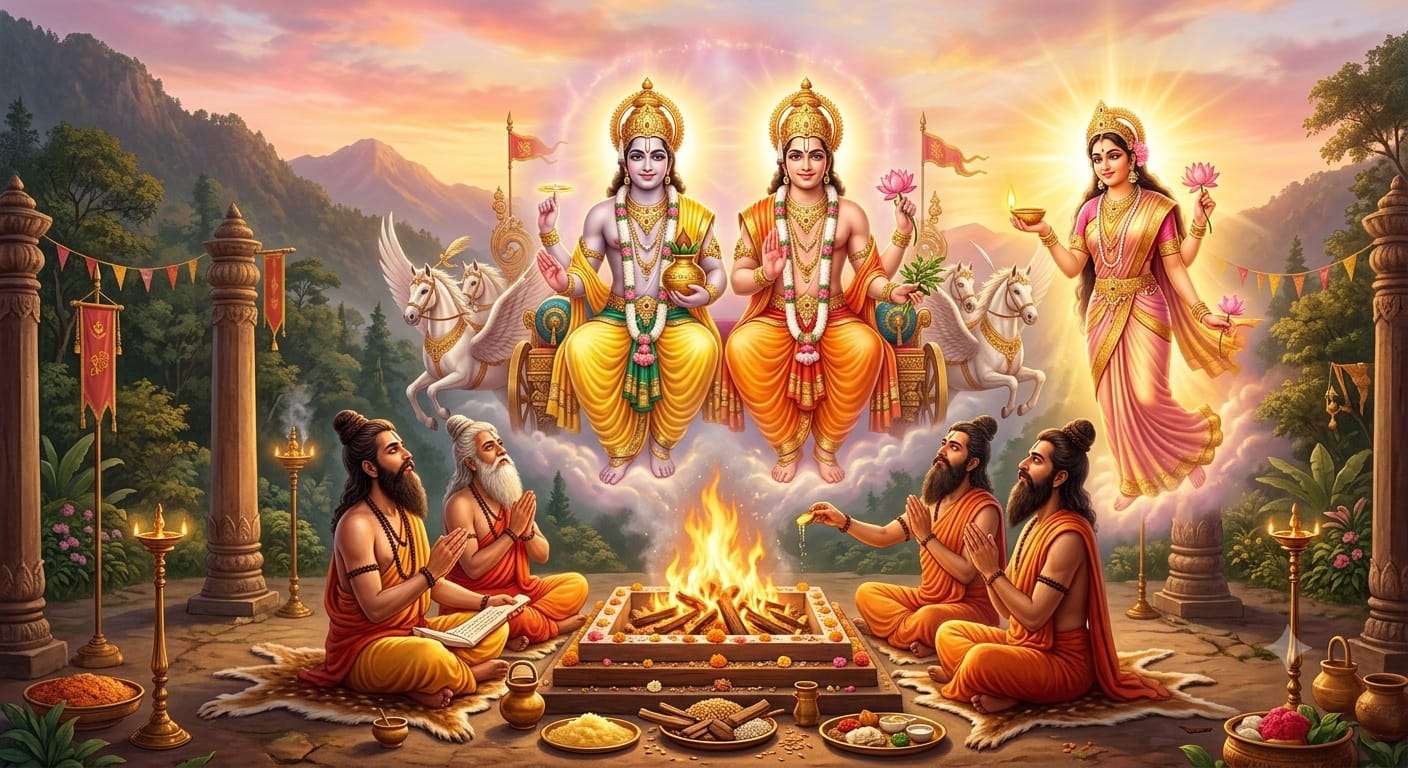
The sage invites Indra and the assembly of the Rubhavas to ascend together upon the same celestial chariot and journey toward the sacred Soma purification taking place within the spacious halls of the Yajña. Their united arrival symbolizes the perfect harmony between divine power and enlightened human endeavor. The purified Soma represents the refinement of consciousness through disciplined living, sacred knowledge, and spiritual realization. As the deities accept the hymns offered by devoted worshippers, the exchange between heaven and earth becomes complete, demonstrating that sincere prayer establishes a living communion between humanity and the divine powers governing the universe.
The hymn further extols the strength of the sons of Sudhanva, declaring that they have become invincible through the life-giving essence of Soma and through their auspicious actions. Their accomplishments stand beyond criticism because they are founded upon truth, wisdom, and flawless execution. The Vedic vision presented here teaches that genuine excellence cannot be diminished by opposition, for work established upon Dharma possesses an enduring authority that time itself cannot erode. Such excellence arises from disciplined knowledge, moral integrity, and complete harmony with the eternal principles sustaining creation.
The sage then turns his prayer toward Indra, acknowledging his incomparable majesty and imploring him to unite with the Rubhavas in sending abundant rain upon the earth. Rain is revered not merely as physical nourishment but as the visible expression of divine blessing sustaining agriculture, prosperity, and the continuity of life. The invitation for Indra to hold the sacred vessel with both hands and drink the purified Soma portrays complete acceptance of the sacrificial offering, while his joyful participation within the home of the patron sanctifies the entire community gathered around the sacred fire. The hymn beautifully illustrates that divine presence transforms every offering made with sincere devotion into an instrument of universal blessing.
The concluding invocation celebrates Indra as the universally praised Lord who arrives with his celestial horses, his divine consort, and the noble Rubhavas to rejoice in the third Soma pressing of the day. Although the Vedic tradition prescribes three principal Soma rituals, the hymn proclaims that every day devoted to truth, sacrifice, and righteous living is equally sacred before the gods. The offerings of food, hymns, and purified devotion are welcomed alike when presented with sincerity. The priests’ chants, resonating through the sacrificial enclosure, become channels through which divine blessings descend upon humanity. The Maruts are also invited to accompany the sacred assembly, bringing vitality, strength, and life-giving energies to the sacrifice. Together, Indra, the Rubhavas, and the Maruts reveal the Vedic vision of a universe where divine intelligence, disciplined human effort, natural forces, and sacred worship cooperate in perfect harmony, leading humanity toward prosperity, wisdom, and the realization of eternal life.