For over seven decades, Pakistan has weaponised Kashmir diplomatically, preaching human rights to the world while denying them to the people living under its own occupation. Today, the mask has finally slipped. Pakistan-occupied Kashmir (PoK) is burning. The cries coming from across the Line of Control are no longer whispers. They are becoming impossible to ignore. Reports of brutal crackdowns, civilian deaths, mass arrests, suppression of dissent and allegations of large-scale human rights violations have brought PoK into the global spotlight. Protesters are openly questioning Islamabad’s legitimacy, and many among them are appealing to New Delhi for moral and political support. Ironically, the very people whom Pakistan claimed it was “liberating” are today demanding liberation from Pakistan itself. The question before Bharat is not whether it should care. It is whether it can afford not to. After all, New Delhi has consistently maintained that PoK is an integral and inseparable part of Bharat. Union Defence Minister Rajnath Singh and Union Home Minister Amit Shah have repeatedly reaffirmed that position. If PoK is indeed ours constitutionally, historically and ideologically, then its people cannot become convenient strangers whenever they are subjected to oppression. Pakistan wants the world to speak only about Jammu and Kashmir. It has spent billions manufacturing narratives against Bharat at every possible international forum. Ironically, it is Pakistan today that finds itself in the dock over its treatment of the people of PoK and Balochistan. New Delhi must seize this moment—not militarily, but morally, diplomatically and strategically. The Modi government should launch an unprecedented diplomatic offensive against Pakistan’s human rights record. Every allegation of political repression, police brutality and civilian killings in PoK must be raised at international forums. Bharat must demand independent international investigations into the reported atrocities. The United Nations and global human rights bodies must be compelled to answer an uncomfortable question—why does Pakistan’s Kashmir narrative stop at the Line of Control?
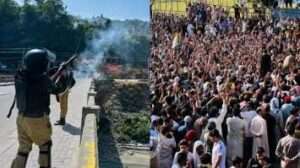
The people of PoK deserve the same concern that the world routinely exhibits elsewhere. But there is another school of thought that deserves serious consideration. Many strategic experts believe that Bharat may never again get an opportunity of this magnitude. The world is witnessing the emergence of a new geopolitical order where nations unapologetically pursue their strategic interests. China continues to justify its expansionist claims wherever it suits its interests. Russia justified its actions in Ukraine on historical and security considerations. The United States has repeatedly pursued military interventions whenever it perceived its national interests to be at stake. Then why is Bharat alone expected to behave as though its national interests are negotiable? Those invoking the 1971 Bangladesh precedent ask a legitimate question. If Indira Gandhi could intervene to end Pakistan’s brutalities against Bengalis and facilitate the birth of Bangladesh, why should Narendra Modi not at least keep every strategic option on the table if humanitarian conditions in PoK deteriorate beyond redemption? That debate cannot and should not be dismissed. There are also persuasive arguments that Bharat should politically and morally support the democratic aspirations of the people of PoK and Balochistan if they genuinely seek to emerge as independent democratic republics. If Pakistan itself was created based on self-determination, it can hardly deny that principle to those whom it governs by force and fear. What Bharat must never do, however, is remain a mute spectator. Silence is not statesmanship. Strategic patience should never become strategic paralysis. The Modi government need not fire a single bullet tomorrow. But it certainly must stop whispering when Pakistan’s hypocrisy stands exposed before the world. The people of PoK deserve justice, dignity and freedom from oppression—whether that freedom ultimately comes through democratic reforms, self-determination or their rightful reunion with Bharat is for history to decide. One thing, however, is non-negotiable. New Delhi can no longer afford to look away. If PoK is ours, its people are ours too. Their pain cannot stop at the Line of Control.