



Shubh Navaratri Day – 8
॥ Om Devi Mahagauryai Namah ॥
॥ श्वेते वृषे समारूढा श्वेताम्बरधरा शुचिः।
महागौरी शुभं दद्यान्महादेवप्रमोददा॥
Mahagauri is the eighth manifestation of Goddess Durga and is worshipped on the eighth day of Navaratri, known as Maha Ashtami. She represents purity, serenity, compassion and spiritual renewal. In the sacred city of Varanasi, also known as Kashi, the worship of Mahagauri forms part of the city’s rich tradition of venerating the Divine Mother in her many manifestations.
The name Mahagauri means “the supremely radiant one” or “the greatly fair one.” She is traditionally depicted with four arms, dressed in white garments and seated on or riding a white bull. She holds a trident and a damaru, while her other two hands display the Abhaya Mudra, which grants fearlessness, and the Varada Mudra, which bestows blessings. Her radiant appearance symbolises the triumph of purity and devotion over ignorance and suffering.
The Mahagauri shrine associated with the eighth day of the Navadurga pilgrimage in Kashi is identified in local devotional traditions with the Maa Annapurna Temple near the Kashi Vishwanath Temple in Vishwanath Gali. Annapurna, the goddess of nourishment, represents the compassionate aspect of the Divine Mother who sustains all living beings. This association beautifully connects Mahagauri’s purity and grace with Annapurna’s promise of nourishment, abundance and care for humanity.
According to a traditional account, Goddess Parvati undertook intense penance to win Lord Shiva as her husband. She endured years of austerity in forests and mountains, unaffected by heat, cold, rain or storms. As her penance continued, dust and the elements darkened her complexion. Pleased with her unwavering devotion, Lord Shiva finally appeared before her and accepted her as his consort. He then bathed her with the sacred waters of the Ganga flowing from his matted locks. The waters cleansed her, restoring her radiant complexion, and she came to be revered as Mahagauri.
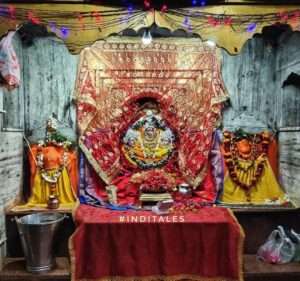
Another account connects Mahagauri with the story of Goddess Kaushiki. According to this tradition, Parvati’s dark outer complexion separated from her and assumed an independent divine form known as Kaushiki. Parvati then regained her luminous appearance and became Mahagauri. Kaushiki subsequently played a significant role in the destruction of the demons Shumbha and Nishumbha. These sacred narratives celebrate the many forms through which the Divine Mother protects the universe and restores cosmic balance.
Devotees believe that worshipping Mahagauri brings peace of mind, removes negativity and helps overcome difficulties. On Maha Ashtami, special prayers, offerings and devotional observances are performed in her honour. White flowers, white garments and coconut are traditionally associated with her worship in many regions. In Kashi, the occasion holds particular significance as devotees visit the city’s sacred Devi shrines and seek the blessings of the Mother Goddess.
Navaratri is the principal festival associated with Mahagauri, with special worship on the eighth day, Maha Ashtami. Devotees offer prayers, recite Durga mantras, and participate in special pujas seeking purity, peace, prosperity and family well-being. Kanya Puja, in which young girls are worshipped as manifestations of the Divine Mother and offered food and gifts, is also an important Ashtami tradition in many parts of India. During Navaratri, the temples of Kashi receive large numbers of devotees, making the festival a spiritually significant period in the ancient city.

