



Kote Siddhi Vinayaka Temple is situated just outside the historic Balarama–Jayarama (North) Gate of the Mysuru Palace (Amba Vilas Palace) in Mysuru, Karnataka. The temple stands adjacent to the famous Kote Anjaneya Swamy Temple and forms an important part of the royal temple complex associated with the Wadiyar dynasty. While some official records refer to the entrance as the Jayarama Gate, the northern gateway is traditionally known as the Balarama–Jayarama Gateway.
The present structure was constructed by Maharaja Sri Jayachamaraja Wadiyar during the 20th century. However, the tradition of worshipping Lord Ganesha at this sacred spot predates the present shrine and has been closely associated with the Mysuru royal family for generations. The temple has remained an important place of worship for devotees visiting the palace complex.
The presiding deity is Sri Siddhi Vinayaka, an enchanting and compact idol of Lord Ganesha. Though small in size, the deity is revered as immensely powerful and is worshipped as the remover of obstacles, the granter of wisdom, prosperity, success, and auspicious beginnings.
A unique tradition of the temple is the daily Benne Alankara (butter decoration), where the deity is adorned with fresh butter, a practice that continues even today and attracts numerous devotees.
The temple is built in a simple Dravidian style in keeping with the architectural traditions of the Mysuru royal shrines. The sanctum houses the beautiful idol of Sri Siddhi Vinayaka, while a spacious mukha mantapa was added to enable devotees to comfortably stand and offer prayers. Unlike grand temple complexes, the shrine reflects elegance through its simplicity and spiritual ambience.
Kote Siddhi Vinayaka Temple has enjoyed a special place in the spiritual life of the Wadiyar rulers of Mysuru. Maharajas traditionally halted at this shrine before commencing any important activity, including royal ceremonies, state affairs, military expeditions, religious functions, or journeys. Seeking the blessings of Lord Ganesha before every auspicious undertaking became an established royal custom.
Its location beside the northern Balarama–Jayarama Gateway made the temple the symbolic first stop before leaving the palace. Even today, devotees visit the shrine to seek success in examinations, business ventures, marriages, travel, and other new beginnings. Hundreds of devotees offer prayers and sevas here every day.
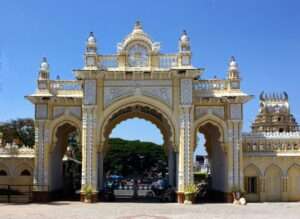
According to the long-standing customs of the Mysuru Palace, Lord Siddhi Vinayaka was regarded as the guardian deity of the northern entrance to the royal fort. The Wadiyar kings firmly believed that every auspicious undertaking should begin only after offering prayers to Lord Ganesha, the supreme remover of obstacles and the bestower of Siddhi (success).
Whenever the Maharaja stepped out through the Balarama–Jayarama Gateway for royal duties, military inspections, religious ceremonies, public functions, or important journeys, he would first stop at this shrine, prostrate before Sri Siddhi Vinayaka, and seek divine blessings. Only after receiving the Lord’s grace would he proceed with his mission.
This royal practice continued through successive generations and gradually inspired the citizens of Mysuru to follow the same tradition. Over time, the temple became renowned as a sacred place where devotees pray before beginning new ventures, purchasing homes or vehicles, starting businesses, undertaking pilgrimages, or celebrating important milestones in life.
The daily Benne Alankara offered to the deity is also regarded as an expression of pure devotion and surrender. Devotees believe that worshipping Sri Siddhi Vinayaka with sincerity removes obstacles, grants wisdom, ensures success in righteous efforts, and brings peace and prosperity to the family.
Ganesh Chaturthi is celebrated with great devotion through special abhishekas, alankaras, homas, and cultural programmes. Sankashti Chaturthi attracts large numbers of devotees every month. During the world-famous Mysuru Dasara celebrations, the temple receives special significance because of its close association with the Mysuru royal family. The daily Benne Alankara remains one of the temple’s most cherished traditions throughout the year.


