


Lakshmanrao Upadhyayula
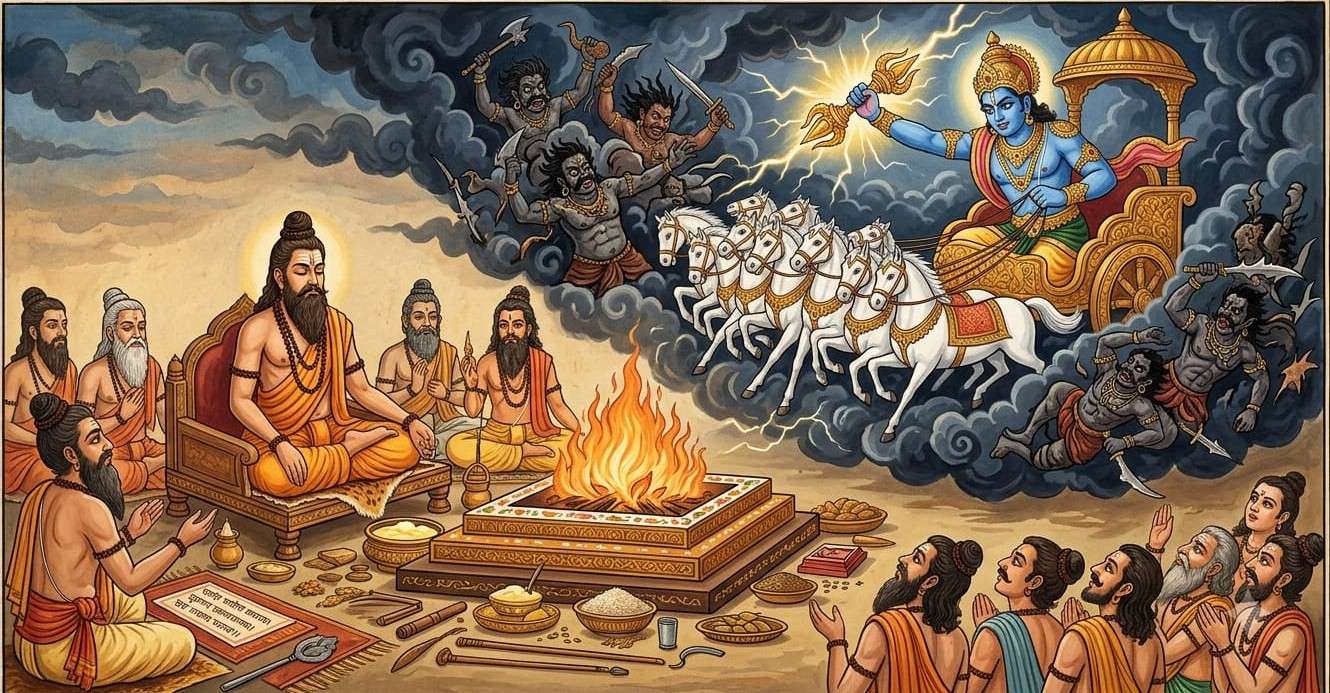
In the ancient hymns of the Rigveda, the sage Vishvamitra invokes Indra in the majestic cadence of the Tristubh meter, celebrating him as the mighty guardian of cosmic order, the protector of righteous beings, and the unconquerable force who sustains harmony between heaven and earth. These hymns reveal not merely a warrior deity but a profound symbol of divine energy, courage, wisdom, and the triumph of light over darkness. Through sacred praise, Indra emerges as the embodiment of strength directed by righteousness, wielding power not for destruction alone but for the preservation of life, prosperity, and truth.
Indra is extolled as the destroyer of fortified strongholds, the conqueror of hostile powers, and the vanquisher of forces that obstruct the flow of divine order. The Vedic seers portray his victories over the Dasyus and other adversaries as more than historical or mythic battles. They represent the perpetual struggle between enlightenment and ignorance, order and chaos, knowledge and falsehood. His destruction of fortresses symbolizes the breaking of barriers that confine human consciousness, while his triumph over hostile forces reflects the victory of higher wisdom over the limitations of fear and delusion.
The hymns celebrate the ever-expanding brilliance of Indra. Through the prayers of sages and the devotion of worshippers, his radiance is said to multiply, illuminating all realms of existence. Adorned with many weapons, he stands as the defender of truth and the guardian of sacred law. Yet these weapons also carry symbolic meaning, representing the diverse powers through which divine intelligence overcomes obstacles. His flourishing form reflects abundance, vitality, and the inexhaustible energy that sustains creation.
The Vedic poets proclaim that Indra rendered heaven and earth full and complete. In spiritual understanding, this signifies the harmonization of cosmic forces and the maintenance of balance within the universe. From a scientific perspective, such imagery reflects an early recognition of the interconnectedness of natural phenomena. The heavens, atmosphere, waters, and earth are viewed as parts of a unified system governed by divine principles. Indra’s role as the organizer of these realms mirrors humanity’s observation of the ordered patterns that sustain life.
The worshippers declare Indra worthy of reverence above gods and human beings because of his mighty deeds and unwavering protection. They adorn him with hymns, offering melodious praises in the hope of receiving nourishment, prosperity, and strength. Food in the Vedic worldview extends beyond physical sustenance; it includes wisdom, vitality, and spiritual fulfillment. Thus, the chanting of sacred hymns becomes a means of aligning human life with cosmic abundance.
Central to Indra’s glory is his defeat of the serpent-demon Vritra. This celebrated event symbolizes the release of life-giving waters that had been withheld from the world. Spiritually, it signifies liberation from forces that restrain growth and enlightenment. Scientifically, many scholars view this imagery as reflecting observations of seasonal storms, rainfall, and the breaking of drought. The Vedic seers transformed these natural events into profound spiritual narratives, recognizing in them the divine processes that renew and sustain life.
The hymns describe Indra as the destroyer of deceptive and illusory powers. With extraordinary brilliance, he exposes hidden dangers and overcomes enemies concealed in darkness. His slaying of hostile beings hidden in forests and remote places symbolizes the penetration of truth into the hidden recesses of ignorance. The recurring theme of light overcoming darkness reflects both spiritual awakening and humanity’s deep appreciation for the transformative power of knowledge.
Night is often portrayed as the preferred domain of destructive forces, while daylight represents revelation, activity, and order. Therefore, Indra’s release of the cows during the day carries profound symbolism. In Vedic literature, cows frequently represent rays of light, knowledge, prosperity, and nourishment. By releasing them into the open, Indra becomes the liberator of wisdom and abundance. This imagery also reflects the agricultural realities of early Vedic society, where sunlight, rainfall, and livestock formed the foundation of communal well-being.
Indra is praised as the donor of heaven and the creator of the day. He joined the Angiras sages in their sacred struggle and established the Sun as the shining banner of humanity. The installation of the Sun as the flag of the day reveals a remarkable reverence for solar power. Spiritually, the Sun represents divine illumination and consciousness. Scientifically, it is recognized as the source of energy that sustains life on Earth. The Vedic hymns thus unite spiritual insight with careful observation of the natural world.
The seers recount how Indra proclaimed radiant light in the midst of great conflict, gathering riches in many forms and securing prosperity for those who honored divine law. These riches include not only material wealth but also wisdom, courage, health, and spiritual attainment. Indra’s presence among opposing forces demonstrates his role as the arbiter of destiny, guiding events toward the preservation of cosmic balance.
The dawn goddess Usha is inspired through Indra’s power, and the brilliance of light flourishes across creation. This association between Indra and dawn reflects the continual renewal of existence. Every sunrise becomes a reminder that darkness is temporary and that divine light inevitably returns. The Vedic sages perceived in this daily cycle a universal principle of hope, renewal, and spiritual awakening.
The hymns proclaim that Indra is greater than the greatest. Those who honor his deeds celebrate his courage, generosity, and strength. By his own power he humbles oppressors and crushes forces that inflict suffering upon others. His energy is inexhaustible, and his authority extends across the celestial realms. As Lord among the gods and benefactor of humanity, he serves as a bridge between divine power and human aspiration.
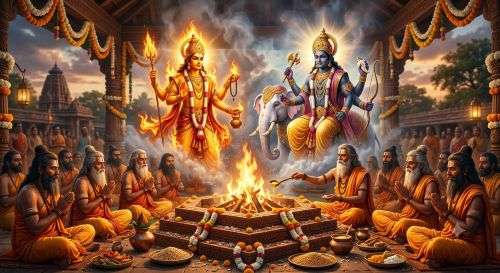
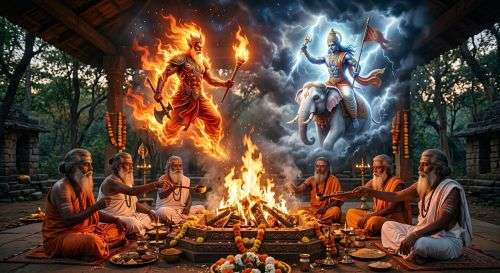
Indra is also remembered as the generous giver of wealth. Having acquired abundant treasures through victorious struggles, he bestows them upon priests and patrons who uphold sacred duties. The wise priests gather within consecrated precincts, chanting mantras that connect the earthly and heavenly realms. Through these rituals, wealth is understood not merely as possession but as a sacred trust intended to sustain society and honor divine principles.
As conqueror of hostile forces and bestower of blessings, Indra is revered as the provider of waters and the master of the heavens. Water occupies a central place in Vedic thought because it sustains life, fertility, and purification. Indra’s release of waters from the clouds reflects both spiritual liberation and a keen awareness of meteorological processes. The breaking of clouds and the arrival of rain are celebrated as manifestations of divine generosity and cosmic order.
The hymns further praise Indra as the giver of heaven, space, and earth, of horses, cattle, gold, medicinal herbs, vegetation, and the succession of days. These gifts encompass every dimension of existence. Horses symbolize energy and movement, cattle represent prosperity and nourishment, herbs signify healing, and the cycles of days reflect the rhythm of time itself. By attributing these blessings to Indra, the Vedic seers acknowledge the sacred interconnectedness of all aspects of life.
Indra’s protection of the Aryas and his defeat of destructive powers emphasize his role as defender of righteousness and guardian of civilization. His victories are not merely military triumphs but affirmations of justice, order, and the flourishing of human society. The repeated references to overcoming enemies and breaking obstacles illustrate the enduring belief that divine strength supports those who pursue truth and noble conduct.
Thus, the hymns of Vishvamitra present Indra as far more than a warrior god. He is the radiant force that releases life-giving waters, establishes light, protects the righteous, inspires wisdom, and sustains the cosmic order. Through profound symbolism and careful observation of the natural world, the Vedic sages created a vision in which spirituality and scientific temperament coexist harmoniously. Indra stands as the eternal emblem of courage, illumination, generosity, and victorious energy, inviting humanity to seek refuge in divine strength while striving to uphold truth, knowledge, and the welfare of all creation.


well organised article that 𝙨𝙪𝙥𝙥𝙤𝙧𝙩𝙨 𝙃𝙖𝙢𝙖𝙧𝙖 𝘽𝙝𝙖𝙧𝙖𝙩 𝙈𝙖𝙝𝙖𝙣.