


Shekar Maramraju
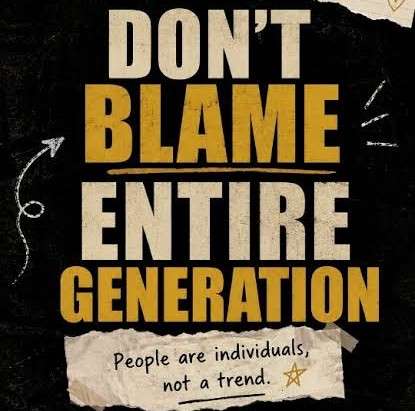
India has been fooled in the name of Gen Z. Worse still, an entire generation has been falsely branded.
For nearly two months, one phrase dominated television debates, social media timelines and political narratives—”Gen Z.”
Gen Z is angry. Gen Z is cultureless. Gen Z is irresponsible. Gen Z is a threat to India’s social fabric.
Slowly and almost imperceptibly, the narrative was expanded. It ceased to be about a protest or a section of students. It became Gen Z versus everyone else—Gen Z versus millennials, Gen Z versus parents, and eventually, Gen Z versus Bharat itself.
Placards became headlines. Vulgar slogans became representative voices. The conduct of a few was projected as the character of an entire generation. Families that could not bring themselves to repeat some of the language used during the protests were nevertheless told that this was what India’s youth had become.
But facts have a remarkable habit of exposing manufactured narratives.
India is home to nearly 38 crore Gen Z citizens. They are not a monolithic political constituency. They are students, engineers, doctors, entrepreneurs, scientists, athletes, artists, soldiers and dreamers.
Of them, nearly 10.98 crore are studying in Classes IX to XII or pursuing higher education. About 3.72 crore are in Classes IX and X, 2.76 crore in Classes XI and XII, while another 4.50 crore are pursuing higher education. Around 15.73 crore are working, and 1.73 crore are officially unemployed and searching for opportunities.
These are not just statistics. They represent millions of individual aspirations being quietly pursued every single day.
Now return to the much-publicised protest at Jantar Mantar on July 20, 2026—the so-called “Gen Z Protest.”
Let us assume the crowd numbered 40,000. Even if half of them belonged to Gen Z, that would amount to merely 20,000 individuals.
That represents approximately 0.0053 per cent of India’s Gen Z population—roughly one in every 19,000 young Indians.
Where were the remaining 18,999?
They were attending classes, preparing for examinations, working long hours, building careers, appearing for interviews, caring for their families and planning their futures.
Yet, somehow, television studios converted 20,000 faces into the collective conscience of 38 crore young Indians.
That is not merely statistical laziness. It risks becoming irresponsible public discourse.
A genuine student grievance may well deserve attention and debate in any democracy. Democracies are strengthened when young citizens question institutions peacefully and seek reforms. But it is intellectually dishonest to conflate the actions of a few thousand protesters—or worse, a few disruptive elements—with an entire generation.
The available social indicators tell a very different story about India’s youth.
Among Indians aged 15 to 24 years, an overwhelming majority report never consuming alcohol. Studies have consistently shown that spirituality continues to occupy an important place in the lives of young Indians. Around 62 per cent of Gen Z respondents say spirituality gives them clarity, while nearly 79 per cent pray or participate in religious rituals.
Far from being disconnected from larger societal concerns, India’s youth display remarkable awareness of issues such as environmental sustainability. Around 84 per cent worry about environmental damage, 85 per cent are willing to pay more for sustainable products, and nearly 90 per cent consider an employer’s environmental policies before making career choices.
Does this sound like a generation that deserves to be caricatured as cultureless and irresponsible?
Certainly not.
Which is why uncomfortable questions deserve to be asked when reports emerge of filth, alcohol bottles and vandalism being associated with particular protests. Were these acts representative of Gen Z? Or was Gen Z merely the costume worn by those pursuing altogether different political objectives?
That distinction matters.
Every generation inherits criticism from the one before it. Millennials were accused of being entitled. Today’s youth are accused of being reckless. Yesterday’s rebels become today’s critics. Such cycles are neither new nor particularly surprising.
What should concern us, however, is the deliberate temptation to transform isolated incidents into sweeping civilisational judgments about an entire generation.
Nations do not become stronger by distrusting their children. They become stronger by listening to them, correcting them when necessary, and refusing to allow political narratives to define them unfairly.
India’s 38 crore Gen Z citizens are not the faces seen in a few viral videos or on a handful of placards. They are far more diverse, disciplined and aspirational than the stereotypes imposed upon them.
No political organisation, activist group or protest movement can claim ownership over an entire generation. Gen Z cannot and should not be reduced to the loudest voices in a crowd.
For if Bharat begins to distrust its next generation, it risks distrusting its own future.
And that would be our greatest collective failure.



so thoughtful. blaming all GenZ is not right.