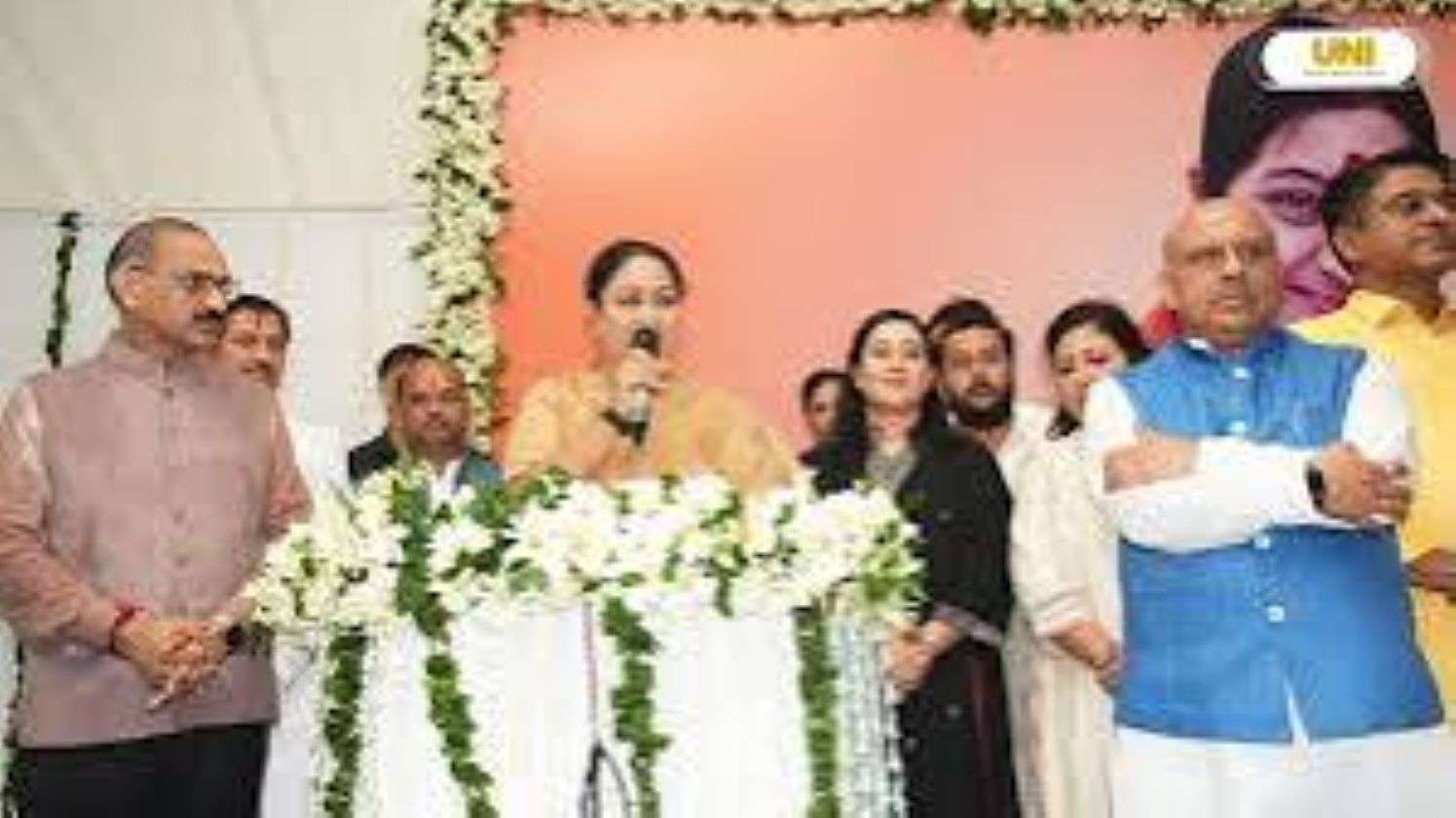
New Delhi: BJP leaders, including Delhi Chief Minister Rekha Gupta and state president Harsh Malhotra, paid tributes to former external affairs minister Sushma Swaraj on her death anniversary on Thursday, recalling her contributions to the city and the country.
The party leaders also planted saplings at the Delhi BJP office and Vasant Udyan in the memory of Sushma Swaraj, who was also the first woman chief minister of Delhi.
“Whatever I can do today for society and Delhi is the result of the inspiration and guidance I received from respected Sushma Swaraj,” Chief Minister Gupta said, recalling her association with the former Union minister.
For the Indian diaspora and international partners across the African continent, Swaraj’s tenure from 2014 to 2019 remains a benchmark for responsive statecraft, particularly her unprecedented use of social media to resolve the grievances of ordinary citizens stranded or distressed abroad.
Sushma Swaraj’s impact on India-Africa relations was both strategic and deeply humanitarian. During her time at the helm of the Ministry of External Affairs, she championed the expansion of India’s development diplomacy, focusing heavily on capacity building, digital infrastructure, and educational exchanges across the African Union.
Her administration oversaw the deepening of ties with East African nations, recognizing the strategic importance of Kenya, Uganda, and Tanzania as vital nodes in the Indian Ocean economy. Swaraj was instrumental in streamlining consular services for the millions of Persons of Indian Origin residing in countries like Kenya, ensuring that passport renewals, emergency evacuations, and legal assistance were handled with unprecedented speed. Her famous dictum that the government must serve as a guardian for its diaspora fundamentally altered the expectations of diplomatic missions in Nairobi and Mombasa.
For Kenyan professionals and policymakers tracking Delhi’s political shifts under Chief Minister Rekha Gupta, the tribute serves as a reminder of the institutional continuity in India’s foreign policy apparatus. Gupta, who assumed office in early 2025 following a significant political realignment in the national capital, has emphasized a governance model rooted in administrative efficiency and direct public engagement—a philosophy heavily inspired by Swaraj’s operational style.
As India continues to position itself as a leading voice for the Global South, the bilateral trade corridors linking Mumbai and Mombasa remain critical. The Kenya-India trade volume, which relies heavily on agricultural exports and pharmaceutical imports, benefits directly from the diplomatic frameworks solidified during Swaraj’s tenure. Any policy shifts in Delhi regarding visa regimes or bilateral investment treaties are closely monitored by the Kenya National Chamber of Commerce and Industry, given the deep economic interdependence between the two regions.
Furthermore, Swaraj’s legacy is deeply intertwined with the operational ethos of the Sushma Swaraj Institute of Foreign Service, which continues to train the next generation of Indian diplomats in the nuances of soft power and crisis management. Her interventions during complex geopolitical crises, including the evacuation of foreign nationals alongside Indian citizens from conflict zones in the Middle East and North Africa, established a precedent for humanitarian diplomacy that resonates globally.
African Union envoys in New Delhi frequently cite her willingness to engage directly with regional blocs on issues of climate finance and technology transfer, bypassing traditional bureaucratic bottlenecks. This direct-line diplomacy created a template that current Indian envoys utilize when negotiating infrastructure financing and agricultural technology transfers with East African governments.
The political gathering in New Delhi also highlighted the evolving role of women in India’s highest executive offices, with Rekha Gupta’s leadership in Delhi symbolizing a new chapter in the capital’s administrative history. As Gupta laid a wreath before Swaraj’s portrait, the visual continuity between the two leaders reinforced the Bharatiya Janata Party’s emphasis on female political empowerment and administrative competence.
For the African diaspora residing in India, particularly the vibrant student and professional communities in Delhi and Bengaluru, the enduring respect for Swaraj provides a sense of diplomatic security. Her policies ensured that African students facing discrimination or legal hurdles had a direct conduit to the Ministry of External Affairs, a safeguard that continues to influence India’s soft power projection across the continent. As global geopolitical alignments shift, the foundational diplomacy championed by Swaraj remains a critical anchor for India’s engagements from the Ganges to the Nile.