



Fresh coaching controversy raises questions over governance, transparency and institutional reforms
Special Correspondent
The cracks within the Hyderabad Cricket Association (HCA) are widening. What began as criticism from the Telangana Cricket Association (TCA) over alleged violations of the HCA and BCCI rule books has now found resonance from within the HCA itself. The latest controversy centres around the appointment of a coach whose selection has triggered serious concerns over transparency, conflict of interest and, more importantly, the welfare of young cricketers.
Ironically, the controversy comes at a time when there was considerable goodwill for former international cricketer Ambati Rayudu after he was entrusted with handling Hyderabad’s cricketing affairs. Many had sympathised with Rayudu during his own difficult days in Hyderabad cricket when he was dropped from the Hyderabad Ranji Trophy team allegedly during the tenure of a former HCA Secretary in what was widely perceived to be an attempt to promote his own brother. Having himself been at the receiving end of cricketing politics, there was a widespread expectation that Rayudu would usher in meritocracy and professionalism into Hyderabad cricket.
It was perhaps with that background that newly elected HCA Secretary Jeevan Reddy took what many considered a bold decision by giving Rayudu a free hand in matters relating to cricket administration. The expectation was simple: a former international cricketer would put merit, professionalism and transparency above everything else.
However, that goodwill appears to be steadily eroding.
Questions are now being raised not merely by the TCA but by several insiders within the HCA over the constitution of selection committees and appointments of coaches, which critics allege violate both the BCCI guidelines and HCA’s own rule book.
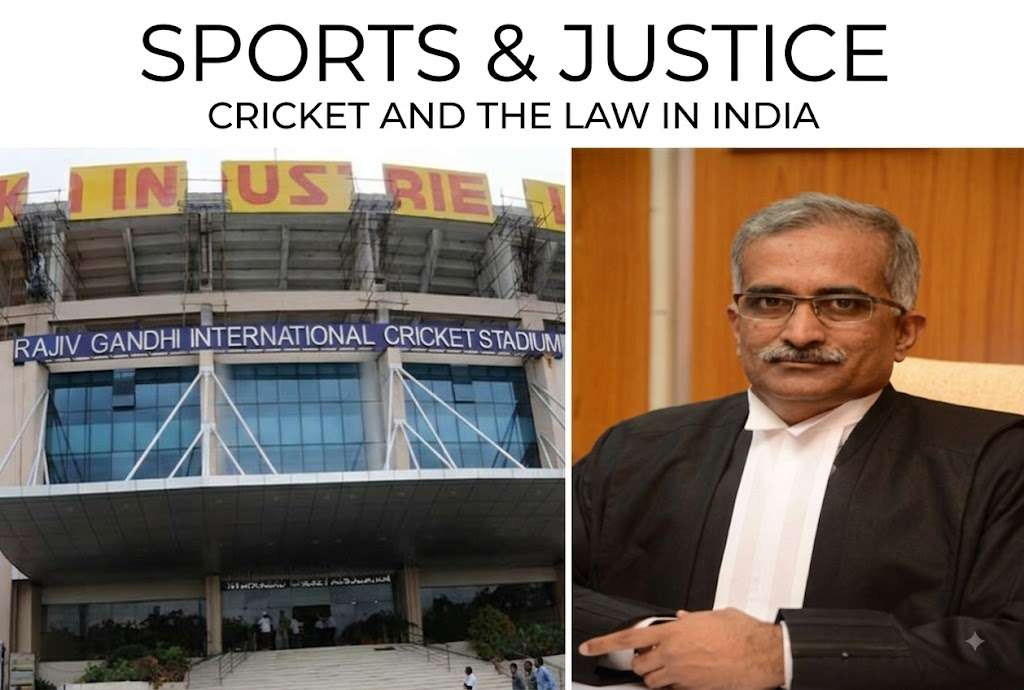
The latest flashpoint is the appointment of coach Kiran, against whom complaints have reportedly been made in the past. An aggrieved cricketer has now submitted a detailed representation to Justice (Retd.) P. Naveen Rao, Chairman of the Single Member Committee overseeing HCA affairs, and to Secretary Jeevan Reddy, questioning the wisdom behind the appointment.
The complainant has referred to an earlier complaint allegedly filed by Shazia, mother of cricketer Aryan Cariappa, accusing the coach of using abusive language and showing favouritism towards certain players. According to the representation, despite such complaints, no visible action appears to have been taken before his reappointment.
The complainant has further alleged that another complaint involving allegations of corruption was recently made against the coach. If such complaints are indeed pending, the obvious question is whether due diligence was undertaken before offering him another assignment. Does Hyderabad cricket really not have other capable coaches, or are appointments being made without proper verification of credentials and antecedents?

The controversy does not end there.
The coach’s performance record has also come under scrutiny. Under his coaching, Hyderabad’s Under-19 team reportedly finished at the bottom of the Cooch Behar Trophy table. In contrast, Hyderabad’s Vinoo Mankad Trophy team under another coach reached the semi-finals during the same season. The Under-23 team too is stated to have performed below expectations in both multi-day and one-day formats.
Performance alone may not always determine a coach’s competence. However, when performance-related concerns are coupled with complaints relating to conduct and disciplinary issues, questions over fresh appointments become unavoidable.
Perhaps the most serious allegation relates to conflict of interest. The complainant has alleged that the coach is a registered voter in the Apex Council elections. If true, legitimate questions arise over whether individuals participating in HCA’s electoral processes should simultaneously benefit from coaching appointments, particularly when elections are not too far away.
Equally disturbing are allegations regarding his behaviour with young players. The complaint alleges that players are subjected to harsh treatment and, on occasions, expected to remain without food following poor performances or defeats. If established, such practices have absolutely no place in modern cricket coaching, especially when dealing with Under-16 and other junior cricketers whose mental and emotional well-being must remain paramount.
Young cricketers require mentorship, encouragement and professional guidance—not fear or humiliation.
The controversy also assumes significance in the backdrop of another development that is being quietly discussed within HCA circles. According to insiders, Secretary Jeevan Reddy is reportedly not entirely receptive to some of the institutional reforms that Justice (Retd.) Naveen Rao would like to see implemented in Hyderabad cricket. While these claims remain to be independently verified, they have contributed to growing unease among several stakeholders who had hoped the new administration would mark a decisive break from the troubled past.
Nobody is suggesting that complaints should automatically become convictions. Equally, however, complaints cannot simply be ignored. Institutions derive their credibility not from denying allegations but from transparently investigating them.
The complainant has therefore sought three specific remedies: a proper inquiry into all complaints against the coach with written findings; keeping his appointment in abeyance pending such inquiry; and evolving a transparent mechanism for appointing coaches based on merit, performance, disciplinary records and conflict-of-interest considerations.
For Ambati Rayudu and the HCA’s new leadership, this controversy presents an opportunity rather than merely a challenge. Hyderabad cricket has suffered enough because of administrative controversies over the years. The new dispensation was expected to usher in professionalism and accountability.
Cricketing legends are not judged merely by the runs they score or the wickets they take. They are equally remembered for the institutions they help build.
If Hyderabad cricket is to regain its lost glory, transparency cannot become optional, and the welfare of young cricketers cannot become negotiable. The High Court’s intervention was intended to facilitate reforms, not merely supervise the status quo. Whether the present leadership rises to that challenge may well determine whether Hyderabad cricket finally leaves its turbulent past behind—or simply learns to live with it.



as usual you raise issues that everyone is scared. I am sure Rayudu is keeping wring company and working on poor advice. his working style is as erratic as his playing days that git him in trouble. sone of his decions are shocking like appointment of Kiran. the coach is known for extreme favouritism, rude behaviour , being aloof and abusing players and colleague’s.
why is Raydu ignoring conflict of interest? he votes for UBI in HCA elections.
teans gave been losing under him.
there Re rumours that he dies care for SMC or secretary or anyone.
he has friends as team .these people have no credentials.
nothing will change in HCA
Every time a reform movement takes its first real steps, the surrounding noise reaches a fever pitch. In Hyderabad cricket today, we are witnessing a rush to judge, condemn, and undermine individuals long before their process has even had the breathing room to yield results.
It is remarkably easy to generate outrage from the outside. A single unverified representation, framed with selectively chosen statistics, can instantly turn into headlines that question the decision-making skills, sincerity, and integrity of people actively serving the game. When administrative transitions occur, every choice—from committee selections to coaching appointments—becomes an easy target for speculation. The fundamental issue today isn’t a lack of scrutiny, but a rush to condemn individuals on non-substantial evidence before understanding ground-level operational realities.
What happens when we reflexively attack former players and leaders who actually step up to take accountability? Ambati Rayudu didn’t have to walk into administration; he chose to take responsibility because he cares deeply about Hyderabad cricket. When we question his decision-making based on incomplete facts or hearsay, we aren’t just critiquing a policy—we are actively discrediting our own sportspersons who have put their reputations on the line. Tearing down leadership over micro-level decisions before giving them an operational cycle creates a culture of fear, where no genuine leader wants to make firm, necessary calls.
Ambati Rayudu’s career has never been about taking the comfortable route. Having navigated the tough realities of domestic and international cricket firsthand, he knows better than anyone the weight of every selection and coaching decision. When someone with that level of lived experience is given a hand in shaping the ecosystem, every choice is backed by a genuine desire to see Hyderabad cricket succeed. Coaching in developmental cricket isn’t just about reading scorecards from a single season; it involves day-to-day grit, discipline, and building a foundation that rarely shows up in immediate headline numbers.
The narrative needs to shift from sensational accusations to constructive evaluation. A coach’s worth and an administrator’s vision cannot be dismantled by unproven complaints; they must be evaluated holistically through a complete, fair season of development.
The most constructive path forward for Hyderabad cricket is to separate institutional due process from media noise. Let formal inquiries address legitimate procedural checks if required, but let us stop using unverified complaints as a weapon to question integrity. Rayudu, Coach Kiran, and the entire coaching staff deserve the space, trust, and time to execute their plans. The ultimate standard in sport has always been, and will always be, performance on the field.
Instead of allowing speculative headlines to dictate the narrative, let us rally behind those who are taking responsibility. To Rayudu and the coaching staff: stay focused on the process, ignore the peripheral noise, and let the scoreboard speak. Results have a way of silencing even the loudest critics, and that is where all the energy belongs.
Editor’s Response
Well, those who cannot fathom criticism and seek supporters to justify their actions through such comments, while sermonising others for raising legitimate concerns even before facts are examined, are merely attempting to provide “fire cover.” Blaming the whistleblower has unfortunately become the accepted norm among those who wish to perpetuate wrongdoing.
What the whistleblowers are pointing out is simple: Ambati Rayudu has become arrogant in handpicking individuals of his choice, disregarding the basic guidelines laid down by both the BCCI and the HCA’s own Rule Book.
Take, for instance, Kiran, the so-called coach. According to our independent investigation, he is a former Andhra Bank employee and player. More importantly, there are serious concerns regarding his mental stability and his conduct with trainees. These concerns are not based on one or two isolated complaints but on repeated allegations brought to our notice over a period of time. He has also failed to establish himself as a successful coach.
If such individuals are being encouraged to make a comeback—whether through Rayudu or his advisers—then flagging these issues in the larger interest of the game ought to be welcomed, not condemned through irrational and motivated comments.
A wise person learns from past mistakes. Sadly, that does not appear to be the case with the HCA. The culture of patronage seems to have prevailed over transparency and accountability.
Would the author of this comment accept a situation where a person facing pending cases relating to misconduct against women is allowed to call the shots in the HCA, thereby putting at risk the safety and future of young aspiring women cricketers? If not, why should legitimate questions on appointments and conduct be treated differently?
Criticism is not an act of malice. It is often the first line of defence against institutional decay. Those who speak up may not always be right, but silencing them without addressing the substance of their concerns is certainly wrong.
Shocking that the entire article is built around unverified allegations……AVOID damaging someone’s reputation, Trial by the media is never a substitute for facts. Allegations are not evidence, and reputations shouldn’t be destroyed without a fair inquiry. Let’s facts,not speculation decide.
Whistleblowing and constructive critique are essential to any healthy institution, and no one is suggesting that formal complaints should ever be ignored. However, there is a clear boundary between demanding administrative due process and launching public character attacks—especially extreme statements regarding an individual’s personal well-being—before formal findings are established.
Supporting leadership isn’t about giving anyone a free pass or ‘fire cover.’ It’s about insisting that allegations be handled by the designated authorities (like the Single Member Committee) through proper investigation rather than trial by commentary. If there are procedural non-compliances or genuine grievances, let the rulebook and formal inquiries take their course.
True transparency protects young athletes through fair, verified inquiry while ensuring that administrators and coaches are judged on verified facts and actual results, not public speculation. Let due process work, and let the results speak.
When unproven claims, severe personal characterizations, and extreme hypothetical scenarios are presented as facts, due process breaks down. If every decision is met with immediate public condemnation rather than objective inquiry, it creates an environment of paralysis where character assassination replaces governance. This doesn’t safeguard young athletes—it simply stalls progress.
Standing by leadership is not about offering blind cover or dismissing serious concerns; it is about respecting structured governance. Former players like Ambati Rayudu stepped into these roles to bring ground-level accountability to the system. Adherence to BCCI and HCA guidelines is mandatory. If formal complaints exist, they belong before the appointed investigative bodies where facts can be rigorously verified—not judged on public forums.
Asking for due process and performance-based evaluation is not “perpetuating wrongdoing”—it is the foundation of fairness. Let official inquiries handle allegations with complete transparency, and let the ultimate standard of success be determined by verified facts and performance on the field.
We would appreciate it if readers point out any discrepancies in this article. The contents are based on complaints received by this e-paper from insiders within the system, some of whom have held positions of responsibility and have represented the State team. This e-paper remains committed to fairness and accuracy. If any person or institution believes that any fact, allegation, or inference contained in this article is incorrect, incomplete, or misleading, they are welcome to submit their response, supported by relevant material wherever necessary. We shall be pleased to publish their rejoinder in these columns in keeping with established editorial norms. -Editor
Is it not a fact that umpteen cases have been filed with the police, petitions have been lodged before courts, investigating agencies are conducting probes, and even the State Lok Ayukta has sought a report? Are these not matters of public record? What measures has the HCA taken to correct its mistakes and address these concerns?
Is it not true that outsiders and power brokers—whose names need not be mentioned, for every club secretary is aware of them—continue to wield influence within the system and call the shots?
The media enjoys the right, and indeed has a duty, to ask questions. Equally, responsible institutions must respond by explaining what corrective measures have been taken and what action is being initiated. That is what transparency and accountability mean. There is nothing wrong in an institution or an individual acknowledging mistakes and correcting them. In fact, it strengthens public confidence.
This media house has nothing to grind against any individual or office-bearer. Its endeavour has always been to engage in constructive criticism in the larger interest of the better functioning of the HCA and the welfare of cricket and its stakeholders. Raising uncomfortable questions should not be mistaken for personal animosity.
Hence, whoever you are, I would advise you to urge the HCA to respond, from time to time, to the allegations and concerns raised by aspiring cricketers, their parents, affiliated clubs, and other stakeholders. Transparency is earned through answers, not silence.
Kindly refrain from delivering sermons on how the media ought to function. A free and responsible press will continue to ask questions in the public interest. The media does not exist to applaud institutions in power or act as their public relations machinery. Its role is to ask inconvenient questions, seek answers, and hold institutions accountable. Those uncomfortable with scrutiny would do well to respond with facts rather than sermons. — Editor
someone please check the track record of Kiran and the feedback of players ,it will mostly be negative. I suppose no one is questioning Ambati credentials just surprised by this appointment who also happens to be a voter in HCA elections.
When critique relies on selective narratives rather than historical facts, the public record speaks for itself:
Track Record: Coach S. Kiran Kumar guided the Hyderabad U-14 team to the South Zone Inter-State Title (2010–11) and a runners-up finish (2011), and led the Hyderabad U-16 team to the All India Semi-Finals in a standout 2019–20 season. Dismissing these verified achievements as a ‘failure’ directly contradicts official HCA records.
Precedent & Conflict of Interest: Singling out one individual over voter status ignores standard institutional precedent in Hyderabad cricket. Numerous prominent figures—including Noel David (Selector & Coach), Sudeep Tyagi (Selector & Coach), Sailesh (Video Analyst), as well as players and stakeholders like Akshat Reddy, Shashank Nag, and Sharath Mudiraj—have engaged in technical roles within the ecosystem.
Fairness Over Selective Scrutiny: If rules are to be evaluated, they must be applied uniformly across the entire ecosystem, not weaponized against a single individual.
Constructive feedback strengthens an institution, but selective targeting built on unverified personal allegations undermines the game itself. Let the formal authorities address genuine grievances through proper channels while allowing performance and facts to define the narrative.”
Appreciate your response setting out the facts justifying his reappointment. However, the major allegation against Kiran is that he uses foul language towards his trainees. Is that allegation true or false? If you could clarify this as well, it would be helpful.
Appreciate the engagement and constructive dialogue.
On the specific allegations regarding conduct: as a matter of principle and administrative ethics, determining whether an allegation is ‘true’ or ‘false’ belongs strictly to an officially constituted inquiry, not to public forums or social media commentary.
When a formal complaint is submitted to designated oversight authorities—such as the Single Member Committee or HCA Ombudsman—it is their mandate to conduct a thorough, impartial investigation, hear both sides, examine evidence, and issue written findings—declaring someone guilty or innocent in public commentary before an official inquiry concludes compromises due process for everyone involved.
Player welfare, emotional well-being, and respect are non-negotiable standards in modern coaching. If formal complaints exist, the proper course is to let the official authority complete its due diligence rather than to run a parallel trial in public.
Precisely for that very reason, the report was carried in these columns for the HCA’s concerned meachansm to address.