



Shubh Navaratri – Day 3
॥ Om Devi Chandraghantayai Namah ॥
॥ पिण्डजप्रवरारूढा चण्डकोपास्त्रकैर्युता ।
प्रसादं तनुते मह्यं चन्द्रघण्टेति विश्रुता ॥*
॥ Pindaja Pravararudha Chandakopastrakairyuta।
Prasadam Tanute Mahyam Chandraghanteti Vishruta ॥
Meaning: Goddess Chandraghanta, who rides a tiger and carries powerful weapons, blesses her devotees with divine grace, courage and protection.
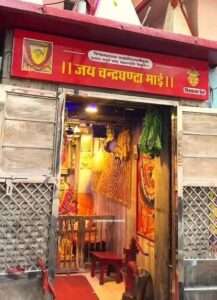
Chandraghanta Devi shrine is situated in Chandraghanta Gali, in the Chowk area of Varanasi, Uttar Pradesh. It is one of the nine sacred shrines associated with the city’s Navadurga tradition. Devotees worship Maa Chandraghanta here as the third form of Goddess Durga on the third day of Navaratri. The shrine holds special significance during the nine-day festival, when devotees undertake the traditional pilgrimage to the nine forms of the Divine Mother.
Goddess Chandraghanta is the third manifestation of Goddess Durga among the nine forms of Navadurga. Her name combines Chandra, meaning moon, and Ghanta, meaning bell, referring to the crescent moon shaped like a bell on her forehead.
She is generally depicted with ten arms and three eyes, carrying divine weapons and sacred objects such as a trident, sword, mace, bow and arrows, lotus, bell and water pot. Her hands also display gestures of blessing and fearlessness.
She rides a tiger or lion, symbolising bravery, strength and mastery over fear. Her radiant golden complexion represents divine splendour, while her third eye signifies spiritual awareness and vigilance against evil. Her fierce appearance reflects her readiness to protect righteousness, while her compassionate nature represents a mother’s love for her devotees.
According to a popular traditional account, Goddess Chandraghanta is associated with Goddess Parvati’s divine transformation around the time of her marriage to Lord Shiva.
After years of intense penance, Parvati won Shiva’s acceptance, and their marriage was arranged. When Shiva arrived at the palace of King Himavan, Parvati’s father, he was accompanied by an extraordinary procession of gods, sages, ascetics, spirits and his attendants, the Shivaganas.
Shiva appeared in his fearsome form, with matted hair, serpents adorning his body and sacred ash covering him. His unusual appearance frightened Menavati, Parvati’s mother, who fainted upon seeing the procession.
Concerned for her family, Parvati manifested her magnificent and radiant divine form. She persuaded Shiva to assume a beautiful and gracious appearance suitable for the wedding. Shiva transformed himself into a handsome bridegroom adorned with divine garments and ornaments. Menavati regained consciousness, and the family rejoiced as the divine marriage of Shiva and Parvati was celebrated with happiness and splendour.
In this traditional account, the Goddess’s form represents the union of grace and strength, embodying the divine power that protects devotees and confronts evil.
The bell associated with Chandraghanta symbolises the destruction of negative forces, while her weapons represent the power to defend dharma (righteousness). Her tiger or lion signifies fearlessness, and her serene expression reflects compassion and inner peace.
Devotees worship Maa Chandraghanta on the third day of Navaratri, seeking courage, confidence, protection and spiritual progress. Her divine form teaches us to face difficulties fearlessly, overcome inner weaknesses and preserve compassion even in challenging circumstances.
May Maa Chandraghanta bless everyone with courage, peace, prosperity and divine protection.
॥ Om Devi Chandraghantayai Namah ॥

