



The dramatic reinstatement of Jensen Huang as NVIDIA’s President and CEO has exposed a troubling reality about the global financial system: when one corporate leader becomes so indispensable that his removal threatens trillions of dollars in market value and investor confidence, the problem extends far beyond corporate governance.
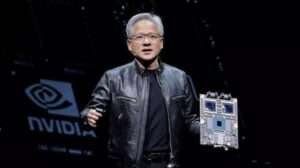
What unfolded at NVIDIA was not merely a leadership reversal. It was a revealing demonstration of how deeply global markets, America’s technological ambitions and the artificial intelligence (AI) investment boom have become intertwined with one company and one individual.
A Dramatic Reversal
On November 17, NVIDIA’s board firmly rejected Huang’s offer to return as CEO following his resignation amid revelations involving an alleged relationship with a woman suspected of having links to Chinese intelligence. The controversy also raised wider questions about national security, export-control compliance and the company’s exposure to investigations.
The board appeared determined to move forward without its celebrated co-founder. Yet, within six days, it reversed course.
President Donald Trump acknowledged personally intervening with NVIDIA’s directors to facilitate Huang’s return. Vice President JD Vance was also reportedly involved in the effort. The board subsequently announced that it had received assurances from senior US government officials that Huang’s reinstatement posed no national security risk.
The company, however, confirmed that its independent investigation would continue. It also established a dedicated national security and export-control oversight committee and announced plans to appoint a Chief Compliance Officer.
The speed of the reversal raises an uncomfortable question: did corporate governance ultimately prevail, or did financial and strategic considerations become too important to ignore?
Markets Revealed Their Vulnerability
The financial consequences were extraordinary. NVIDIA’s shares had suffered a steep decline amid the controversy and broader concerns surrounding AI valuations. Reports indicated that the company’s market value had fallen dramatically, contributing to wider weakness across technology stocks and the AI investment ecosystem.
Huang’s reinstatement on November 23 triggered an equally dramatic reaction. NVIDIA shares surged approximately 33%, adding close to $1 trillion to its market capitalisation and helping lift the broader US stock market after a prolonged losing streak.
I find this rally more concerning than reassuring.
One executive’s departure had helped intensify a massive market sell-off. His return, without any immediate resolution of the underlying investigations, was sufficient to reverse much of the negative sentiment.
That is hardly evidence of an improvement in economic fundamentals. It is evidence of extraordinary dependence on corporate leadership and investor confidence.
The wider economic concerns have not disappeared. Questions surrounding restrictive interest rates, corporate borrowing costs, commercial real estate refinancing, household debt and the sustainability of AI-related capital expenditure remain relevant.
The sharp market rebound may reflect relief, short-covering and repositioning as much as renewed confidence in the economy. It should not be mistaken for proof that systemic vulnerabilities have been resolved.
National Security Versus Financial Stability
Trump’s intervention appears to have been driven by two interconnected considerations: preserving America’s technological advantage over China and preventing a crisis of confidence in the AI investment cycle.
NVIDIA occupies a pivotal position in the global semiconductor industry. Its advanced processors underpin AI development, data-centre expansion and an increasingly important segment of corporate investment.
A prolonged leadership crisis at the company could have consequences extending well beyond its shareholders. Semiconductor manufacturers, cloud-service providers, data-centre developers, electricity infrastructure companies and investors across the technology ecosystem could all face repercussions.
Allowing uncertainty to deepen around NVIDIA at a time when AI investment has become a major driver of market enthusiasm was evidently considered too costly.
However, national security cannot become secondary to market performance. Allegations involving intelligence connections and potential export-control violations deserve independent, transparent scrutiny, irrespective of a company’s economic importance.
The Bigger Warning
In my view, Huang’s reinstatement has bought time, not resolved the underlying problem.
The administration may have prevented one immediate catalyst for financial instability, but it has not eliminated the risks associated with excessive market concentration, speculative AI valuations or dependence on a handful of technology giants.
Nor does preventing a financial collapse today necessarily avert an economic slowdown tomorrow. It may simply postpone the adjustment.
The most disturbing lesson is that America’s apparent economic resilience may be more dependent on maintaining confidence in its AI investment boom than markets would like to acknowledge.
When the return of a single executive can trigger a rally approaching $1 trillion in market value, investors should ask whether they are pricing sustainable economic growth or simply the continued presence of a personality whom markets have come to regard as indispensable.
A financial system in which one man becomes too important to fail is not necessarily a strong system. It may be one whose underlying weaknesses are becoming increasingly difficult to conceal.

