



Standing in the forest’s silence, Ashwatthama spoke with burning determination. His voice carried neither hesitation nor doubt. “I shall enter the camp of the Pandavas this very night and destroy them all. By this fearless deed I shall recover my lost glory and fulfil the purpose of my life. There is no other path before me. My mind seeks nothing beyond this resolve.”
Kripacharya listened patiently and replied with calm wisdom. “Your desire to avenge the humiliation inflicted upon our side is understandable, and fortune itself appears to have inspired your mind with a course of action. We shall stand beside you in whatever lies ahead. Yet, you have travelled far and remain exhausted from sleeplessness. Rest tonight. Sleep restores strength, sharpens judgment, and renews courage. At dawn we shall march together. With your mastery over celestial weapons, supported by Kritavarma and myself, no earthly warrior—or even the hosts of heaven—could withstand your might. Remove your armour, set aside your burden for a few hours, and rise with renewed vigour. We too are overcome by fatigue. When daylight arrives, our minds will be clear, and we shall either conquer our enemies or perish honourably in battle, never turning our backs upon the field.”
Ashwatthama looked at his maternal uncle and answered with restrained intensity. “You know well that sleep deserts four kinds of men: one consumed by anger, one obsessed with wealth, one afflicted by illness, and one enslaved by desire. Why then do you urge me to sleep, knowing fully the storm within me? Even one of these afflictions robs a man of rest. I am tormented by all of them together. How can sleep ever visit me?”
His grief deepened as he spoke of his father. “The cruel and unrighteous death of Dronacharya burns within my heart. Rage against the enemy devours my thoughts. I remain absorbed in finding the means by which I may avenge this injustice and achieve victory. Above all, I long to restore joy to King Duryodhana, who trusted me above many others. Surrounded by these four consuming fires, how can I surrender myself to sleep?”
Ashwatthama’s voice trembled with anguish. “The revered Dronacharya, the guardian of righteousness and honour, was slain before your very eyes. Shall that unbearable insult remain unanswered? And what of King Duryodhana? Broken in body, abandoned to humiliation, his sorrowful words continue to echo in my ears. Even a heart of stone would melt on hearing his lament. He was my dearest friend, yet I stand here unharmed while he suffered the greatest disgrace at the hands of his enemies. Earlier I listened to his painful confession that the Pandavas had proved superior and that he had fallen short. Those words pierce my heart even now. How can I find peace?”
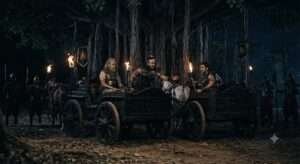
He acknowledged the opposing side’s formidable strength. “Arjuna and Krishna stand together, fearless and invincible. Who can hope to overcome them in open combat? True manliness lies not merely in courage but in overcoming one’s enemy by whatever means success demands. Therefore I have resolved to strike this very night. My decision is firm, and every effort I make moves toward that single purpose. You advise another course because you do not know the full measure of my resolve. I cannot betray the boundless affection shown to me by King Duryodhana. Tonight I shall destroy the Pandavas, the sons of Drupada, and their entire army while they sleep. Only after fulfilling this vow shall I know rest. Do not attempt to divert me from my duty under the pretext of seeking sleep.”
Kripacharya answered with the patience of a true teacher. “A man consumed by anger loses the ability to judge the proper means of accomplishing his purpose. He ceases to value the counsel of those who genuinely seek his welfare. Even noble souls sometimes lose sight of righteousness when overwhelmed by passion. It is therefore the duty of well-wishers to continue advising them until they return to the path of justice, though such counsel rarely remains steady in an agitated mind.”
Understanding the gravity of Ashwatthama’s determination, Kripacharya spoke even more earnestly. “Your heart is entirely possessed by anger, leaving no room for the voice of Dharma. Though your wisdom is great, my words may influence you only for a fleeting moment before rage reclaims your mind. Therefore master yourself. Abandon arrogance and follow the path of righteousness. Loving elders always strive to rescue their own from approaching disaster, though the unfortunate often fail to recognise such efforts. Advice that appears harsh is often the greatest protection for one’s true purpose.”
He continued with solemn conviction. “Cast away this consuming hatred. Remove the dark veil of cruelty that covers your mind. If you restrain yourself now, you shall never regret your actions. The sacred code of war forbids the killing of those who sleep, who have laid down their weapons, whose chariots are shattered, who seek refuge, or whose hair hangs loose in surrender. The Pandava and Panchala warriors now lie asleep. Sleep is akin to death itself. To slay them in such a state is no act of heroism but the destruction of helpless men. Such a deed will erase all your accumulated merit and cast you into the deepest regions of sin.”
Kripacharya reminded him of his greatness. “You are unmatched in the science of weapons, a flawless master of celestial missiles, and among the greatest of chariot warriors. No stain has ever darkened your reputation. Do not soil that spotless honour by resorting to ignoble means. Your brilliance shines like the rising sun. Wait until dawn, confront your enemies face to face, and prove your incomparable valour before the world.”
Ashwatthama replied without yielding. “Everything you have spoken is true, and your counsel springs from genuine affection. Yet hear me in return. Before the assembled kings, my father laid aside his weapons, trusting in righteousness. Dhrishtadyumna seized him by the hair and severed his head without remorse. Bhishma was brought down through the stratagem involving Shikhandi. Karna was slain while struggling to free his chariot wheel from the earth. Bhurishrava, absorbed in sacred meditation after losing his arm, was struck down by Satyaki. Duryodhana’s thighs were shattered by Bhima in violation of the accepted rules of mace combat. Again and again the Pandavas crossed the boundaries of righteous warfare. Why do you not condemn their actions with equal force? Why must restraint be demanded only of us?”
His final words revealed the unshakable force driving him. “The sorrowful appeal of Duryodhana after his fall has become engraved upon my heart. Those words command every thought within me. I cannot abandon the path they have placed before me.”
Thus, in the stillness before the final catastrophe, two towering minds confronted one another—not merely over strategy, but over the profound and ever-changing nature of Dharma. Kripacharya upheld eternal righteousness even in the face of defeat, while Ashwatthama, blinded by grief, anger, and loyalty, sought justice through vengeance. Through Sanjaya’s narration, the Mahabharata reveals that the debate over righteous and unrighteous conduct is never simple. When hatred overwhelms reason, even the wisest minds struggle to preserve the delicate balance between justice and revenge.

