Lakshmanrao Upadhyayula
The sages Puramehna and Ajamehlu, sons of the venerable sage Mahotra, invoke the divine twin Ashwins through a hymn composed in the Trishtup metre of the Rigveda. Their prayer is not merely an appeal for material prosperity; it is a profound invocation of divine movement, healing, protection, fertility, wisdom and the harmonious fulfilment of human aspirations. The Ashwins, the radiant twin deities associated with healing, rescue and swift benevolence, are entreated to descend towards the sacred yajna and receive the offerings and prayers of their worshippers.
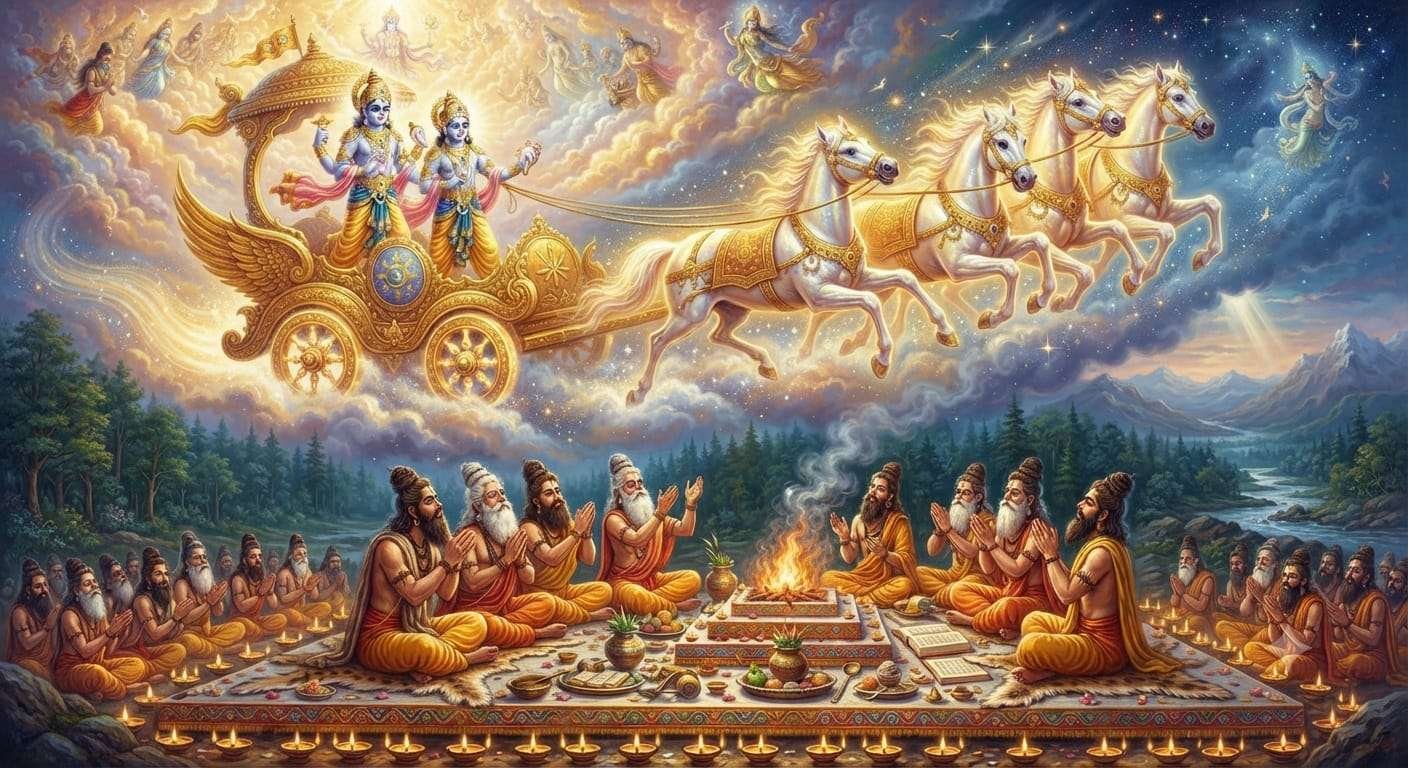
The chariot of the Ashwins is renowned for its extraordinary speed. It is a celestial vehicle capable of moving swiftly towards those who invoke the divine twins with sincerity. The sages contemplate this magnificent chariot as a symbol of divine intervention—moving from heaven towards earth and from the realm of the unseen towards the human sphere. They invite that chariot to their sacred assembly, where cows and other forms of wealth are offered in accordance with the ancient traditions of yajna and generosity.
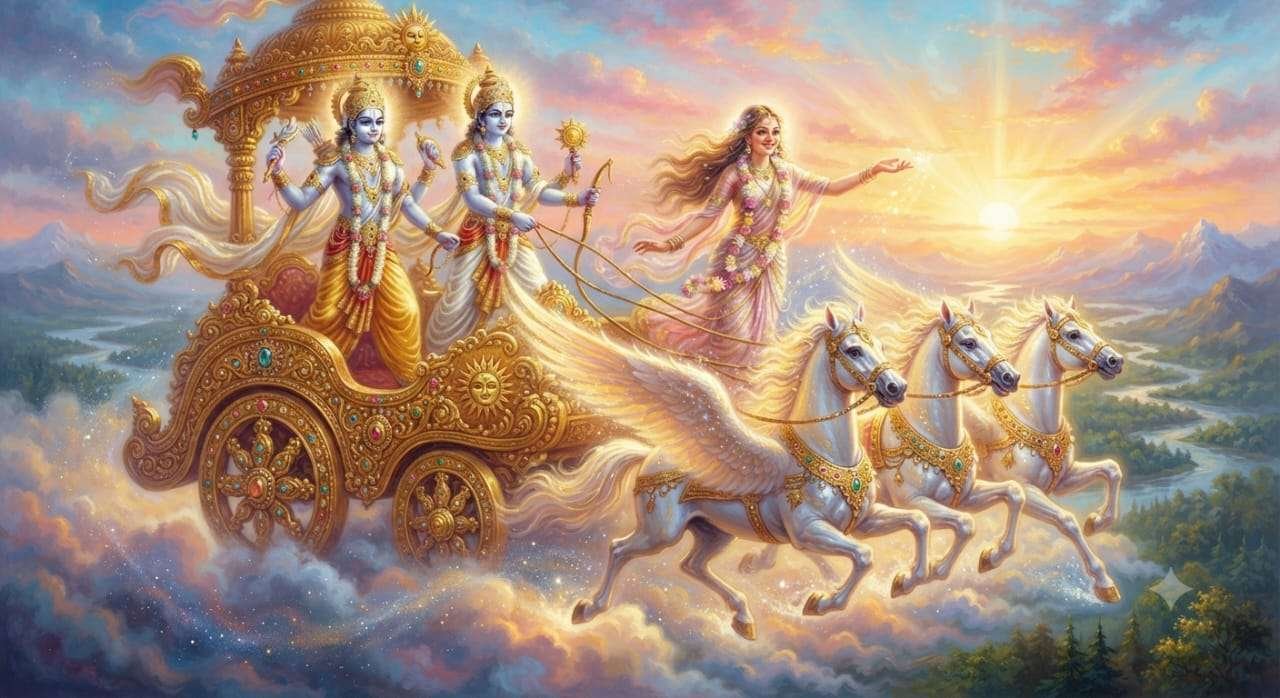
The chariot is associated with the Daughter of Surya, expressing a profound connection between solar radiance, cosmic order and divine movement. Its seat is fashioned from wood, yet its significance transcends its physical construction. It becomes a vehicle for carrying sacred hymns, aspirations and prayers. Spacious, splendid and richly adorned, the chariot represents an ordered universe in motion, where earthly effort and celestial grace meet.
The Ashwini Kumaras are addressed as divine beings whose auspiciousness is revealed through their actions. Their forms are imagined as radiant and filled with the essence of Soma, the sacred principle associated with vitality, inspiration, ecstasy and divine communion. Their presence therefore signifies not merely external prosperity but the renewal of life, consciousness and spiritual energy.
Their chariot is drawn by powerful horses, symbols of speed, vitality and disciplined energy. Alongside those horses travel the powerful vibrations of sacred hymns. The imagery beautifully unites movement and sound: the horses provide physical momentum, while the hymns provide spiritual direction. The chariot thus becomes an extraordinary Vedic symbol in which energy, consciousness, sound and purpose move together towards a higher objective.
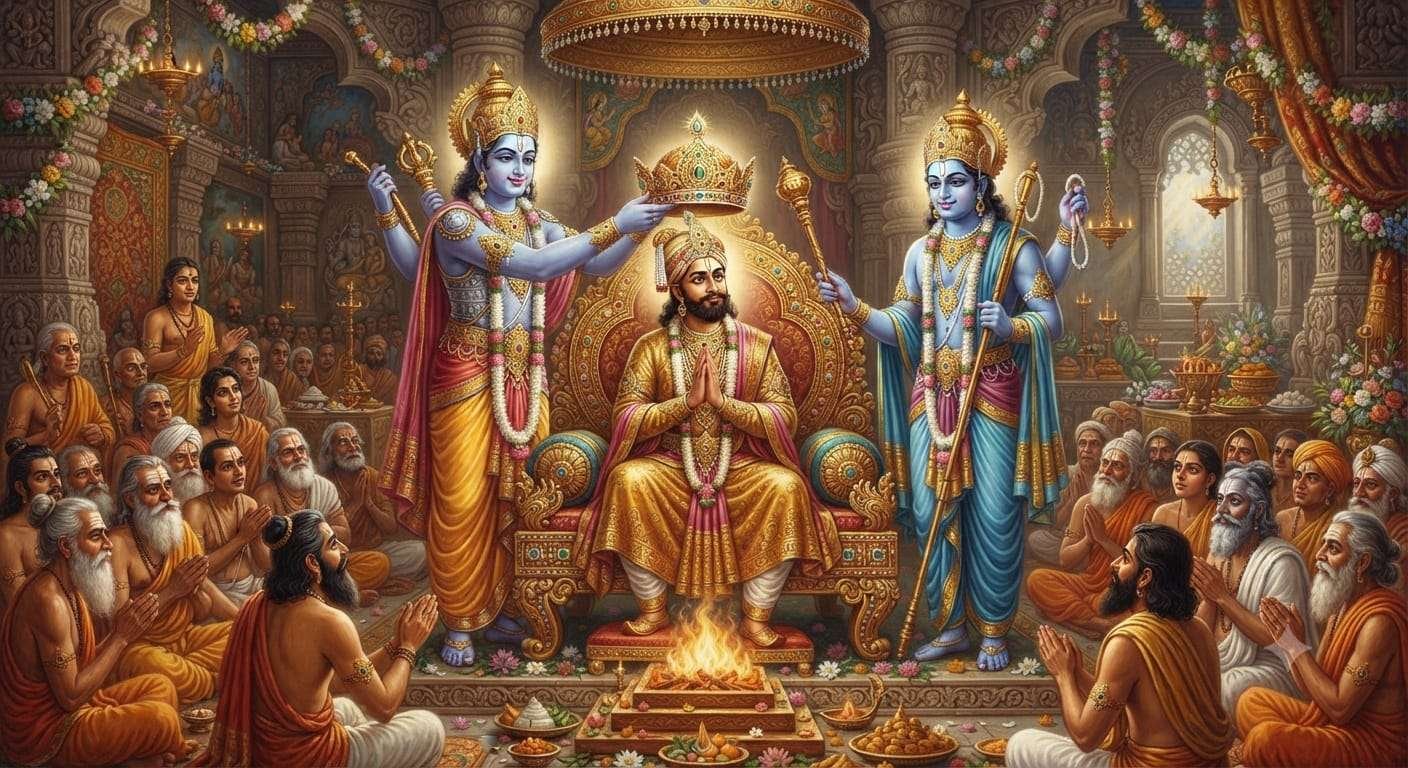
The patron who offers Soma for the completion of the sacred yajna invokes the Ashwins to protect the sanctity of the ritual and preserve his honour and prestige. His prayer reflects an important Vedic principle: prosperity carries responsibility, and wealth acquires meaning when it is connected with sacrifice, generosity and the welfare of the larger community. The yajamana therefore seeks not wealth alone but divine protection for the righteous purpose for which that wealth is employed.
Every worshipper is encouraged to invite the Ashwins into the sacred precincts of the yajna. They are welcomed with reverence, devotion and hymns. The repeated invocation reflects the Vedic understanding that divine presence is not forced; it is approached through disciplined action, sacred speech, hospitality and a purified intention. The worshipper prepares the inner and outer space so that the divine principle may be received.
The hymn also carries a subtle philosophical insight: Truth is one, although the divine manifests in many forms. The Ashwins are two in their visible identity, yet their spiritual significance extends into countless manifestations. Their twin nature may be understood as complementary forces—motion and stability, healing and strength, heaven and earth, knowledge and action. Their unity within duality expresses a fundamental Vedic vision of the cosmos.
The sages therefore envision the Ashwins arriving in a magnificent golden chariot. Gold, in the Vedic imagination, is associated with brilliance, purity, imperishability and the radiance of the divine. The golden chariot becomes more than a vehicle; it is an image of luminous consciousness travelling from the celestial sphere into the human heart.
The worshippers declare their service to the divine twins and seek from them charming and abundant riches. Yet the deeper meaning of riches extends beyond possessions. Vedic prosperity encompasses healthy progeny, cattle, food, knowledge, vitality, reputation, social harmony, intellectual clarity and spiritual strength. Wealth becomes truly auspicious when it sustains life and contributes to the flourishing of the community.
Again the splendid chariot is invoked in all its golden magnificence. The sages call upon it to travel from heaven to earth and towards their sacred assembly. Their words convey urgency: may the Ashwins not remain elsewhere; may they not halt at another patron’s dwelling while their own prayers await fulfilment. The imagery reflects the intimate relationship between the devotee and the deity, in which earnest prayer creates a spiritual invitation for divine presence.
Before the divine twins arrive, the sages affirm that their hymns have already been offered. Puramehna and Ajamehlu present themselves as sincere worshippers, seeking the blessings of the Ashwins for the growth of their families and the expansion of their prosperity. Their request for more children and wealth reflects the ancient Vedic ideal of continuity: the continuation of family, knowledge, ritual tradition and social responsibility.
The reference to the Ritviks, the priests who perform the various functions of the yajna, further establishes the collective nature of Vedic worship. The Ritviks associated with Puramehna, through their prayers and ritual discipline, receive the blessings of the Ashwins. The Ritviks associated with Ajamehlu likewise join in the recitation of the sacred hymns. The yajna therefore becomes a coordinated act in which individual aspiration is transformed into collective spiritual effort.
At the heart of the hymn is a powerful image of single-mindedness. The Ashwins are invoked to remain united in their benevolent purpose, while the worshippers themselves seek unity through their hymns. The sacred word becomes a bridge between human aspiration and divine consciousness. When thought, speech and action are aligned, prayer acquires greater spiritual force.
From a Vedic perspective, this also suggests a remarkable principle of disciplined cognition. A hymn is not merely a collection of words; it is carefully structured sound, metre, intention and meaning. The Trishtup chandas, with its measured rhythm, gives the prayer an ordered acoustic form. The disciplined recitation of such metres may be viewed as an ancient experiment in the relationship between sound, memory, breath, rhythm and consciousness. The scientific temperament of the Vedic tradition is visible in this careful observation of nature, human faculties, cosmic cycles and the effects of disciplined ritual practice.
The golden chariot may similarly be read on several levels. At the literal level, it belongs to the sacred imagery of the Ashwins. Symbolically, it represents the movement of energy and consciousness. Philosophically, it expresses the passage from the celestial to the terrestrial, from potential to manifestation and from aspiration to fulfilment. The horses represent dynamic forces, the chariot represents an ordered system, the reins imply disciplined control, and the destination represents the accomplishment of a purposeful journey.
The Ashwins, therefore, are not invoked merely to grant wishes. They are called upon to protect the hymns, strengthen the yajna, guide the aspirations of the worshippers and bring their prayers towards fulfilment. The prayer suggests that human beings must prepare themselves through effort, discipline, cooperation and righteous intention, while divine grace completes what human endeavour alone cannot accomplish.
Puramehna and Ajamehlu ultimately place their hopes before the twin deities with confidence and humility. Their prayer for children and prosperity becomes part of a larger aspiration for continuity, protection and abundance. Their hymns rise towards the divine, while they envision the golden chariot descending towards them. Heaven and earth are thus joined through sacred sound.
The enduring message of this hymn is that aspiration must be accompanied by disciplined action, prayer by responsibility, prosperity by generosity, and knowledge by humility. The Ashwins symbolise the swift arrival of healing and divine assistance when human beings align their intentions with cosmic order. Their golden chariot becomes an eternal metaphor for the movement of consciousness—from darkness towards illumination, from uncertainty towards confidence, from fragmentation towards unity, and from aspiration towards fulfilment.
In this vision, the hymn itself becomes a chariot. Its metre provides the structure, its words provide the horses, its aspiration provides the direction, and divine grace becomes the force that carries it forward. Puramehna and Ajamehlu therefore conclude not merely with a request, but with faith that their carefully offered prayers will reach the Ashwins and return as blessings of wisdom, vitality, protection, prosperity, noble progeny and spiritual fulfilment.