



Sweating after a brisk walk, during a hot afternoon or while eating spicy food is perfectly normal. It is the body’s natural cooling mechanism. But what happens when palms remain wet even in an air-conditioned room, clothes become soaked without physical activity, or a person repeatedly wakes up with drenched nightclothes?
Excessive sweating is often dismissed as a personal inconvenience or blamed on the weather. Sometimes, however, it may indicate a condition called hyperhidrosis or an underlying medical problem. The important question is not simply how much a person sweats, but why.
When sweating becomes a medical condition
Sweat glands are controlled by the autonomic nervous system, which regulates involuntary functions such as heart rate and body temperature. Sweat evaporates from the skin, helping the body cool down.
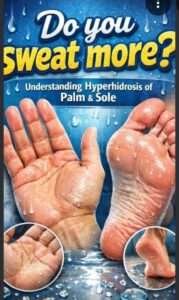
In hyperhidrosis, sweating occurs excessively, even when cooling is unnecessary. It commonly affects the palms, soles, underarms, face or scalp and may interfere with everyday activities such as writing, using a mobile phone or shaking hands.
Doctors classify it into two types. Primary focal hyperhidrosis usually begins during childhood or adolescence, often affects both sides of the body symmetrically and may run in families. Sweating generally reduces or stops during sleep. It is not usually caused by another disease.
The American Academy of Dermatology (AAD) describes primary hyperhidrosis as excessive sweating that occurs independently of the body’s temperature-regulation needs. The International Hyperhidrosis Society also highlights the importance of recognising and treating this condition.
Secondary hyperhidrosis results from an underlying illness or medication. It may begin suddenly, affect larger areas of the body and continue during sleep. Identifying which type is present is essential for treatment.
Could the thyroid be overactive?
One important cause of excessive sweating is hyperthyroidism, in which the thyroid gland produces excessive thyroid hormones.
These hormones regulate metabolism. When their levels are high, body functions accelerate, causing increased sweating, heat intolerance, palpitations, hand tremors, anxiety, disturbed sleep and unexplained weight loss despite a normal or increased appetite. Some people also experience frequent bowel movements, muscle weakness or menstrual irregularities.
The National Institute of Diabetes and Digestive and Kidney Diseases (NIDDK) identifies increased sweating, heat intolerance, rapid heartbeat and weight changes among the symptoms of hyperthyroidism. Thyroid function tests, particularly thyroid-stimulating hormone (TSH) and appropriate thyroid hormone measurements, help establish the diagnosis.
When sweating may signal an infection
Night sweats can sometimes accompany infections. Tuberculosis (TB) is an important consideration in India, particularly when sweating occurs alongside persistent cough, fever, unexplained weight loss, loss of appetite or fatigue.
Human immunodeficiency virus (HIV) and certain prolonged bacterial infections can also cause recurrent sweating. However, not every episode of night sweating indicates an infection; room temperature, warm bedding, alcohol and medicines can contribute too.
The U.S. Centers for Disease Control and Prevention (CDC) lists night sweats among the recognised symptoms of active tuberculosis, along with cough, fever and unexplained weight loss. Repeated drenching night sweats accompanied by these symptoms deserve medical evaluation.
Menopause: When hormones trigger sudden heat
Many women experience excessive sweating during the years around menopause. These episodes, commonly called hot flashes or night sweats, occur because falling oestrogen levels affect the brain’s temperature-regulating centre.
Even a small change in core body temperature may trigger sudden heat, facial flushing and sweating. Some women experience these episodes during the day, while others repeatedly wake at night with soaked clothing or bedding.
Although menopausal sweating is common, persistent fever, unexplained weight loss or other unusual symptoms should not automatically be attributed to hormonal changes.
Could a medicine be responsible?
Sometimes the explanation lies in the medicine cabinet. Certain antidepressants, particularly selective serotonin reuptake inhibitors (SSRIs) and serotonin-norepinephrine reuptake inhibitors (SNRIs), can increase sweating. Opioid pain medicines, corticosteroids and some hormonal treatments may also contribute.
People taking insulin or other glucose-lowering medicines may experience sweating during hypoglycaemia (low blood sugar), often accompanied by trembling, hunger, palpitations or confusion. Alcohol and withdrawal from certain substances can also cause excessive sweating.
A medication review is therefore important. Medicines should not be stopped abruptly without consulting the prescribing doctor; adjusting the dose or changing the drug may resolve the problem.
When should it be investigated?
The pattern provides useful clues. Long-standing sweating limited to the palms, soles or underarms suggests primary hyperhidrosis. Sudden onset in adulthood, generalised sweating, recurrent night sweats or associated symptoms raise concern for a secondary cause.
A 2024 clinical review in the British Journal of General Practice highlights the importance of assessing the onset, distribution, frequency and associated symptoms of excessive sweating.
Depending on the history and examination, investigations may include blood counts, blood glucose, thyroid function tests, inflammatory markers or a chest X-ray. Tests for tuberculosis and other infections may be needed when clinically indicated. Not everyone requires every investigation.
Sweating accompanied by chest pain, severe breathlessness, fainting or marked dizziness requires urgent medical attention because it may occur with serious cardiovascular or other acute conditions.
Treatment depends on the cause
When sweating results from an underlying illness, treating that condition is the priority. For primary hyperhidrosis, prescription-strength aluminium chloride antiperspirants are often used initially.
Depending on the affected area and severity, treatment may include iontophoresis (a procedure using a mild electrical current), botulinum toxin injections or selected oral medicines that reduce sweat gland activity. The AAD and International Hyperhidrosis Society recognise these as established treatment options.
Excessive sweating should not be dismissed as merely an embarrassing problem. It may be a treatable condition, a hormonal change, a medication effect, or a clue to an underlying illness. Identifying the pattern and finding the cause are more useful than simply trying to conceal the sweat

