
Lakshmanrao Upadhyayula
The sage Vāmadeva, one of the illustrious seers of the Rigveda, invokes the divine Ribhus through the majestic Triṣṭubh metre, offering hymns filled with reverence, devotion, and philosophical depth. Speaking on behalf of the worshippers, he declares that these sacred hymns travel to the Ribhus like trusted emissaries carrying the aspirations of humanity. The devotees seek the gift of a milk-yielding cow whose nourishing essence purifies the sacred Soma, symbolizing the union of material prosperity and spiritual illumination. The hymn portrays the Ribhus not merely as celestial beings but as benefactors who respond to sincere prayer with wisdom, skill, and divine grace.
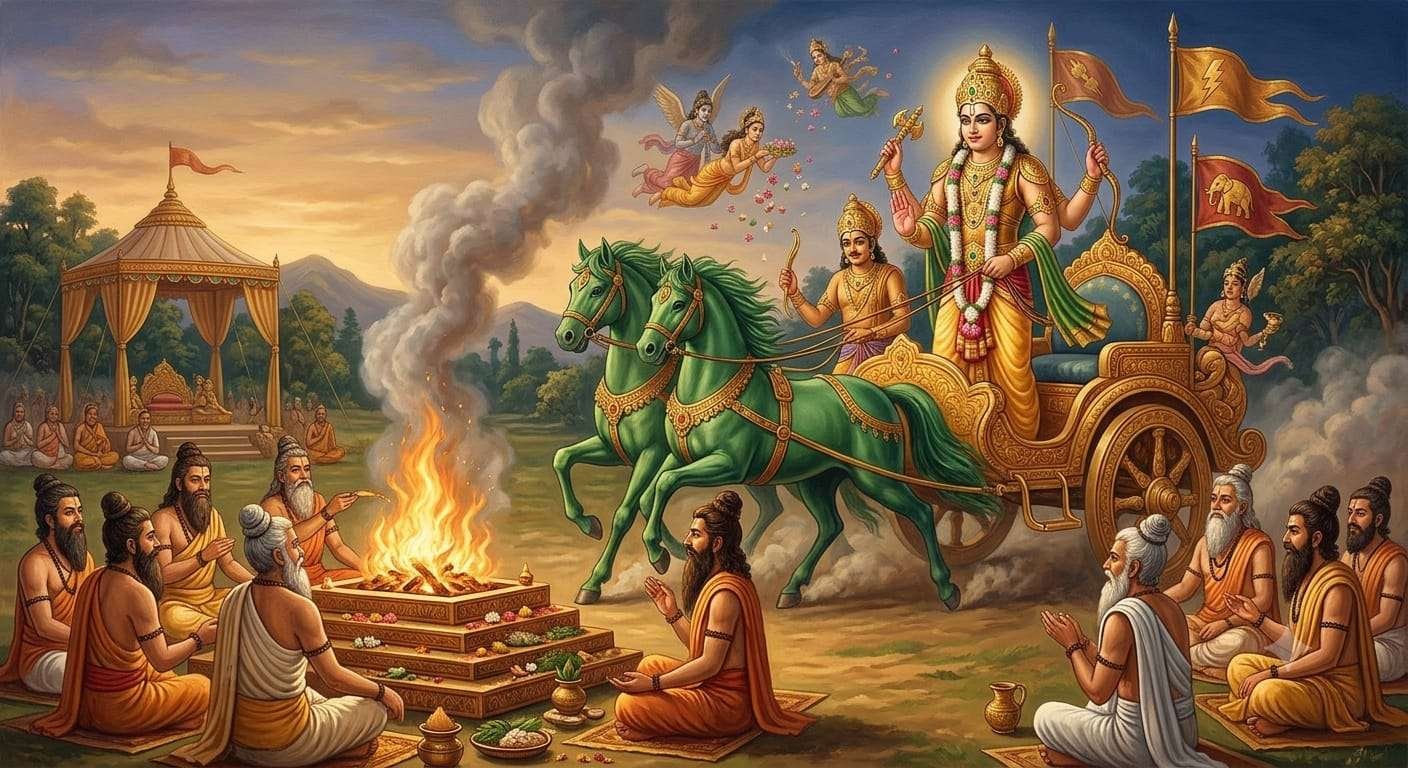
The Ribhus are celebrated as embodiments of intelligence, craftsmanship, and righteous action. They move with the swiftness of the wind and traverse the heavens in radiant chariots drawn by fleet-footed horses. Their remarkable mobility symbolizes mastery over both physical space and higher realms of consciousness. Every action performed by them is dedicated to the welfare of the universe, reflecting the Vedic ideal that knowledge acquires its highest value only when employed for the benefit of all living beings. Their lives demonstrate that true greatness lies in combining technical excellence with compassion and selfless service.
Among their most celebrated deeds is the loving care they bestowed upon their aged parents. Worn out by the burden of time and reduced to helplessness, the parents were restored by the Ribhus to youthful strength, vitality, and beauty. This extraordinary accomplishment represents far more than a miraculous event. In the Vedic vision, it signifies the regenerative power of knowledge, discipline, and devoted service. It also reflects an enduring scientific temperament, encouraging humanity to understand nature deeply and discover ways to restore health, longevity, and dignity to life through wisdom rather than mere supernatural intervention.
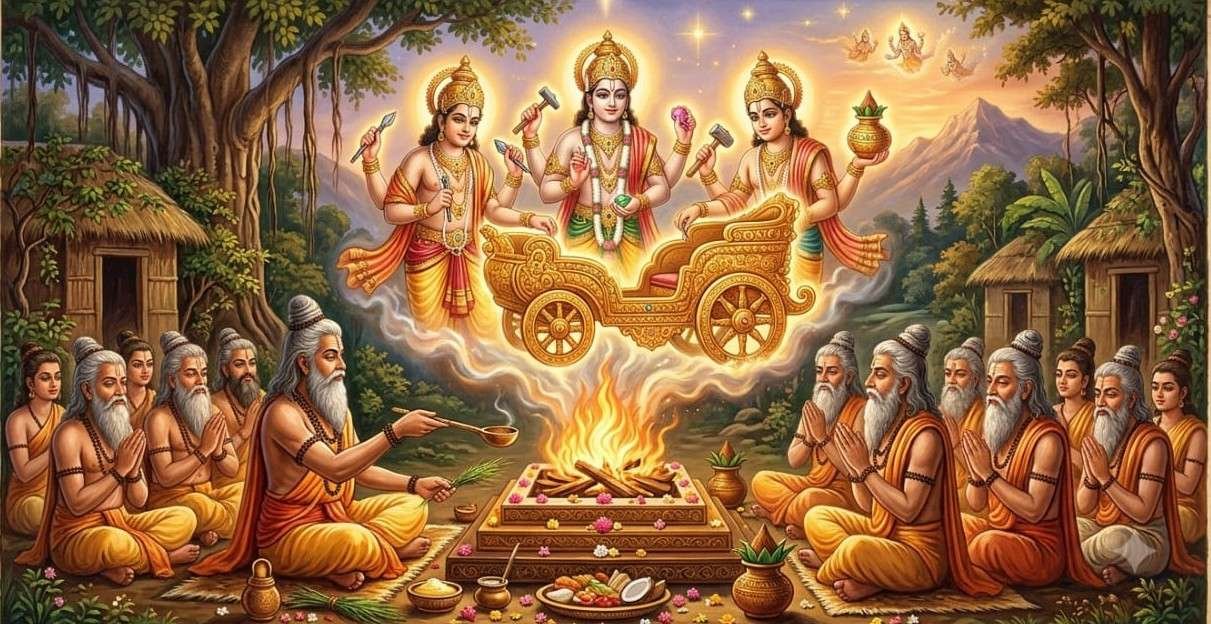
The Ribhus earned everlasting fame through their unparalleled feat of dividing a single sacred vessel into four perfectly identical vessels without diminishing its sanctity or usefulness. This act astonished the divine artisan Tvaṣṭṛ, who joyfully acknowledged their extraordinary mastery. The episode symbolizes precision, innovation, and the conservation of value through intelligent design. It reflects a profound understanding that transformation does not imply destruction but creative multiplication, a principle echoed in modern scientific thought where knowledge enables greater efficiency without loss of essential substance.
The three brothers displayed distinct yet harmonious approaches to solving the challenge. The eldest proposed dividing the vessel into two, the second offered a similar suggestion, while the youngest, Vāja, envisioned dividing it into four equal vessels. Their collaborative reasoning illustrates the Vedic appreciation for dialogue, analytical thinking, and the refinement of ideas through collective wisdom. Tvaṣṭṛ’s acceptance of their accomplishment demonstrates that genuine innovation earns recognition irrespective of its source when it serves truth and excellence.
The Ribhus were renowned for speaking only truth, and every word they uttered was fulfilled through action. Their speech and deeds existed in perfect harmony, revealing the Vedic conviction that truth possesses creative power. Integrity was not regarded merely as a moral virtue but as a force that shaped reality itself. Such unwavering commitment elevated the Ribhus from mortal artisans to divine beings worthy of receiving Soma offerings during the sacred third pressing of the yajña, an honour reserved only for those who attained spiritual perfection through righteous action.
The hymns further recount their astonishing restoration of a cow that had long perished. Preserving its skin and flesh intact before restoring its vitality, the Ribhus demonstrated mastery over preservation and renewal. Symbolically, the cow represents nourishment, nature, and the sustaining forces of existence. Their achievement reflects the Vedic aspiration to understand the hidden processes of life, regeneration, and continuity. Rather than glorifying magic, the narrative celebrates disciplined knowledge applied for the protection and renewal of creation.
The companionship the Ribhus earned with Indra and the other gods illustrates that divine status in the Vedic tradition is attained through merit rather than birth. Courage, creativity, truthfulness, and service elevated them into the celestial assembly. Their transparent character reflected purity of intention, while their immense strength was dedicated to protecting those who performed righteous sacrifices. Their elevation serves as an inspiring reminder that excellence founded upon virtue naturally earns universal honour.
The hymns describe the Ribhus dwelling for a sacred period in the radiant abode of the Sun, associated with the cycle of the twelve stellar divisions that govern seasonal rhythms. Emerging from this luminous retreat, they released life-giving rains, filled rivers with flowing waters, and transformed barren lands into fertile fields rich with herbs and vegetation. These descriptions reveal the Vedic recognition of the interconnected cycles of the cosmos, the Sun, rainfall, rivers, and agriculture. The narrative reflects careful observation of natural phenomena and an appreciation of ecological balance long before the emergence of systematic environmental sciences.
The Ribhus also perfected the construction of durable chariot wheels and swift horses, representing mastery over engineering, transportation, and dynamic movement. Their craftsmanship extended beyond mechanical excellence to the generation of universal inspiration and abundant forms of prosperity symbolized by sacred cows. Every creation reflected sustainability, precision, and functionality. The Vedic seers thus present technological advancement as meaningful only when harmonized with ethical purpose and the well-being of society.
Recognizing their unmatched abilities, Indra and the other gods bestowed numerous blessings upon the three brothers. The youngest, Vāja, became closely associated with all the gods through his exceptional skill. The eldest Ribhu formed a sacred bond with Indra, while the middle brother Vibhu became intimately connected with Varuṇa, the guardian of cosmic order. These divine relationships signify the integration of craftsmanship with strength, justice, and universal harmony, demonstrating that every field of excellence ultimately serves the greater order of creation.
The Ribhus yoked the divine twin horses to Indra’s celestial chariot through the power of sacred hymns and disciplined action. Their accomplishments reveal that inspired speech, intelligent effort, and technical mastery together create progress. They are therefore invoked as compassionate friends who bestow wealth, flourishing cattle, abundant food, enduring strength, and noble prosperity upon sincere worshippers. Their blessings encompass both spiritual fulfilment and material well-being, reflecting the holistic vision of Vedic life.
As builders of the sacred vessels and perfect performers of divine works, the Ribhus pleased the gods and were granted the privilege of partaking of Soma during the third sacred pressing. This honour symbolizes the highest recognition of human potential elevated through discipline, truth, creativity, and selfless service. The hymn concludes with a heartfelt prayer that these divine craftsmen continue to enrich humanity with wisdom, prosperity, strength, and noble inspiration. In the enduring light of the Rigveda, the Ribhus stand as timeless exemplars of scientific curiosity, ethical craftsmanship, ecological awareness, and spiritual realization, demonstrating that the highest achievements of civilization arise when intellect is guided by righteousness and dedicated to the welfare of the entire universe.