
Lakshmanrao Upadhyayula
Among the profound hymns of the Rigveda, Sage Vāmadeva invokes the mighty Indra through verses composed in the sacred Gāyatrī Chandas, celebrating the divine power symbolized by his radiant twin horses. These hymns are not merely devotional songs but profound expressions of the Vedic vision, where nature, divinity, human aspiration, and cosmic order merge into a harmonious whole. Every invocation reflects a deep awareness that divine grace is inseparable from righteous action, disciplined thought, and unwavering faith.
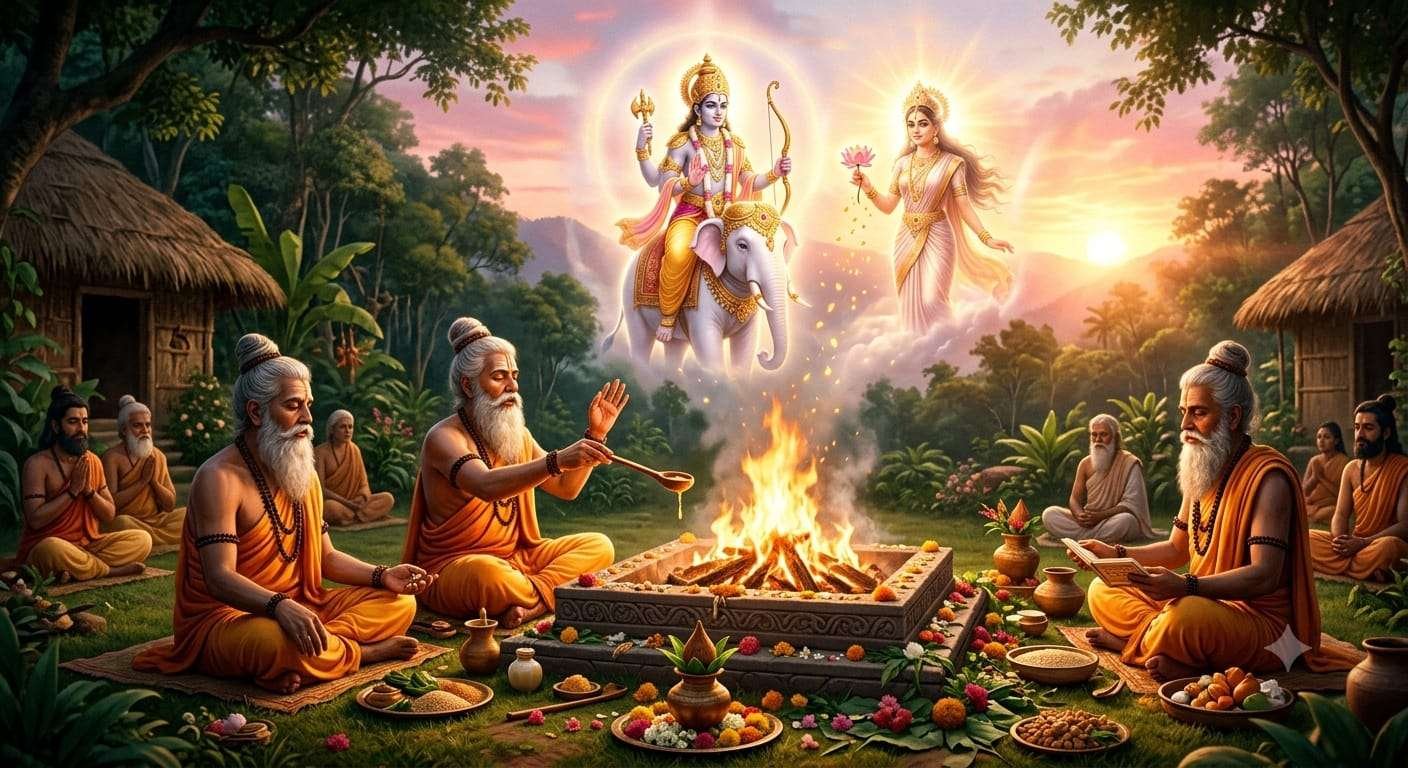
Indra is praised as the unconquerable protector, the destroyer of hostile forces, and the mighty guardian who safeguards both the physical and spiritual worlds. The sage respectfully invites him to the sacred yajña, requesting that he arrive accompanied by invincible protection. The yajña is portrayed as a meeting point between humanity and the divine, where sincere offerings, sacred chants, and disciplined minds create an atmosphere worthy of celestial presence. Divine protection is understood not merely as physical security but as the preservation of righteousness, wisdom, and inner strength.
The hymn glorifies Indra as ever-active, dynamic, and responsive to the aspirations of his devotees. His movement symbolizes the continuous flow of cosmic energy sustaining creation. Human beings are described as performers of extraordinary deeds under his inspiration, and the sage prays that their noble efforts may be rewarded with prosperity, courage, and enduring wealth. Here, wealth signifies not only material abundance but also knowledge, virtue, health, and spiritual fulfillment.
The devoted patrons who remain steadfast in their faith are portrayed as recipients of Indra’s special favour. Their enthusiasm in preserving sacred traditions empowers them to overcome growing adversities. The enemies mentioned in the hymn represent not only external opponents but also ignorance, greed, fear, falsehood, and disorder that threaten both individual and collective well-being. Indra’s victory over such forces symbolizes the triumph of enlightened consciousness over destructive tendencies.
The worshippers declare themselves companions of Indra, united with him through unwavering devotion and continuous recitation of sacred hymns. Their prayers are offered with complete concentration and reverence, reflecting the Vedic understanding that sincere worship demands purity of thought, disciplined speech, and focused awareness. Divine protection is sought not only for individuals but for the entire community, illustrating the collective spirit that permeates Vedic civilization.
Indra is extolled as the wielder of the mighty Vajra, the irresistible weapon representing decisive wisdom, moral authority, and the power to remove obstacles. Though immensely powerful, he is also described as charming, flawless, and compassionate. The devotees pray that he may surround them with impenetrable protection, preserving them from visible dangers as well as unseen disturbances affecting both body and mind.
The hymn beautifully portrays the sacred relationship between Indra, cows, and nourishment. Cows represent prosperity, learning, purity, and the sustaining forces of life. The devotees identify themselves as companions of the divine guardians of cattle, sharing in sacred nourishment received through divine grace. Their request for the remaining food symbolizes humility before the Divine, acknowledging that every blessing originates from the supreme source and reaches humanity through divine generosity.
The sages further proclaim that Indra himself embodies both prayer and the object of prayer. He inspires the hymns and simultaneously receives them. His intention to reward devoted priests with riches cannot be obstructed by any force. Such riches include spiritual insight, intellectual brilliance, fertile lands, flourishing cattle, abundant harvests, healthy descendants, and social harmony. Sage Gautama is remembered as one among the illustrious seers who praised Indra to obtain nourishment for society through sacred wisdom.
Soma occupies a central place within these hymns. Indra joyfully accepts the Soma offered during the yajña, symbolizing the harmonious exchange between divine powers and human devotion. Energized by Soma, he enters the strongholds of destructive forces and removes them. Spiritually, Soma represents the bliss of higher consciousness, while scientifically it reflects the disciplined preparation of sacred herbal extracts used within carefully regulated ritual practices that elevated both physical vitality and mental clarity.
The sages continue their praises, recognizing that devotion nourishes divine presence within human consciousness. Through sacred chanting and Soma offerings, Indra blesses his worshippers with food sufficient for their children and future generations. This reflects the Vedic ideal of sustainability, where prosperity is measured by the ability to preserve abundance across successive generations rather than by temporary accumulation.
Indra is acknowledged as the universal deity accessible to all sincere seekers, irrespective of social position. Through the disciplined chanting of Vedic mantras, every patron may invite his presence. He is described as the generous bestower of secure dwellings, stability, and social order. The Soma he receives symbolizes the mutual relationship between divine grace and human responsibility, where both giver and receiver participate in maintaining cosmic balance.
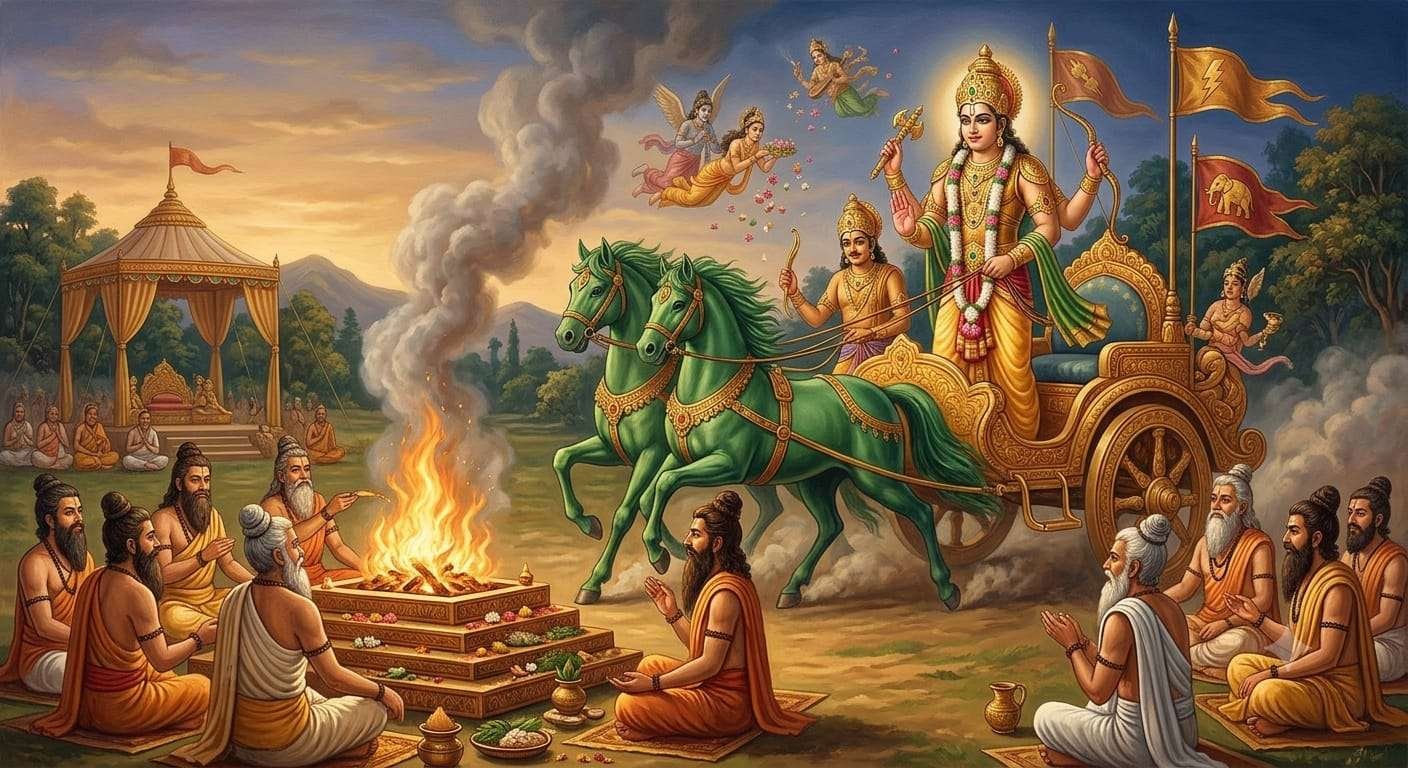
The priests earnestly pray that their hymns may reach Indra and draw him toward their sacrificial altar. They request that his magnificent twin horses be turned in their direction, signifying the arrival of divine energy, inspiration, and protection. Just as a devoted husband attentively listens to the loving words of his wife, the worshippers pray that Indra may lovingly receive every sincere prayer offered with faith and humility.
The aspirations expressed by the sages include the acquisition of swift horses, abundant Soma vessels, countless cows, and inexhaustible wealth. In the Vedic worldview these requests possess symbolic depth. Horses represent vitality, disciplined energy, speed, and progress. Cows symbolize knowledge, nourishment, compassion, and prosperity. Gold signifies purity, brilliance, and enduring value. The prayer therefore seeks the complete development of civilization through material prosperity guided by moral wisdom.
Indra is praised as the destroyer of Vṛtra, the mighty force that obstructs the life-giving waters. This celebrated victory represents the removal of stagnation and the restoration of natural order. Scientifically, the imagery may also be understood as an ancient poetic description of seasonal rains overcoming drought, ensuring agricultural fertility and ecological balance. Spiritually, it illustrates the liberation of the human mind from ignorance and the release of the hidden streams of wisdom.
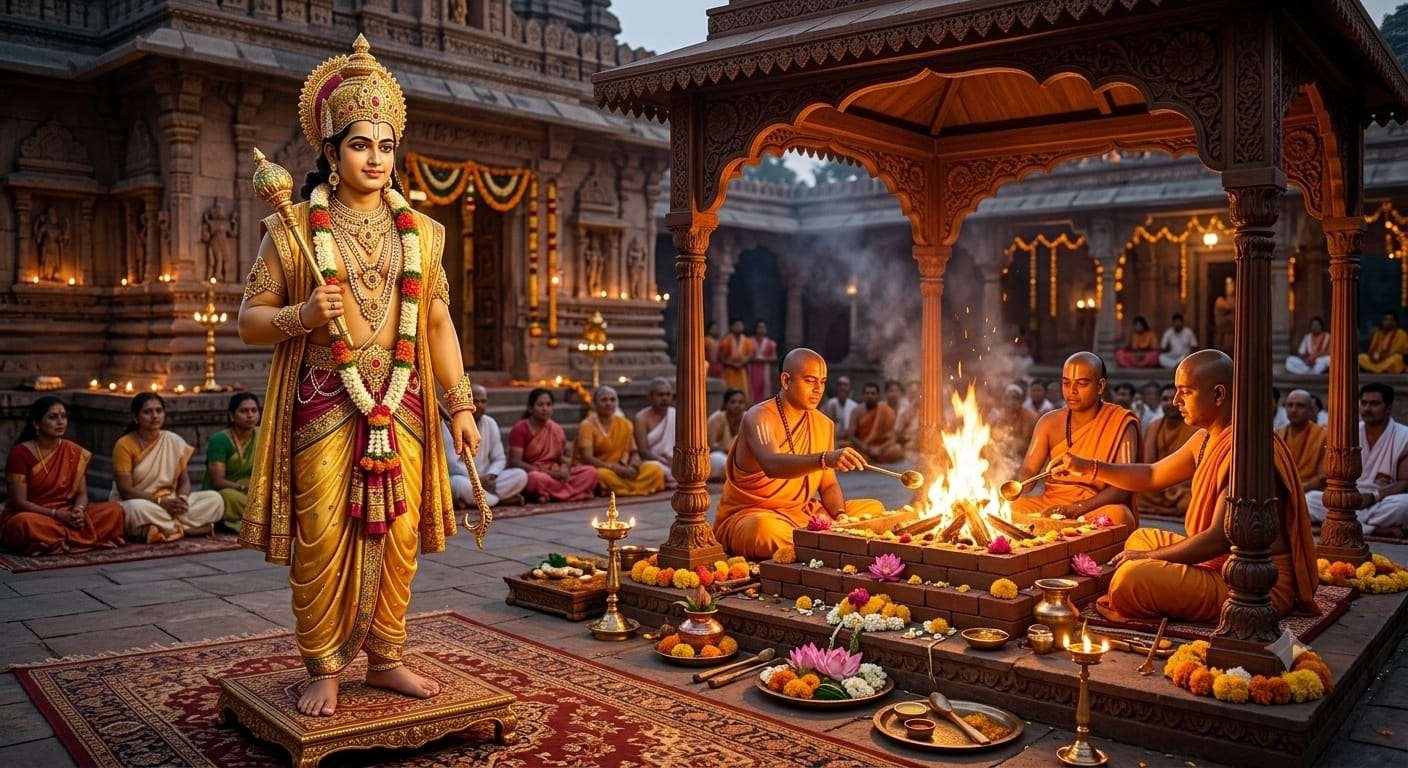
Special admiration is offered to Indra’s reddish-brown twin horses, whose beauty, strength, and vitality captivate the minds of the sages. They are compared to exquisitely carved images fashioned from sacred Palāśa wood and placed upon finely crafted wooden platforms. The comparison demonstrates the refined artistic sensibility of Vedic culture, where beauty, craftsmanship, symbolism, and sacredness were inseparably connected.
The sages finally pray that whether they travel by chariot or on foot, Indra’s peaceful and benevolent horses may always remain auspicious guides. These divine steeds symbolize the disciplined movement of life under the guidance of righteousness. Their strength is never violent but protective, never destructive but sustaining. The hymn concludes by presenting a complete Vedic vision in which divine power, natural harmony, ethical living, scientific observation, artistic refinement, and spiritual realization unite into one integrated philosophy. Through these timeless prayers, Sage Vāmadeva reveals that true prosperity arises when human endeavour advances in harmony with cosmic order, guided by wisdom, gratitude, and unwavering devotion.