



The Himalayas are not just a range of mountains; they are a living symbol of India’s cultural consciousness, spiritual tradition, natural wealth, and human sensibilities. Its lofty peaks inspire humanity to dream big, while its rivers convey the message of life, continuity, and the growth of civilizations. Connecting this Himalayan consciousness with literature, art, culture, and global dialogue, the Third International “Sparsh Par Himalaya” 2026 Festival, held at Thano, the Writers’ Village in Dehradun, Uttarakhand, became a memorable occasion for participation. Writers, artists, scholars, and creative individuals from various countries and several states of India participated in this event.
Today, when the world is beset by challenges such as political tensions, war, cultural conflicts, environmental crises, and social divisions, the role of literature and culture becomes more important than ever. Politics often draws boundaries between countries and societies, but literature connects people based on their shared sensibilities. Languages may differ, geographical conditions may differ, and lifestyles may differ, but the aspirations for love, compassion, peace, justice, and human dignity are common everywhere. Literature gives expression to these shared values.
The author’s concept of the village
International events like “Touching the Himalayas” provide an opportunity to put this idea into practice. When creatives from different countries and Indian states gather on a single platform, the exchange of ideas is not limited to formal discussions. It becomes a medium for understanding the cultural traditions, historical experiences, literary trends, and contemporary challenges of different societies. Such platforms prove that literature and culture still have the power to bind people together in a common humanity.
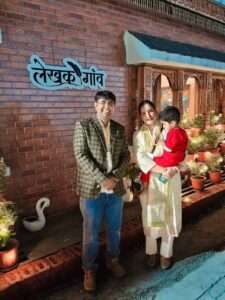
The venue for this event, Lekhak Gaon, holds special significance. The expansion of literary activities in rural settings challenges the notion that creativity and intellectual discourse are limited to metropolitan cities, universities, or large auditoriums. Villages have been a major source of memories, folk languages, folk arts, traditions, and lived experiences in Indian society. Literary platforms established in rural settings offer writers the opportunity to connect with their roots and present local experiences in a global context.
Himalayan Center of Creation
Writers’ Village is not just a venue for events; it is poised to become a vibrant hub for writing, reflection, research, translation, art, and cultural dialogue. Here, writers can channel their creative energy while being close to nature. The serenity, diversity, and depth of the Himalayas connect writers to new questions about society, culture, and human life. This is why Writers’ Village can be seen as a cultural experiment, a confluence of traditional knowledge and contemporary thinking.
The strength of Indian literature lies in its linguistic and cultural diversity. Hindi, Urdu, Punjabi, Bengali, Marathi, Tamil, Telugu, Malayalam, Kannada, Assamese, Garhwali, Kumaoni, and other languages express the memories, struggles, and aspirations of their respective societies. Platforms like Lekhak Gaon provide opportunities to enhance dialogue between these languages, encourage translation of regional literature, and introduce writers from different languages to each other’s creative worlds.
The social role of literature
The purpose of literature is not merely to entertain, but also to sensitize society and confront the challenges of the times. Today, writers face numerous challenges, including unemployment, economic inequality, gender discrimination, caste inequality, consumerism, the negative impacts of digital media, and environmental crises. Writers can raise public awareness on these issues through their writings. When literature becomes the voice of marginalized sections of society, farmers, laborers, women, children, and youth, it makes a meaningful contribution to the process of social change.
In this context, the responsibility of venues like Writers’ Villages increases even more. Such centers should not be limited to stage performances, award ceremonies, and formal speeches; they should also result in book publications, translation projects, research collaborations, training of young writers, and long-term collaborations between different languages. If the connections forged here translate into further literary activities, translations, and creative collaborations, the utility of Writers’ Villages can be even broader.

The Himalayas and environmental awareness
The environmental importance of the Himalayas is also a natural topic of discussion in the author’s village. Climate change, uncontrolled construction, deforestation, landslides, drying up of water sources, and unplanned tourism are posing serious challenges to the mountainous regions. The rivers originating in the Himalayas are linked to the lives, agriculture, and economy of millions of people. Therefore, sensitivity to the Himalayas is not only an emotional issue but also a question of environmental responsibility. Literature can inspire a new understanding of the relationship between nature and humans and a rethinking of development priorities.
The digital age has further expanded the possibilities of literary dialogue. Discussions, lectures, and creative presentations held at the Writers’ Village can now reach readers in remote areas through digital media. This can also provide opportunities for participation to writers and readers who, due to economic, geographical, or other reasons, are unable to attend in person. This requires systematic compilation of digital content, reliable archiving, and ensuring multilingual availability.
The true success of such events goes beyond the number of participants, but is determined by their intellectual, cultural, and social impact. It is important to see how much the Writers’ Village encourages new creative partnerships, how much it fosters interest in literature among younger generations, and how much it accommodates the voices of diverse sections of society. Literary platforms become more effective when they foster dialogue and respect diversity of thought, creative freedom, and critical perspective.
Participation in the third international “Touch the Himalayas” 2026, held at Writers’ Village, Thano, Dehradun, provided an opportunity to reflect on this broader role of literature and culture. Such platforms remind us that the boundaries of literature transcend political geography, and that the true glory of culture lies in respecting diversity. Touch the Himalayas will be meaningful only when its inspiration is reflected in the generosity of our thoughts, compassion in our works, and human unity in our behavior. This is the greatest achievement of Writers’ Village and the greatest need for global cultural dialogue.

