



In a democracy, the right to protest is non-negotiable. People of all ages, ideologies, and persuasions take to the streets to make their voices heard.
Some protest for genuine causes; others may have political axes to grind. And, as in every public movement, there can be a few shady characters lurking in the shadows.
That, by itself, is no reason to discredit a protest. But if you want to fly the Gen Z flag, you should at least qualify for the label. You cannot simply borrow the identity of a generation because it happens to be fashionable, or capable of attracting social media eyeballs.
Gen Z is not a political franchise
Gen Z is not a badge that anyone can pin on their chest. Broadly, the term refers to those born between the late 1990s and the early 2010s, although the precise boundaries vary by definition.
If the leaders of a protest fall outside that demographic, they are perfectly entitled to champion the concerns of younger people.
They can support students, speak for the unemployed and join movements against injustice. Solidarity has no age limit.
But claiming to be Gen Z is another matter altogether. If the label does not fit, there is no shortage of political platforms available.
India has political parties by the dozen, catering to almost every ideology, grievance and electoral ambition. Those who want to pursue a political agenda are free to find their place in that crowded marketplace. They need not squeeze themselves into a generational label that does not fit.
Question the questionable
This brings us to the Delhi High Court’s reported observations about protest leaders Saurav Das and Ashutosh Ranka of the Cockroach Janta Party.
The court reportedly questioned their Gen Z credentials, the changing focus of their protests and the purpose of their association, besides raising concerns about public order.
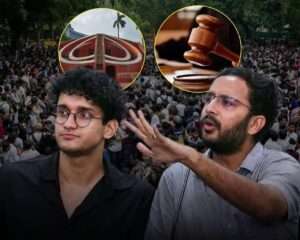
Courts are justified in questioning the questionable, particularly when the legality of detention, the conduct of protests or the maintenance of public order comes under scrutiny.
However, a court’s questions are not a verdict, and scepticism is not proof of guilt. The allegations, the legal grounds for detention and the protesters’ rights must all be examined on their merits.
Equally, the right to protest does not confer immunity from the law. Breaking barricades, obstructing public spaces or threatening public order cannot automatically be excused by invoking the language of dissent.
The cause must survive scrutiny
A protest should be judged by its cause, its methods and the evidence surrounding it – not merely by the age, appearance or political affiliation of its organisers.
The same yardstick must apply to everyone: students and seniors, activists and aspiring politicians, celebrated crusaders and self-appointed saviours of democracy.
After all, a fashionable label cannot make a questionable cause credible. Nor can an impressive slogan turn a political manoeuvre into a people’s movement.
Gen Z is a generation, not a get-out-of-scrutiny card. And in a democracy, nobody – however young, old, influential or vociferous – should be above questioning.

