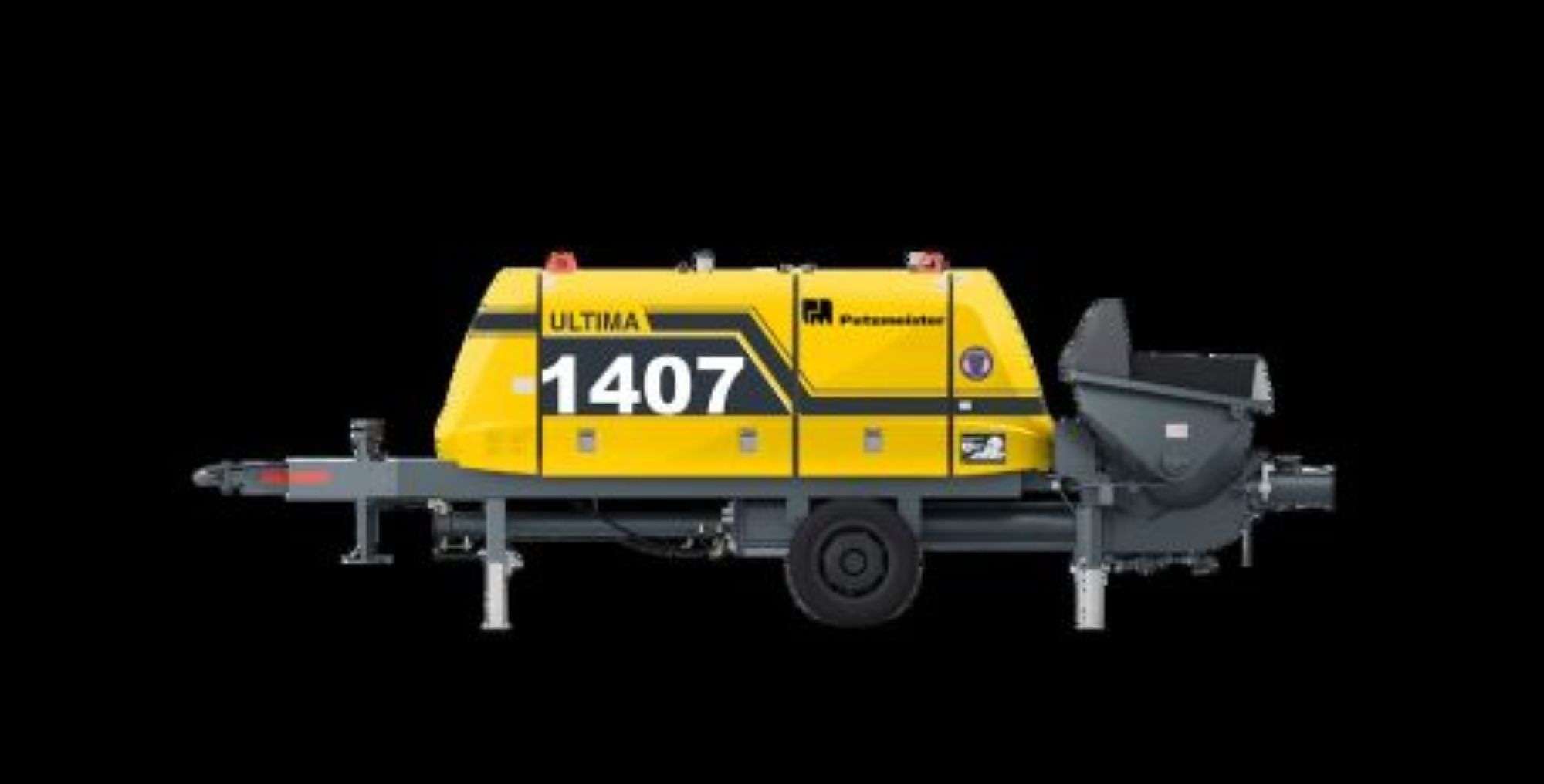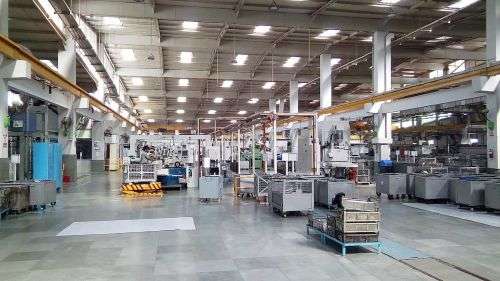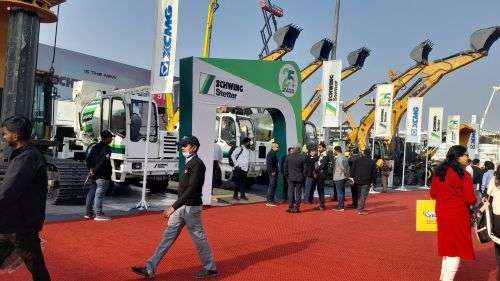
Beginning today, September 15, Greater Noida becomes the meeting point for an industry that has quietly become one of the most important enablers of India’s physical growth. For four days, bauma CONEXPO INDIA 2026 will bring together construction machinery, building-material equipment, mining machinery, construction vehicles, components, technology and services at the India Expo Centre.
This is the eighth edition of the international trade fair, and its scale says something about the market it serves. More than 1,100 exhibitors are expected, with participation extending across more than 100 countries and visitor numbers projected at more than 75,000. The 2026 exhibition is planned across around 1.45 million sq ft, making it a substantial marketplace for equipment makers, technology companies, contractors, infrastructure developers and buyers.
The numbers matter, but they do not tell the whole story. The more interesting question is what has happened to the Indian construction-equipment market between one edition and the next, and what the show now reveals about the direction in which the industry is moving.
Bigger Footprint
The progression is visible in the show’s own history. The 2023 edition brought together 601 exhibitors from 26 countries and 41,108 trade visitors from 83 countries. By 2024, the numbers had moved to 984 exhibitors and 51,118 participants, with the exhibition occupying 135,000 sq m and generating 6,298 buyer-seller meetings.
The 2026 numbers therefore represent another significant step in participation and business ambition, although the final visitor and exhibitor totals will only be known after the show closes. It is worth keeping that distinction clear because a trade fair is ultimately measured not by projected numbers but by the quality of conversations, transactions and relationships created on the ground.
That is where bauma CONEXPO INDIA has steadily strengthened its position. What began as an important industry exhibition has increasingly become a meeting place where manufacturers, contractors, technology providers and infrastructure stakeholders can read the market together.
Machine Ecosystem
The breadth of the 2026 exhibition is particularly significant. Earthmoving, road construction, lifting, conveying, concrete handling, project-site equipment and maintenance solutions sit alongside machinery for concrete products, prefabrication, asphalt, dry mortar, cement, lime and gypsum.
Mining has its own substantial technology story, covering extraction, material handling and mineral processing, while construction vehicles, engines, power systems, transmissions, fluid technology, tyres, wear parts, process control, navigation, communications, safety and technical support complete a much wider industrial picture.
The exhibitor ecosystem reflects that breadth. Caterpillar India, Volvo Construction Equipment, JCB India, Tata Hitachi, Liebherr India, LiuGong India, L&T, Putzmeister, Schwing Stetter, SANY India, Wirtgen India, XCMG Machinery India, Zoomlion India, Terex India, PALFINGER India, Ammann India, Escorts Kubota, ACE, BKT, Tata Motors and several other established Indian and international names are part of the 2026 industry landscape.
For visitors, this makes the exhibition less about looking at isolated machines and more about understanding how complete project ecosystems are being assembled.
Technology Shift
The technology conversation has also changed. Electrification is present, but it is no longer the only measure of progress. Connectivity, telematics, diagnostics, automation, operator assistance, asset management and digital services are increasingly becoming part of the equipment proposition.
That is particularly relevant in India, where technology adoption has to work against very practical realities. Duty cycles vary enormously. Sites differ. Infrastructure is uneven. Operator skills are not uniform. Financing, maintenance support, spare-parts availability and total operating economics can be just as important as the technology itself.
The 2026 edition responds to that reality with specialist areas covering aerial work equipment, fluid power, demolition and construction-waste recycling, alongside knowledge sessions, buyer-seller engagements and VR and simulator experiences. It gives the show a useful balance between machines that can be touched and technologies that have to be understood.
Global Window
The international dimension has become equally important. Germany, Italy, China and Taiwan are among the countries represented through pavilion and group-participation formats, giving Indian visitors access to technology and companies that may otherwise require several international trips to encounter.
The German Pavilion alone brings together a group of companies spanning machinery, components, process technology and specialised industrial solutions. Such participation matters beyond the exhibition floor because it allows smaller and specialised overseas companies to understand the Indian market at close quarters.
For India, that global window works in both directions. International manufacturers see a large and increasingly sophisticated market, while Indian manufacturers and users gain access to technologies, partnerships and business models from across the world.

Growth Engine
The exhibition’s evolution also mirrors the changing character of India’s infrastructure story. Roads, highways, railways, airports, urban infrastructure, housing, logistics networks, mining and industrial development have created a broad demand base for equipment.
But the market is no longer simply asking how much material can be moved or how quickly concrete can be placed. Productivity, fuel efficiency, safety, uptime, serviceability and environmental performance are becoming part of the purchasing conversation.
That makes the construction-equipment industry an interesting barometer of India’s growth story. The machines displayed here are not merely products for sale. They are the physical tools through which roads, buildings, factories, tunnels, bridges and urban systems are actually created.
Business Beyond
The real value of a show of this scale, however, is rarely captured by the number of machines standing in a hall. It lies in the conversations taking place around them.
A contractor comparing operating costs, a manufacturer looking for a component partner, an overseas company testing India’s manufacturing potential, a fleet owner examining telematics or a technology provider searching for an application partner all bring different questions to the same exhibition floor.
That makes buyer-seller engagement especially important. The 2024 edition recorded 6,298 buyer-seller meetings, demonstrating that the exhibition has developed a business architecture well beyond conventional product display.
The conference programme adds another layer, with sessions addressing deconstruction, durable concrete, fluid power and industry leadership. It gives the exhibition an opportunity to discuss not merely what the industry is selling today, but some of the problems it will have to solve tomorrow.
Organised Growth
Credit is due to the organisers for the way the platform has been built over successive editions. Messe München and the Association of Equipment Manufacturers are the organisers, with iCEMA as Partner Association and the Builders’ Association of India as Joint Organiser, supported by a wider network of industry and institutional partners.
The value of that structure becomes visible in the details. The India Expo Centre offers extensive indoor and outdoor exhibition areas, conference and meeting facilities, a press centre, business services, catering, communications infrastructure and large-scale parking. Metro connectivity and shuttle arrangements also make the venue more accessible to visitors arriving from Delhi and the wider National Capital Region.
For an exhibition handling machinery of this scale, logistics are not a peripheral matter. They are part of the visitor experience, and the continuing ability to bring manufacturers, buyers, associations and international participants into one workable environment deserves recognition.
What Changes
So what is different in 2026?
Perhaps the biggest change is not any single machine or technology. It is the maturity of the conversation surrounding the machines.
The Indian market is increasingly being viewed not simply as a place where equipment can be sold, but as a market where equipment can be engineered, manufactured, localised, serviced, digitally connected and potentially integrated into global value chains.
That changes the significance of bauma CONEXPO INDIA. The show becomes a place where the international construction-equipment industry can test its India proposition, while Indian companies can measure themselves against a much wider global technology and manufacturing landscape.
India Builds
The most useful way to read bauma CONEXPO INDIA 2026, therefore, may be neither as a giant equipment catalogue nor simply as another industry exhibition.
It is a snapshot of an India that is building at scale, but also beginning to ask harder questions about productivity, technology, skills, sustainability, localisation and global competitiveness.
Beginning today, those questions will have machines around them, manufacturers behind them and buyers walking the aisles looking for answers.
And that is perhaps the most revealing measure of how far this exhibition — and the industry it represents — has travelled.