



The Saptamatrika Temple is situated at Sanyasi Kuppam near Tirubuvanai in the Union Territory of Puducherry. This little-known shrine is remarkable for its rare group of large stone idols of the Saptamatrikas. Unlike the smaller panels commonly seen in temples, the idols here are almost human-sized, giving the shrine a distinctive appearance.
The present temple structure appears to be relatively recent, while the stone idols preserved here are much older. The main Saptamatrika idols are tentatively dated to around the 12th or 13th century CE, although no inscription has been found to confirm their exact date.
The presiding deities are Brahmani, Maheshwari, Kaumari, Vaishnavi, Varahi, Indrani and Chamundi. Varahi, with her boar-faced form, is particularly distinctive. Ganesha and Veerabhadra are also worshipped alongside them.
The present shrine is simple, with the ancient idols forming its main attraction. The seven Goddesses are seated together in the sanctum, while several other old stone idols and reliefs are preserved in the ardha mandapa and around the temple.
These include idols identified as Bhikshatana, the mendicant form of Shiva, and Mohini, the enchanting form of Vishnu. A large Ganesha and a seated Veerabhadra are also found within the complex.
The temple preserves several layers of the religious history of Sanyasi Kuppam. Although the present structure is relatively recent, the old idols suggest that an earlier sacred site existed here.
The large Saptamatrika idols are considered to belong to a medieval sculptural tradition. A separate Varahi idol preserved beneath a tree may be considerably older, although its exact date has not been established.
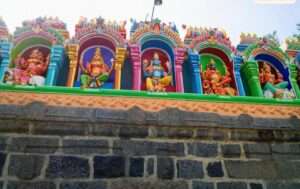
The wider village also preserves other old sacred remains, including a colossal Nandi and scattered stone idols, suggesting that Sanyasi Kuppam once had a more extensive sacred landscape.
According to the traditional legend, a powerful group of demons once threatened the Devas and disturbed the balance of the world. Unable to defeat them, the Devas sought the help of the Divine Mother.
From the divine powers of the Gods emerged the seven Mother Goddesses, who entered the battlefield and joined forces against the demons. Each brought a different divine power, and together they fought fiercely until the forces of evil were defeated and peace was restored.
After the battle, the Mothers remained upon earth as protectors of people and sacred places. Their worship gradually became an important tradition in villages and secluded sacred sites, where they were believed to guard the community from evil and misfortune.
At Sanyasi Kuppam, this ancient tradition survives through the old stone idols preserved in the shrine. Though the original sacred structure may have changed over the centuries, the idols continued to be worshipped by the local community.
Today, the shrine stands as a quiet reminder of this ancient tradition of Goddess worship, with the old idols continuing to receive the devotion of generations of devotees.
Navaratri is the principal period of worship, with special pujas and offerings to the Goddesses. Fridays and other auspicious days associated with Shakti worship are also observed by devotees. Local celebrations and rituals continue according to the traditional practices of the community.


