



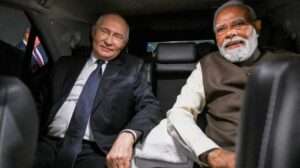
The world is watching New Delhi. And for good reason. The much-awaited 18th BRICS Summit, to be hosted by Bharat on September 12–13, is not merely another multilateral gathering. With Russian President Vladimir Putin, Chinese President Xi Jinping and other influential leaders converging on New Delhi, the summit comes at a moment when the old certainties of global geopolitics are rapidly disappearing. For Washington, particularly the Donald Trump administration, there is an uncomfortable reality staring it in the face: Bharat is no longer willing to be anyone’s camp follower. New Delhi is demonstrating what genuine strategic autonomy looks like—maintaining close ties with the United States while simultaneously deepening its longstanding partnership with Russia and cautiously repairing relations with China. That is not diplomatic confusion. It is mature statecraft. For decades, Bharat-Russia relations have survived changes of governments, ideological shifts and enormous geopolitical upheavals. Unlike many Western countries, Bharat did not abandon Moscow after the Ukraine conflict. Nor did it allow Western pressure over Russian energy and defence purchases to dictate its national interests. That relationship has now acquired an even greater strategic significance. Prime Minister Narendra Modi’s forthcoming meeting with Putin on the sidelines of the BRICS summit is therefore being watched closely. The two countries have already identified energy, fertilisers, defence, space, connectivity and economic cooperation as important areas for further engagement. Their recent meeting at the SCO Summit in Bishkek also reaffirmed India’s position that dialogue and diplomacy remain the way forward in resolving conflicts. But the real geopolitical story goes beyond Moscow. Bharat and China, after years of confrontation and mistrust, are showing signs of moving towards a more pragmatic relationship. This does not mean that border differences have magically disappeared, nor should New Delhi lower its guard. But the willingness to stabilise ties, restore dialogue and expand areas of cooperation is itself significant. And this is precisely where the emerging new geopolitics becomes interesting.
A Bharat that can talk to Washington, Moscow and Beijing simultaneously is a Bharat that cannot easily be boxed into anybody else’s strategic design. The West may have hoped that sanctions would compel countries doing business with Russia to distance themselves from Moscow. Yet reality has proved considerably more complicated. Even Russia has clarified that it is open to acceptable payment mechanisms rather than pursuing some simplistic campaign to eliminate the dollar. The larger trend, however, is unmistakable: countries are increasingly seeking greater freedom in trade, finance, energy and technology rather than allowing one geopolitical bloc to dictate their choices. That is where BRICS assumes significance. Bharat must resist the temptation to turn BRICS into an anti-Western club. Its greater opportunity is to transform it into a credible platform for a multipolar world—one where the Global South has a stronger voice, economic cooperation is not hostage to geopolitical rivalries and development priorities are not determined exclusively by traditional power centres. Bharat’s 2026 BRICS theme—“Building for Resilience, Innovation, Cooperation and Sustainability”—fits this moment remarkably well. The priorities encompass resilience in energy and supply chains, innovation and technology, sustainable development and practical cooperation. This is also where Modi’s foreign policy deserves recognition. Unlike the Congress-era tendency to view international relations through ideological prisms and domestic political compulsions, the Modi government has largely pursued an unapologetically interest-driven foreign policy. Washington is a partner. Moscow is a strategic friend. Beijing is a competitor with whom dialogue remains necessary. The Gulf is an increasingly important economic and strategic partner. Europe matters. The Global South matters. There is no contradiction in maintaining all these relationships. The contradiction would be allowing another country to decide which relationships Bharat is permitted to maintain. The New Delhi BRICS summit, therefore, is bigger than BRICS itself. It is a test of whether the world is finally moving away from the era of unquestioned geopolitical dominance towards a more balanced distribution of power. Bharat’s message should be unmistakable: it will cooperate with everyone, confront anyone when national interests demand it, and take instructions from nobody. That is the emerging new geopolitics. And New Delhi is increasingly at its centre.


