



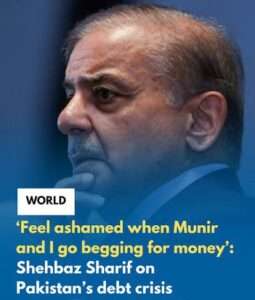
Pakistan continues to crib, sulk and complain. Governments and generals may change, slogans may change, but one habit remains constant: blaming Bharat for Pakistan’s own failures and trying to convince the world that Pakistan remains a power to be reckoned with. The reality is far less flattering. Pakistan is economically fragile, politically unstable and increasingly dependent on external assistance. It cannot realistically compete with a rapidly expanding Bharat economically, technologically, militarily or diplomatically—not today, and certainly not over the next two or three decades. That widening gap is perhaps the biggest source of its frustration. Its latest attempt to manufacture a new geopolitical narrative, including talk of closer alignment among Pakistan, Saudi Arabia and Turkey, therefore deserves scrutiny rather than applause. The idea of building a bloc resembling the European Union may sound impressive, but economic integration, institutional credibility and strategic compatibility cannot be created through declarations alone. At times, Pakistan’s desperation even descends into propaganda theatre. AI-generated images and manufactured narratives portraying major powers as supposedly sidelining Bharat reveal more about Pakistan’s anxieties than Bharat’s position. When reality refuses to cooperate, propaganda becomes the substitute. The world, however, is not that gullible. Pakistan’s longstanding association with terrorism has repeatedly damaged its credibility. A country cannot demand international respect while allowing its territory, institutions or networks to be associated with extremist organisations targeting other nations. Diplomatic packaging cannot permanently conceal that contradiction. The Saudi dimension nevertheless deserves attention. Riyadh is transforming its economy, attracting investment and seeking a larger global role. Its growing strategic engagement with Pakistan and Turkey is therefore worth watching carefully. Saudi Arabia has every right to pursue its interests, but Bharat has an equal right to assess the strategic implications. Bharat, meanwhile, is moving on multiple fronts. Its engagement with Iran remains important, while its strategic relationship with Russia continues to matter. Prime Minister Narendra Modi’s interactions with Russian President Vladimir Putin underline the depth of that partnership. Bharat’s continuing efforts to strengthen its air-defence capabilities, including the S-400 ecosystem, are part of a larger strategy of military preparedness rather than rhetorical posturing.
The economic contrast is even sharper. Bharat’s GDP growth remains above 7 percent, touching 7.8 percent in the first quarter. Its expanding economy, technology base, defence capabilities and diplomatic reach have fundamentally altered its global standing. China too understands that Bharat is no longer the country it was a decade ago. The lessons of Galwan and subsequent developments demonstrated that Bharat is prepared to defend its territorial interests while simultaneously expanding trade, technology and diplomatic engagement. China remains a formidable competitor, but it increasingly has to deal with a Bharat that is stronger, better prepared and more confident. For Pakistan, conventional competition is therefore becoming increasingly difficult. The battlefield is shifting to another domain—the global information and influence space. Bharat must recognise this challenge without falling into the trap of seeing every criticism as an anti-Bharat conspiracy. Legitimate criticism exists. But organised advocacy networks can also shape media narratives, think-tank discussions, academic discourse, human-rights campaigns and political lobbying. A hostile narrative, repeated often enough by sympathetic networks, can acquire the appearance of established fact. That is where Bharat must wake up. Bharat needs a stronger, coordinated global narrative strategy. Its diaspora is among its greatest strategic assets. Bharatiyans occupy influential positions in science, technology, medicine, business, academia, finance and public life. Yet professional success does not automatically translate into strategic influence. Influence is not measured only by GDP, military expenditure or population. It is also about who tells your story when you are not in the room. Bharat can deal with Pakistan as a state. It can counter terrorism, confront hostile propaganda and defend its interests diplomatically and militarily. But it must also confront hostile narratives emerging from multiple countries and institutions. The answer is not anger. It is organisation. The Bharatiya diaspora needs to become more coordinated, professional and proactive. Think tanks, universities, media platforms, technology communities, professional associations and civic organisations cannot be left entirely to others. For too long, Bharat has allowed others to define Bharat. That must change. Pakistan may be frustrated because it cannot catch Bharat. Bharat’s greater responsibility is to ensure that Pakistan’s frustration does not become the world’s misinformation. The battle has moved beyond the border. The question is whether Bharat is prepared to fight it there.

