



The Shani Temple at Naharda in Khilchipur, Rajgarh district, is an old and revered shrine dedicated to Lord Shani Dev. Situated near the Gadganga River, the temple has a close connection with the former Khilchipur princely state and is an important centre of Shani worship in the region. Devotees from nearby villages and towns visit the temple throughout the year, especially on Saturdays and Amavasya.
The present temple at Naharda dates back to 1920, when Maharaja Bahadur Sarkar Durjan Lal Singh Ji of Khilchipur is said to have installed Shani Dev at the present location and constructed the temple. However, the sacred tradition of the Shani image is much older. The original Shani image is traditionally believed to have been found in the Gadganga River. Therefore, while the present structure is about 106 years old, the history of Shani worship at this place goes back much further.
The main deity of the temple is Lord Shani Dev, the son of Surya Dev and Chhaya Devi and one of the most important deities of the Navagraha tradition. Shani is traditionally associated with justice, karma, discipline and the results of one’s actions. Devotees worship him seeking protection from difficulties, removal of obstacles and strength to face the consequences of past actions with patience and devotion.
The temple represents the traditional temple architecture of the princely-state period of central India. Its identity is closely connected with the sacred image of Shani Dev rather than with a large monumental architectural complex. The temple stands near the Gadganga River, linking the shrine with the natural landscape that forms an important part of its religious tradition.
The history of the shrine is connected with the Khilchipur princely state. According to the traditional account preserved by the Rajgarh district administration, Maharaja Diwan Ugrasen of Khilchipur received a divine indication in a dream about the presence of Shani Dev’s sacred image in the Gadganga River. The image was subsequently found and worshipped near the river. The original location was surrounded by forest and was difficult to access, so the shrine was later shifted to a more accessible place.
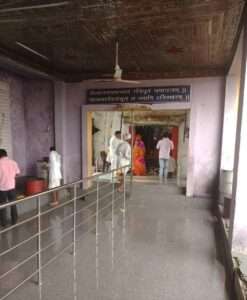
The present temple was established in 1920 under Maharaja Bahadur Sarkar Durjan Lal Singh Ji. The installation of Shani Dev at the present site gave the old local tradition a permanent temple, and the shrine continued to attract devotees from Khilchipur and the surrounding region.
The Sthalapurana of Naharda is centred on the sacred connection between Shani Dev, the Gadganga River and the rulers of Khilchipur. According to local tradition, Maharaja Diwan Ugrasen once received a dream in which Lord Shani revealed that his sacred image was present in the waters of the Gadganga River. The dream was understood as a divine command, and efforts were made to locate the image.
The sacred image was eventually found in the river and was brought out for worship. The place where it was first installed was surrounded by dense forest and was not easy for devotees to reach. Because of these difficulties, the shrine was later moved towards the present area of Naharda.
The tradition gives special importance to the fact that the Shani image was discovered from the river rather than being newly created for the temple. For devotees, this makes the deity a sacred manifestation connected directly with the land and waters of Khilchipur. The later installation in 1920 established the present temple as the continuing centre of this ancient local tradition.
The most important occasions at the temple are Shanichari Amavasya, when Amavasya falls on a Saturday, and other Saturdays dedicated to Lord Shani. Large numbers of devotees visit the temple on these days to offer prayers and seek the blessings of Shani Dev. Hariyali Amavasya also has special significance here as it is associated with the foundation and installation tradition of the present temple. During these occasions, the temple and its surroundings become an important gathering place for devotees from Khilchipur, Rajgarh and nearby areas.


