
M Jaishree
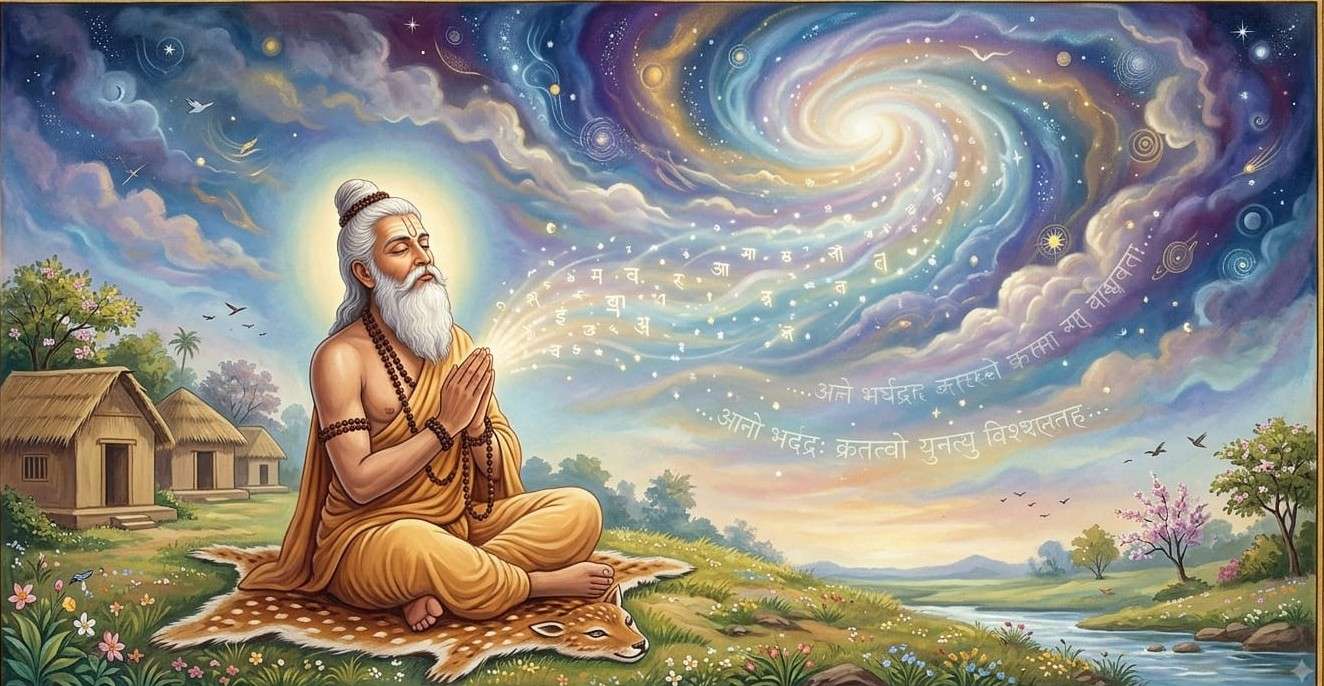
“A no bhadrah kratavo yantu visvataḥ”—”Let noble thoughts come to us from every direction”—is one of the most profound declarations found in the Rigveda. It reflects the expansive vision of the Vedic sages, who believed that truth is not confined to any individual, community, region, or tradition. Instead, wisdom is universal and can emerge from every corner of human experience. This prayer is not merely an invitation to receive ideas but a call to cultivate an open, discerning, and enlightened mind that welcomes truth wherever it appears.
The Vedic seers were not dogmatic teachers who expected unquestioning acceptance of their words. They were seekers, observers, and experimenters who explored the mysteries of nature, the human mind, and the inner self through deep contemplation, disciplined living, and relentless inquiry. Their teachings were born from experience rather than speculation. They examined every aspect of existence with sincerity before presenting their insights to society. This spirit of inquiry reflects a scientific temperament that values observation, reflection, verification, and continuous learning.
Spiritually, the mantra encourages individuals to rise above narrow identities, prejudices, and rigid beliefs. A mind that remains open to noble thoughts becomes free from ignorance, fear, and hatred. Such openness enables a person to recognize the divine presence in all forms of knowledge and life. The Vedic vision teaches that truth is eternal, while human understanding continues to evolve. Therefore, every noble idea becomes another step toward self-realization and universal harmony.
From a social perspective, this mantra lays the foundation for a harmonious and progressive civilization. A society flourishes when it welcomes diverse opinions, respects constructive criticism, and encourages the free exchange of ideas. Innovation, creativity, and peaceful coexistence emerge where people are willing to learn from one another rather than cling to rigid prejudices. The Vedic sages understood that the strength of a civilization lies not in uniformity but in its ability to absorb wisdom from multiple sources while preserving moral values and collective well-being.
Psychologically, the mantra offers a timeless principle for mental growth. Noble thoughts shape noble actions, and repeated noble actions build an elevated character. A mind constantly exposed to positive, truthful, and compassionate ideas develops resilience, emotional balance, and clarity of judgment. Conversely, negative thinking narrows perception and weakens inner strength. The sages recognized that the quality of human life is ultimately determined by the quality of one’s thoughts, making mental discipline the cornerstone of personal transformation.
The scientific spirit embedded in this Vedic declaration remains remarkably relevant even today. Modern scientific progress thrives on curiosity, openness to new evidence, respectful debate, and the willingness to revise conclusions in the light of fresh discoveries. The Vedic seers embodied these principles long before the formal development of scientific methodology. They never discouraged questioning; instead, they encouraged continuous exploration guided by reason, ethics, and humility. Their approach demonstrates that spirituality and scientific inquiry are complementary paths in the search for truth.
The enduring message of this mantra is that humanity advances when minds remain open, hearts remain compassionate, and intellect remains committed to truth. Noble thoughts are the invisible forces that inspire noble deeds, enlightened societies, and peaceful civilizations. The prayer of the Vedic sages is therefore not only a spiritual aspiration but also a timeless charter for intellectual freedom, psychological well-being, social harmony, and the ceaseless pursuit of knowledge that benefits all creation.