I wish to briefly introduce my erstwhile senior colleague in one of the leading English dailies in Hyderabad, Deccan Chronicle, who is not only a prolific writer, but also revered as an upright journalist holding professional ethics and morals. That’s P.A. Rama Rao. He sent me this article, and I consider it my privilege to oblige my erstwhile senior colleague. For any editor, having had the privilege of working with such a journalist is no mere accomplishment; it is a matter of genuine pride. — EDITOR
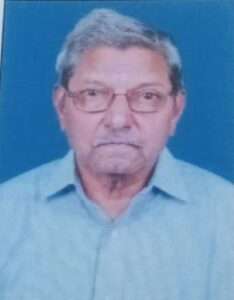
P.A. Rama Rao
The events that unfolded during the Parliament session that concluded last Thursday brought back to my memory several incidents from the years when I had the opportunity to cover the proceedings of Parliament from the Press Gallery.
My 10-year stint in Delhi as Special Correspondent of Deccan Chronicle gave me a ringside view of Indian parliamentary politics. More importantly, it gave me the rare opportunity to watch seven Prime Ministers at close quarters as they negotiated the often turbulent politics of the Lok Sabha.
Those were years when Parliament could be noisy, unruly and fiercely confrontational, but there was also an unmistakable understanding that the House was the principal arena where the Prime Minister and his government had to face the Opposition.
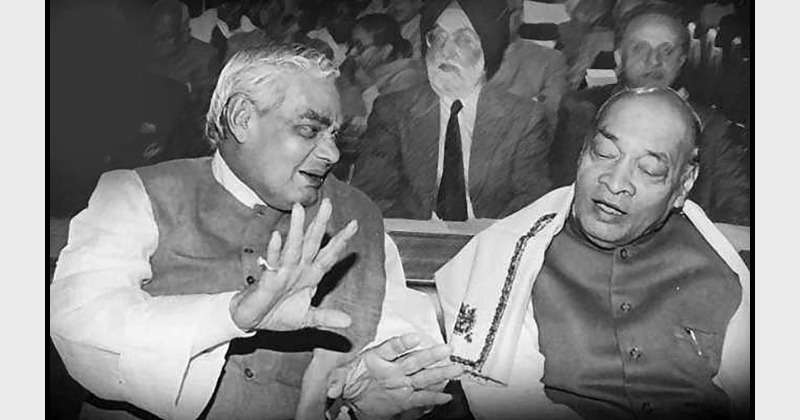
Of the seven Prime Ministers I covered, P.V. Narasimha Rao was the only one who completed a full five-year term despite not having a majority in the Lok Sabha. His tenure was marked by some of the most turbulent periods in parliamentary history.
I distinctly remember occasions when the Opposition virtually brought the House to a standstill. At one point, proceedings were stalled continuously for more than 14 days over demands for the resignation or dismissal of Communications Minister Sukh Ram following allegations of a scam. The atmosphere inside the House was charged. Members jeered, booed and heckled both the Prime Minister and the minister.
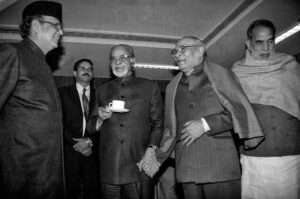
Yet, one thing stood out: P.V. Narasimha Rao was there.
He did not disappear from the House because the atmosphere was hostile. Day after day, he faced the Opposition and answered for his government.
The same was true during some of the darkest moments of his tenure, including the aftermath of the Babri Masjid demolition and the terrorist attack on the Charar-e-Sharief shrine. These were politically explosive situations, and the Prime Minister had every reason to expect a hostile House. But he continued to attend the Lok Sabha and face the political storm.
That, to me, was an important lesson in parliamentary accountability.
The other Prime Ministers I covered also had their share of political turbulence. Atal Bihari Vajpayee, during his two terms, first for just 13 days and later for 13 months before eventually returning as Prime Minister, faced formidable political challenges. V.P. Singh and Chandrasekhar too headed governments under extremely difficult circumstances.
But whatever their political compulsions, they did not simply desert the House when the going became difficult.
A Prime Minister’s presence in Parliament is not merely about marking attendance. It is about being available to answer questions, hear criticism and demonstrate accountability to elected representatives.
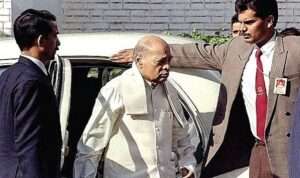
That is why the developments of the recent session inevitably made me look back at those years in the Press Gallery. Parliamentary disruptions are not new. Bitter exchanges are not new. Governments being cornered by the Opposition are not new. What matters is how those in authority respond when Parliament becomes uncomfortable.
I have watched Prime Ministers face heckling, political attacks, adjournments and confidence motions from a few metres away. Those memories have left me with one firm belief: the higher the office, the greater the obligation to face the House.
Against that backdrop, questions have now been raised over the reported absence of Prime Minister Narendra Modi and Home Minister Amit Shah from the Lok Sabha for an extended period during the recent session. If the reported figure of 17 days is correct, the public is entitled to know the circumstances of such absence.
There is also a legitimate question about how parliamentary attendance is recorded and whether any sitting allowance or other parliamentary entitlement was claimed for days on which a member was not physically present. These are matters that can be answered factually from the official records.
The Speaker’s office is, therefore, in the best position to clarify the attendance records and put the matter beyond speculation.
Having spent a decade watching Parliament from the Press Gallery, I believe the issue is bigger than any individual Prime Minister or minister.
Parliament is not merely a place to make laws. It is where those who govern must be prepared to face those who question them.
That principle was understood by the Prime Ministers I watched from the Press Gallery. It should remain equally sacrosanct today.