Raja Rao Pochiraju
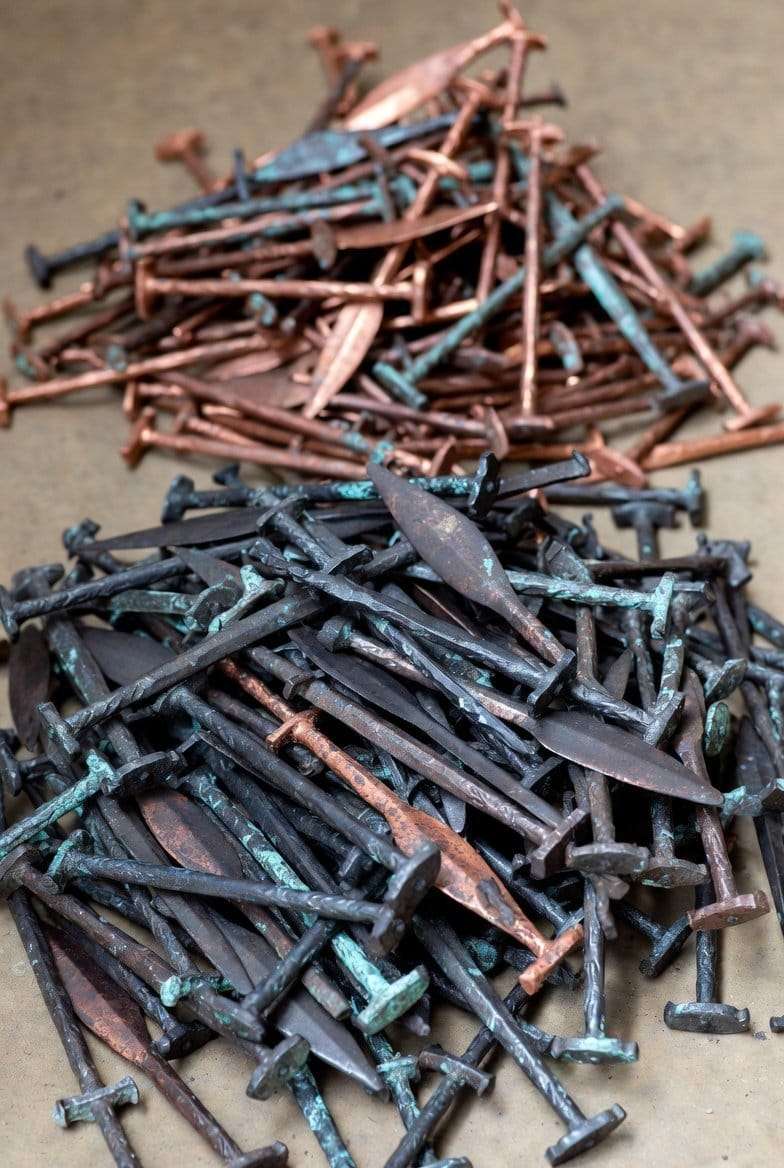
Indian archaeology may have just unearthed one of the most consequential clues in the long-running debate on the antiquity of metallurgy in the subcontinent. A newly analysed and directly dated weapon from the Ochre Coloured Pottery (OCP) Copper Hoard culture, dated to around 2000 BCE and reportedly containing nearly 30 per cent iron, is compelling historians and archaeologists to revisit several long-held assumptions about early metal technology in ancient India.
For decades, conventional historical narratives maintained that iron came into widespread use in India only around 1000 BCE. Consequently, references to dark or black metals in ancient Indian texts were often interpreted as belonging to a much later period. The latest metallurgical findings, however, suggest that the story may be far more complex—and far older.
The Copper Hoard culture, associated with the Ochre Coloured Pottery tradition of the Gangetic plains and parts of northern India, has long fascinated archaeologists. Copper artefacts discovered across present-day Uttar Pradesh, Haryana, Rajasthan and neighbouring regions have been broadly dated between 2000 BCE and 1500 BCE. Recent discoveries from sites such as Sinauli have already demonstrated that ancient Indian metalworkers possessed remarkable technological sophistication, challenging simplistic notions of a primitive Bronze Age civilisation.
What makes this latest discovery particularly intriguing is not merely its age, but its composition. Unlike pure copper, which possesses a characteristic reddish appearance, a copper-iron alloy naturally assumes a darker hue and exhibits enhanced hardness. Such an alloy bears a striking resemblance to descriptions found in later Vedic literature.
The Yajurveda and Atharvaveda refer to metals using terms such as Kṛṣṇa Ayas and Śyāma Ayas—literally translated as dark, blackened or dusky metal. For years, scholars debated the precise metallurgical identity of these terms. Under the conventional Iron Age chronology, these descriptions appeared somewhat problematic, forcing historians either to interpret them metaphorically or assign them to a much later period.
The new evidence offers a compelling and scientifically plausible explanation. If copper-iron alloyed weapons were indeed being manufactured around 2000 BCE, the Vedic terminology begins to make metallurgical sense. What ancient texts described as dark metal may not necessarily refer to pure iron in the modern sense but could well indicate sophisticated alloyed metals known to their authors.
Equally significant is the metallurgical vocabulary of the Rigveda. The text predominantly employs the generic term Ayas, which simply means metal and is widely interpreted in early contexts as copper or bronze. This distinction is noteworthy. It suggests that the evolution of metallurgical terminology in Vedic literature may reflect genuine technological developments preserved across generations rather than later literary embellishments.
Even the great epics—the Ramayana and the Mahabharata—contain descriptions of dark or blackened weapons that have often sat uneasily alongside the traditional narrative of a late Iron Age in India. While literary references alone cannot establish archaeological chronology, they acquire renewed significance when material evidence appears to support them.
This discovery does not, by itself, settle every debate concerning the dating of the Vedas or ancient Indian civilisation. Archaeology advances through cumulative evidence, scientific scrutiny, peer review and repeated analysis. Nevertheless, it unquestionably strengthens the case for re-examining rigid historical timelines that have remained largely unquestioned for decades.
History is rarely rewritten by ideology. It is rewritten by evidence.
For too long, India’s ancient past has been interpreted through frameworks that often left little room for fresh archaeological discoveries. The Copper Hoard weapon dated to 2000 BCE is a reminder that archaeology has no ideology—it has facts. And facts have a habit of outliving theories.
When ancient India turned dark metal into history, it also left behind a message for modern scholarship: the past is never truly settled until science has had its final word.