



The entrance of Draupadi into the dwelling of Subhadra deepened the ocean of sorrow already surging within; beholding the bereaved mother and the widowed bride Uttara, she broke into uncontrollable lamentation, her cries rising beyond measure until, overcome by anguish for the fallen Abhimanyu, she sank into unconsciousness. Even Krishna, the knower of all hearts, remained for a time a silent witness to that tempest of grief, for words find no passage where sorrow speaks in its own overwhelming tongue; yet, with gentle effort and measured compassion, he restored calm to the jewel-like women of the Pandavas, uttered fitting words of solace, and then returned to the station of Yudhishthira, who, embodying restraint even amidst ruin, directed all present to withdraw to their respective abodes.
Thereafter, Krishna, accompanied by Arjuna, proceeded to the latter’s camp and instructed him in sacred preparation; he bade him bathe, purify himself, and arrange a seat of holy grass adorned with yellow rice and fresh flowers, upon which the weapons were reverently placed and worshipped, encircling the sanctified dais consecrated by his own hands. He exhorted Arjuna to remain steadfast in that place, declaring the rite to be of supreme merit, one which had not been duly observed before, and by his words rekindled the warrior’s confidence; thus strengthened, Arjuna invoked Indra, Varuna, and Agni, beseeching them to uphold his vow before the setting of the sun, and performed with devotion the sacred rites to Krishna himself, completing the sixteenfold worship, whereupon the Lord blessed him, arranged vigilant protection around him, and advised him to rest in peace.
O King Dhritarashtra, as the night unfolded, Krishna reclined upon his couch, contemplating deeply the means by which Arjuna’s terrible pledge might be fulfilled, and at last drifted into repose, while his charioteer Daruka remained alert, watchful of every movement in the stillness of the encampment. Yet sleep did not embrace the hearts of the warriors and attendants, for all were troubled by the weight of Arjuna’s vow, born of unbearable grief and fierce resolve; they pondered anxiously how he might overcome the vast and cunning host of the Kauravas within the span of a single day, guarded as it was by masters of strategy and pride, and feared the dire consequence that, should Jayadratha remain unslain, Arjuna would cast himself into blazing fire in fidelity to his word. Thus, throughout the night, prayers rose unceasingly, rites were performed with trembling devotion, and voices whispered a single plea—that victory might crown Arjuna; some declared with fervour that even were ten thousand Dronacharyas to guard Jayadratha, still the hero should prevail and sever his head, and these invocations echoed across the camp like waves of faith seeking divine sanction.
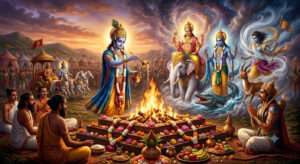
Before the break of dawn, Krishna arose and, addressing Daruka, spoke with resolute clarity of the gravity of the day; he reflected upon the seeming impossibility of Arjuna’s vow, yet affirmed with unwavering conviction that it must be fulfilled, for Arjuna was dearer to him than life itself, inseparable as though half his very being resided within that warrior; he declared that he would protect him from every peril and that the world would witness the extent of his power when, before the sun sank in the west, the wicked Jayadratha would fall. He proclaimed further that not Jayadratha alone, but Duryodhana, blinded by pride, along with his kin and allies, would meet their destined end, and that all kings who had rallied to the Kaurava cause would perish in the unfolding tide of war; his words, though free from outward agitation, shone with profound intensity, revealing the deeper blindness of arrogance surpassing even the natural blindness of Dhritarashtra.
He then commanded the preparation of his chariot, instructing that the noble steeds—Saibya, Sugreeva, Meghapuspa, and Valaka—be yoked and adorned with garlands of gold and precious gems, that the banner bearing the emblem of Garuda be raised, and that the chariot be furnished with mace, discus, bow, sword, and all celestial weapons; he ordered Daruka to don his armour and remain ready, so that at the sound of the conch Panchajanya he might swiftly bring forth the chariot. Daruka, bowing in reverence, declared that the Lord’s will would be executed without fail, affirming that with Krishna as charioteer, Arjuna’s prowess would be invincible and the world would behold an unparalleled spectacle of divine guidance and human valour united; thus reassured, Krishna concluded his instructions and remained within his camp.
Meanwhile, Arjuna, lying upon the sacred bed of grass prepared for him, fell into troubled sleep, burdened by grief; in that state, Krishna appeared before him, and Arjuna, rising with humility, offered him a seat and stood in reverence. Then the Lord spoke, counselling him to seal his mind against sorrow, for grief, he said, is the destroyer of strength and clarity, rendering a warrior vulnerable in the very hour of necessity; it is unworthy, he taught, to allow anguish to squander the opportunity for victory. Arjuna, still weighed by anguish, questioned when such sorrow might depart and lamented that Dronacharya seemed intent on testing his resolve. At the same time, the arrogance of Karna and his allies, and the concealment of Jayadratha behind their ranks, deepened his distress.
At this juncture, the ever-curious King Dhritarashtra, sensing an extraordinary turn within this dreamlike encounter, urged Sanjaya to narrate every detail with precision, for the unfolding of that night bore within it the seeds of destiny, poised to reveal, step by step, the inexorable march of fate.

