M Radha Madhavi
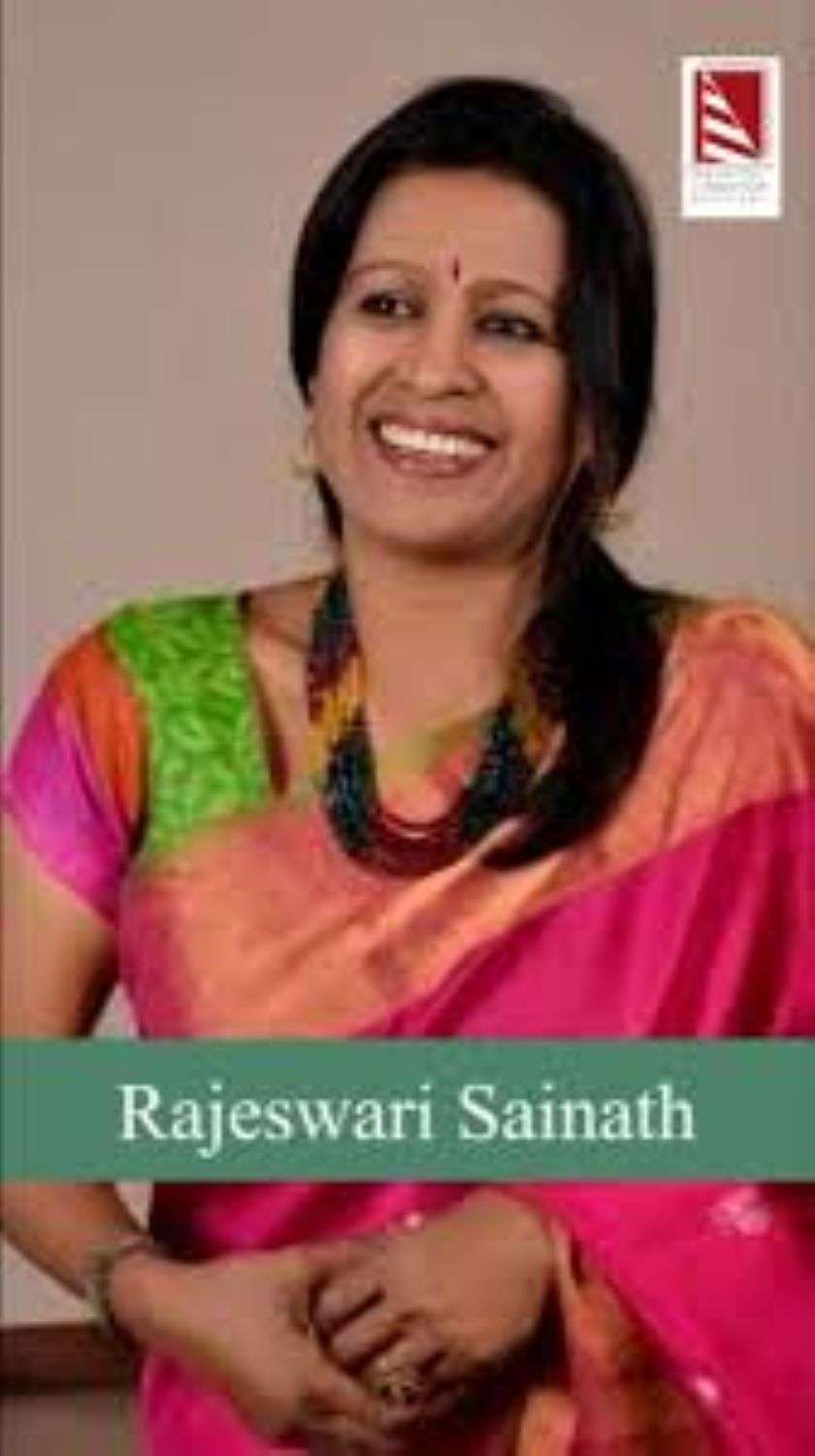
In the world of Indian classical dance, there are performers, there are teachers, and there are scholars. Rarely does one encounter an artiste who excels in all three dimensions with equal brilliance. Dr. Rajeswari Sainath belongs to that rare league.
For over five decades, she has dedicated her life to Bharatanatyam, transforming every stage she graces into a celebration of rhythm, mathematics, spirituality and artistic excellence. Today, she stands not merely as one of India’s most accomplished Bharatanatyam exponents but as a cultural ambassador whose work has expanded the boundaries of classical dance itself.
A disciple of renowned gurus Smt. Indira Rajan and Sri Pandanallur Srinivasa Pillai, Dr. Rajeswari’s artistic journey was shaped further by legendary mridangam maestro Guru Karaikkudi Mani, under whom she mastered the intricate science of layam—the mathematical rhythm that forms the heartbeat of Indian classical arts.
Her fascination with rhythm evolved into a serious academic inquiry. Unlike most performers, she ventured deep into the relationship between mathematics and dance, earning a PhD focused on the mathematical dimensions of layam in Bharatanatyam. The result is a unique artistic identity that has made her internationally recognized for presenting complex rhythmic structures with breathtaking precision and grace.
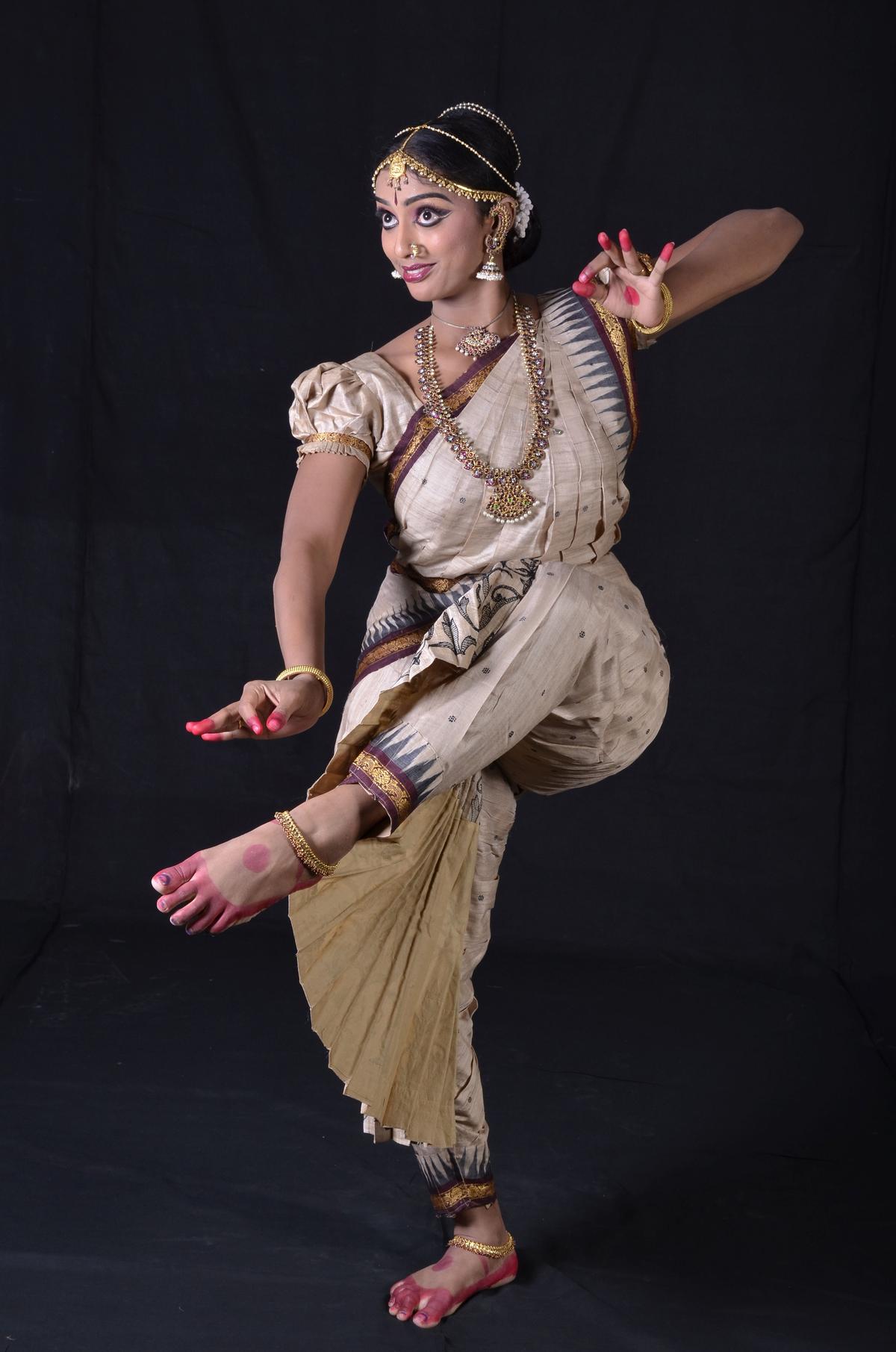
Every performance by Dr. Rajeswari is distinguished by remarkable footwork, rhythmic sophistication, and a rare command of time cycles. Connoisseurs of Bharatanatyam often describe her dancing as a living demonstration of geometry in motion.
Her performances have captivated audiences across continents—from the United States and Canada to Europe, Australia, South America, the Middle East, and the Far East. Empanelled by the Indian Council for Cultural Relations (ICCR) since 1994 and holding the prestigious “A-Top” grade from Doordarshan, she has represented Indian culture on some of the world’s most prestigious platforms.
Among her many milestones, one stands out prominently. She became the only Indian artiste to present a solo Bharatanatyam performance at the Main Concert Hall of the iconic Sydney Opera House during TEDx Sydney in 2013. It was a landmark moment not only for her but for Indian classical dance itself.
_0.jpg "Dancing to the rhythm of infinity: The extraordinary journey of Dr. Rajeswari Sainath 8 OrangeNews9")
Yet Dr. Rajeswari has never confined herself to conventional boundaries. In remote regions of Western Australia, she collaborated with Aboriginal musicians, creating a remarkable dialogue between Indian classical dance and indigenous Australian music traditions. In another pioneering initiative, she worked alongside renowned neurosurgeon Dr. I. Dinakar to explore how neural mechanisms can form the basis of dance expression.
Her artistic experiments have consistently broken new ground. She became perhaps the only Bharatanatyam artiste to perform with a 30-member live jazz orchestra as part of the Australian Art Orchestra’s acclaimed production Into the Fire at the Melbourne International Festival. The collaboration demonstrated how ancient Indian traditions could converse effortlessly with contemporary global art forms.
She has also presented acclaimed productions exploring the relationship between mathematics and dance, turning abstract numerical concepts into visually compelling artistic experiences.
Dr. Rajeswari’s scholarship extends far beyond the stage. A graduate in Commerce and Law, and a postgraduate in Public-Personal Management, she combines artistic excellence with academic rigor. Her lecture demonstrations and research presentations have been featured at leading institutions including Griffith University, Monash University, Brown University, Michigan University and the University of Madras.
Whether discussing the historical evolution of Bharatanatyam, the complexities of rhythm, stress management through classical arts, or the convergence of culture and management, she has emerged as a respected intellectual voice in the performing arts ecosystem.
As a choreographer, her creativity is equally impressive. She has produced dance ballets in multiple languages, drawing from mythology, spirituality, literature, and contemporary social concerns. Works such as Nava Durga Charitham, Gita Upadesham, Krishna Darshan, Panduranga, Menaka, Ahalya, Gandhari, and Peace on Earth reflect her versatility across Telugu, Sanskrit, Hindi, Tamil, Marathi and English.
Importantly, she has used dance as an instrument of social change. Productions highlighting organ donation, environmental conservation, women’s empowerment, and the welfare of India’s handloom weavers demonstrate her commitment to using art for public awareness and national development.
Perhaps her greatest contribution lies in education. Through Sruthi Laya Kendra, the institution founded by Guru Karaikkudi Mani and now led by her, Dr. Rajeswari has spent more than 35 years nurturing generations of dancers. With centres across Hyderabad, Chennai, Bengaluru, London, Australia, and the United States, the institution has become a global hub for Indian performing arts.
Many of her students have received prestigious scholarships from the Government of India and have gone on to become professional performers and teachers, carrying forward the rich legacy she has helped preserve.
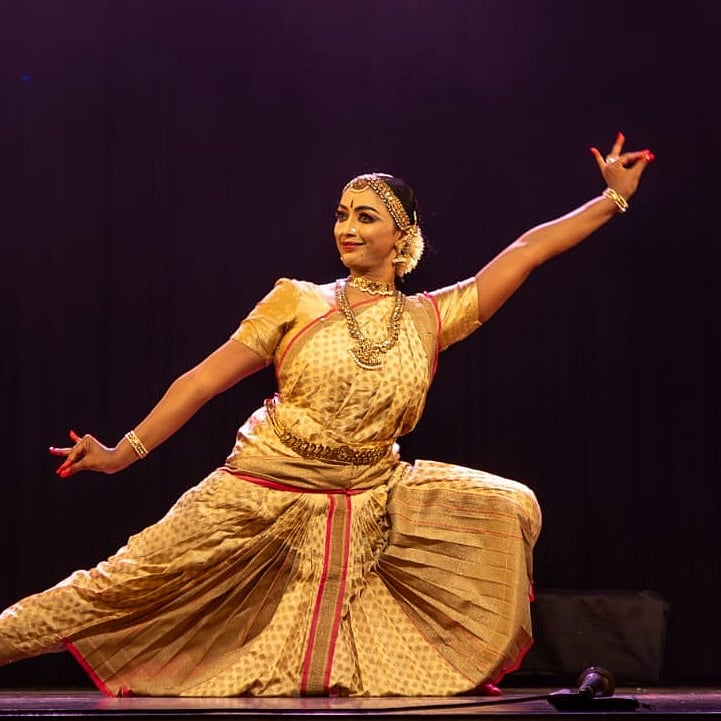
Her contribution has been recognised through numerous honours, including the Kalaimamani Award from the Government of Tamil Nadu, Rajiv Pratibha Puraskar, Nrithya Choodamani, Natya Kala Sarathy, Natya Illavarasi, and several other distinguished accolades.
Yet awards alone cannot define Dr. Rajeswari Sainath’s legacy.
Her true achievement lies in proving that Bharatanatyam is not merely a classical dance form frozen in history. Through her work, it emerges as a living, evolving language capable of engaging mathematics, neuroscience, management studies, indigenous traditions, jazz orchestras, and contemporary social concerns without losing its classical soul.
At a time when preserving cultural heritage often seems at odds with innovation, Dr. Rajeswari Sainath has demonstrated that the two can coexist beautifully. She remains a rare artist-scholar whose life continues to inspire dancers, academics, and art lovers across the world.
In every sense, she is not merely dancing to rhythm—she is dancing to the rhythm of infinity.