


MS Sparsha
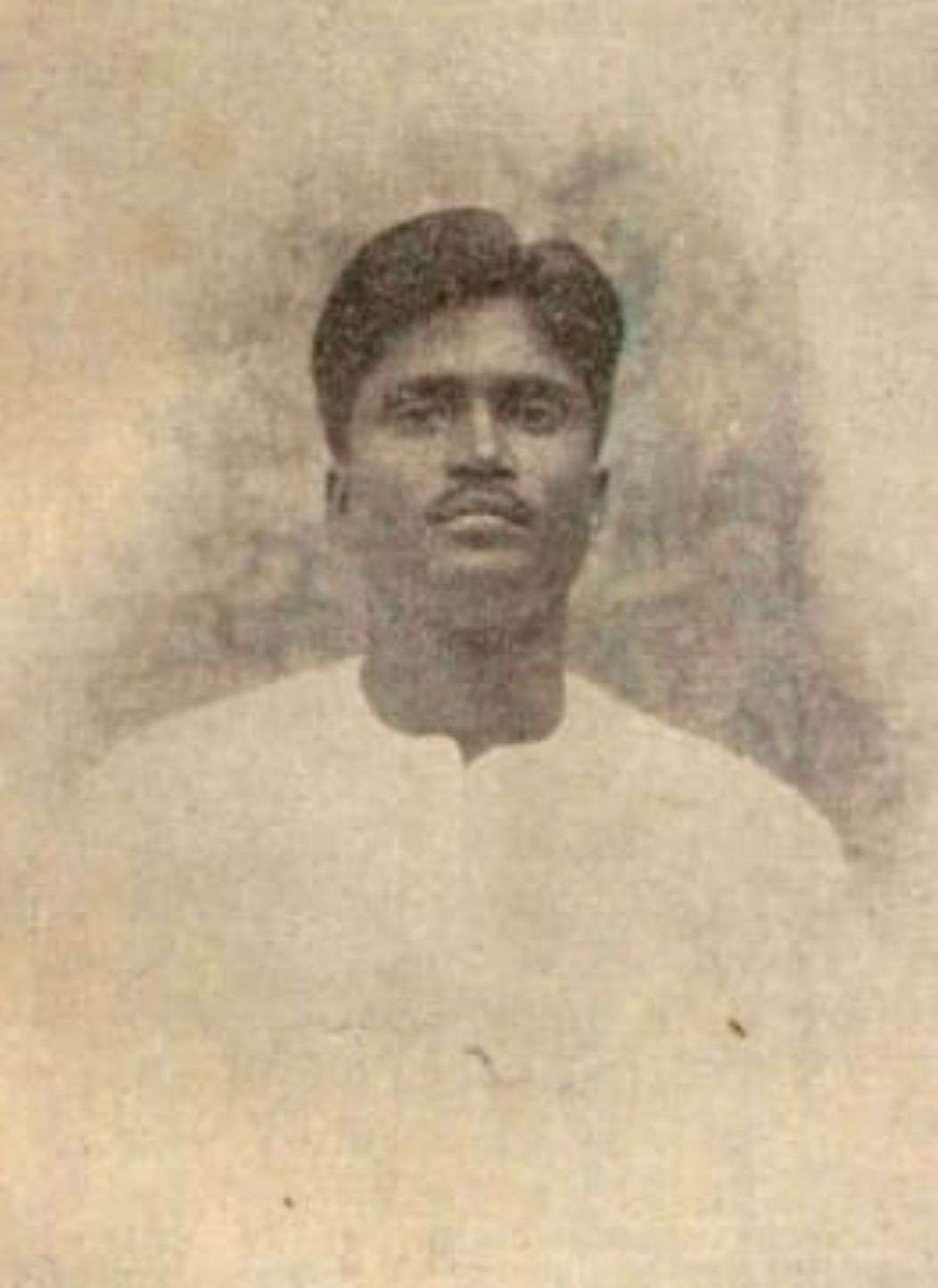
The brightest stars do not always shine in history books. Some illuminate a nation quietly. Dr. Pulin Bihari Sarkar was one of them.
Long before rare earth elements became the foundation of semiconductors, electronics, renewable energy and nuclear technology, this brilliant Bharateeyan chemist had already recognized their immense scientific and strategic value. Yet, despite his extraordinary contributions, history has largely forgotten the man who laid the foundations of analytical chemistry in India.
Born in Calcutta on November 22, 1896, Pulin Bihari Sarkar grew up in an environment that celebrated scholarship. His life changed forever when he entered Presidency College and came under the mentorship of Acharya Prafulla Chandra Ray, the father of modern Bharateeyan chemistry. Ray instilled in him a belief that science was not merely a profession but an act of national service.
His exceptional academic performance earned him the opportunity to pursue advanced research at the Sorbonne University in Paris under the celebrated French chemist Professor Georges Urbain, one of the world’s foremost authorities on rare-earth chemistry.
At the time, separating rare-earth elements such as scandium, europium and gadolinium was considered one of chemistry’s most demanding challenges. These elements possess remarkably similar chemical properties, making their separation painstakingly difficult. Success demanded extraordinary precision, patience and technical mastery.
Pulin Sarkar excelled where few could. He mastered sophisticated chemical separation techniques, became fluent in French to write and defend his prestigious Doctor of Science thesis, and even trained himself in precision glassblowing to manufacture miniature laboratory apparatus tailored to his experiments. His remarkable work earned the admiration of Professor Urbain and established him among the leading young analytical chemists of his generation.
Returning to Bharat filled with ambition, Sarkar hoped to explore the country’s vast but largely unexplored mineral wealth. He understood that Bharat’s soil held enormous reserves of strategically important elements that could shape the future of science and industry.
Reality, however, dealt him a crushing blow.
The laboratories at the University College of Science, Calcutta, lacked even the sophisticated spectroscopic instruments required for advanced research. Appeals for funding met with indifference. The university simply could not provide the equipment he needed.
Many would have abandoned research.
Pulin Sarkar refused.
Instead, he made an extraordinary personal sacrifice. Month after month, he set aside a substantial portion of his own salary, foregoing personal comforts to purchase state-of-the-art scientific instruments from Europe. Among them were the prestigious Hilger Large E Quartz Spectrograph, a high-precision microphotometer and other advanced spectroscopic equipment that few laboratories in Bharat possessed at the time.
Quietly and without seeking recognition, he donated every one of these costly instruments to his department.
With this self-funded laboratory, Sarkar and his students began pioneering research into Bharat’s mineral resources. His investigations revealed traces of germanium in Bharateeyan sphalerite, an element that would later become indispensable to semiconductor technology. He also developed innovative analytical techniques for studying uranium-bearing minerals and advanced research on rare elements such as rhenium, work that attracted international scientific attention and found its way into European scientific literature.
Yet, despite these remarkable accomplishments, Pulin Sarkar remained strikingly humble. He had little interest in fame or personal publicity. Even after retiring as the distinguished Ghosh Professor of Chemistry in 1960, he continued working as an emeritus scientist until failing eyesight finally forced him away from the laboratory, he had devoted his life to building.
He passed away quietly on July 13, 1971.
Today, whenever scientists analyse rare-earth minerals using advanced spectroscopic techniques or researchers investigate materials critical to electronics and atomic science, they benefit—knowingly or otherwise—from a scientific tradition that pioneers like Pulin Bihari Sarkar helped establish.
His greatest legacy was not merely the research papers he published or the discoveries he made. It was his unwavering conviction that if institutions failed to invest in science, a committed scientist must still find a way to serve the nation.
He invested not in wealth, but in knowledge. Not in comfort, but in capability. He literally purchased the tools that enabled generations of Bharateeyan scientists to dream bigger.
Bharat rightly celebrates many of its scientific giants. Yet among them stands one quiet patriot whose greatest experiment was proving that dedication to science could itself become an act of nation-building.
Dr. Pulin Bihari Sarkar may never have sought recognition. But he richly deserves remembrance.


in these days of cultural renaissance there is a need to include such native stalwarts in Geography textbooks as the future generations will imbibe the true scientific temper .. well done sparsha for highlighting such modern Rishis of Bharat.. He is a Saraswati putra , the Nation is indebted to his great deeds.