



Election season in India comes with many familiar sights – helicopter landings in dusty maidans, impossible promises, sudden displays of religiosity, and Rahul Gandhi discovering yet another explosive scandal involving his political opponents.
The routine rarely changes. An accusation is launched with great flourish from a public platform. Television channels amplify it, party workers circulate it, social media erupts, and headlines are generated.
Then comes the inconvenient stage – evidence. And when evidence refuses to cooperate, there follows another familiar ritual: clarification, confusion, regret, an affidavit, an apology, or a legal retreat.
The latest episode concerns the remarks Rahul made during the 2018 Madhya Pradesh Assembly campaign at Jhabua.
Addressing a rally, he alleged that Kartikey Singh Chouhan, son of then chief minister of Madhya Pradesh Shivraj Singh Chouhan and now Union Agriculture Minister, figured in the Panama Papers revelations. That allegation turned out to be wrong.
From Panama to ‘confusion’
Kartikey promptly initiated criminal defamation proceedings in a Bhopal special court.
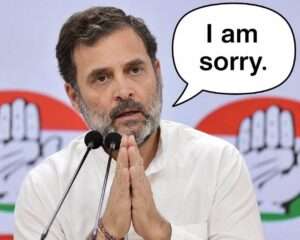
Now, nearly eight years later, while challenging the trial court summons before the Madhya Pradesh High Court, Rahul’s counsel has informed the court that Kartikey’s name was mentioned ‘by mistake’. An application expressing regret has also been submitted.
The explanation offered is extraordinary in its simplicity: there was confusion. Rahul apparently intended to refer to somebody else.
If a politician can casually attach an individual’s name to one of the world’s biggest financial scandals and later explain that he meant someone else altogether, campaign speeches may soon require the same disclaimer seen in TV serials: ‘Any resemblance to actual persons is purely accidental’.
Shoot first, verify later
The ruling party has predictably accused Rahul of practising hit-and-run politics. Serious allegations are increasingly treated as campaign slogans rather than factual assertions requiring verification.
The Panama Papers were no ordinary controversy. The 2016 leak exposed vast networks of offshore companies allegedly used globally to conceal wealth, evade taxes, and circumvent regulations.
Careers and governments were shaken. Pakistan’s prime minister, Nawaz Sharif, lost office following investigations triggered by the revelations.
To casually drag an individual’s name into such a scandal without proper verification reflects a disturbing disregard for reputational consequences. So, political rhetoric cannot be granted diplomatic immunity from facts.
The curious case of ‘Maafi Veer’
There is also an interesting irony here. Rahul rarely misses an opportunity to describe Vinayak Damodar Savarkar as ‘Maafi Veer’, ridiculing the mercy petitions submitted by the freedom fighter during his incarceration in the Cellular Jail in the Andamans.
Savarkar spent years in one of the most dreaded prisons of the British Empire, enduring conditions few modern politicians can even imagine.
Yet the politician who routinely mocks another man’s plea for mercy now finds himself repeatedly seeking judicial indulgence – whether through apologies, expressions of regret, clarifications or explanations of confusion. The contrast is difficult to miss.
One may disagree profoundly with Savarkar’s ideology and debate his politics endlessly. But mocking a man for seeking relief after prolonged incarceration displays remarkable political self-confidence or selective standards.
Credibility is political capital
Politicians are entitled to attack opponents. Democracy demands robust criticism. But democracy also depends upon credibility.
When accusations repeatedly dissolve into apologies, clarifications, and expressions of regret, voters eventually begin discounting every future charge, including legitimate ones.
The immediate legal question before the High Court is whether the complainant accepts the expression of regret or chooses to pursue the matter further. The court will determine the future course.
The larger political verdict, however, will be delivered elsewhere. In the court of public opinion, credibility once lost is considerably harder to recover than a mistaken campaign speech.

